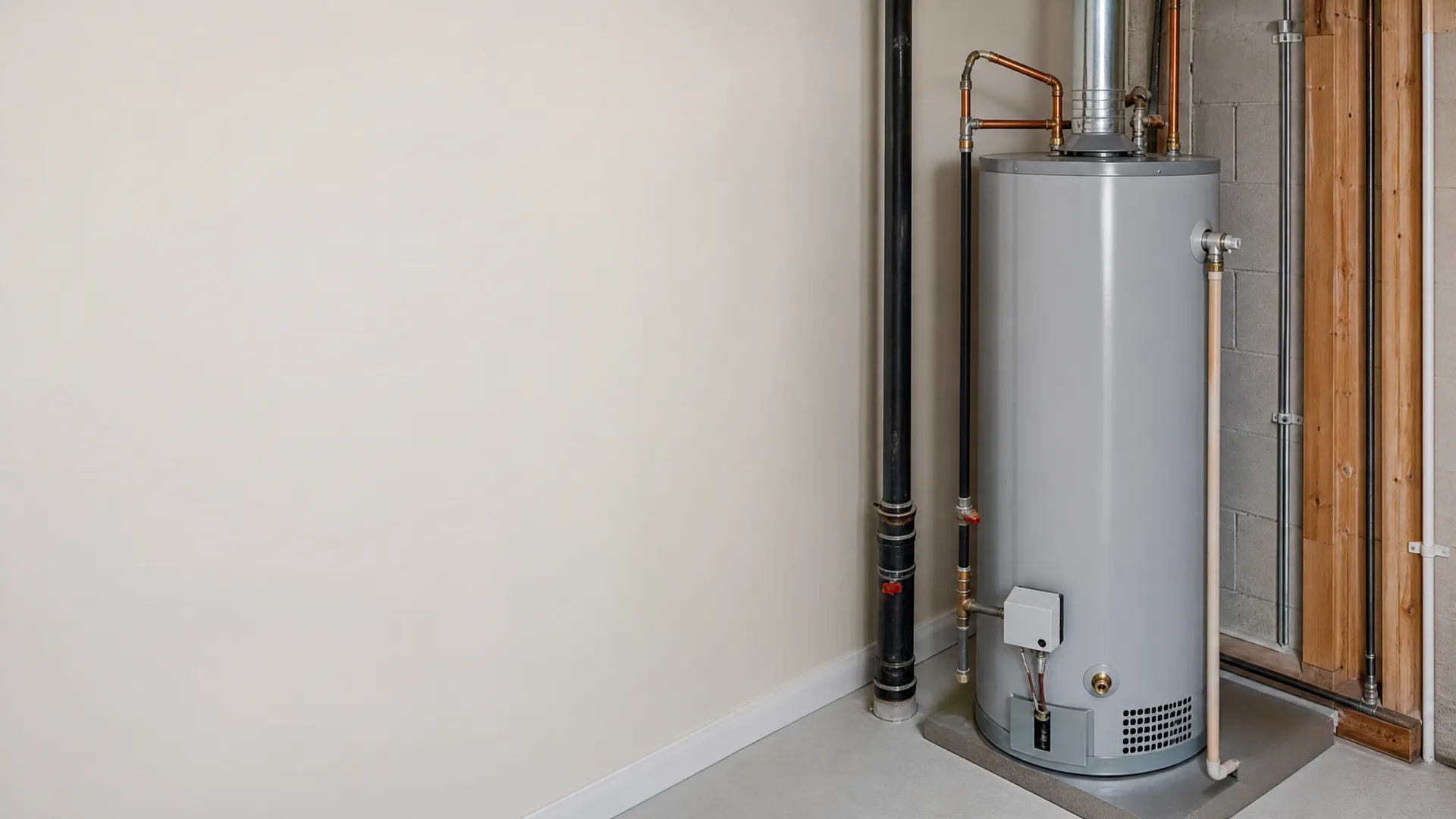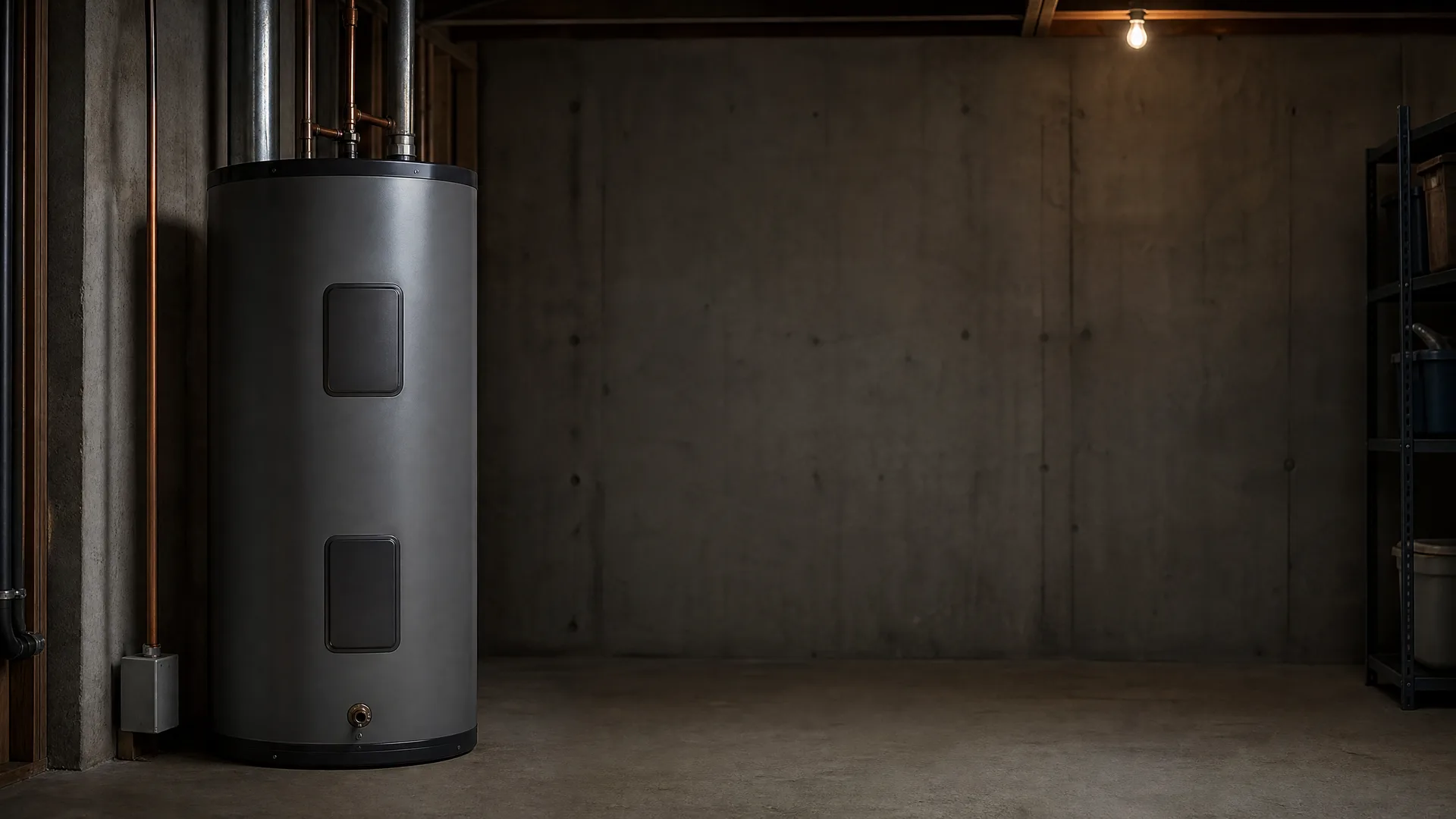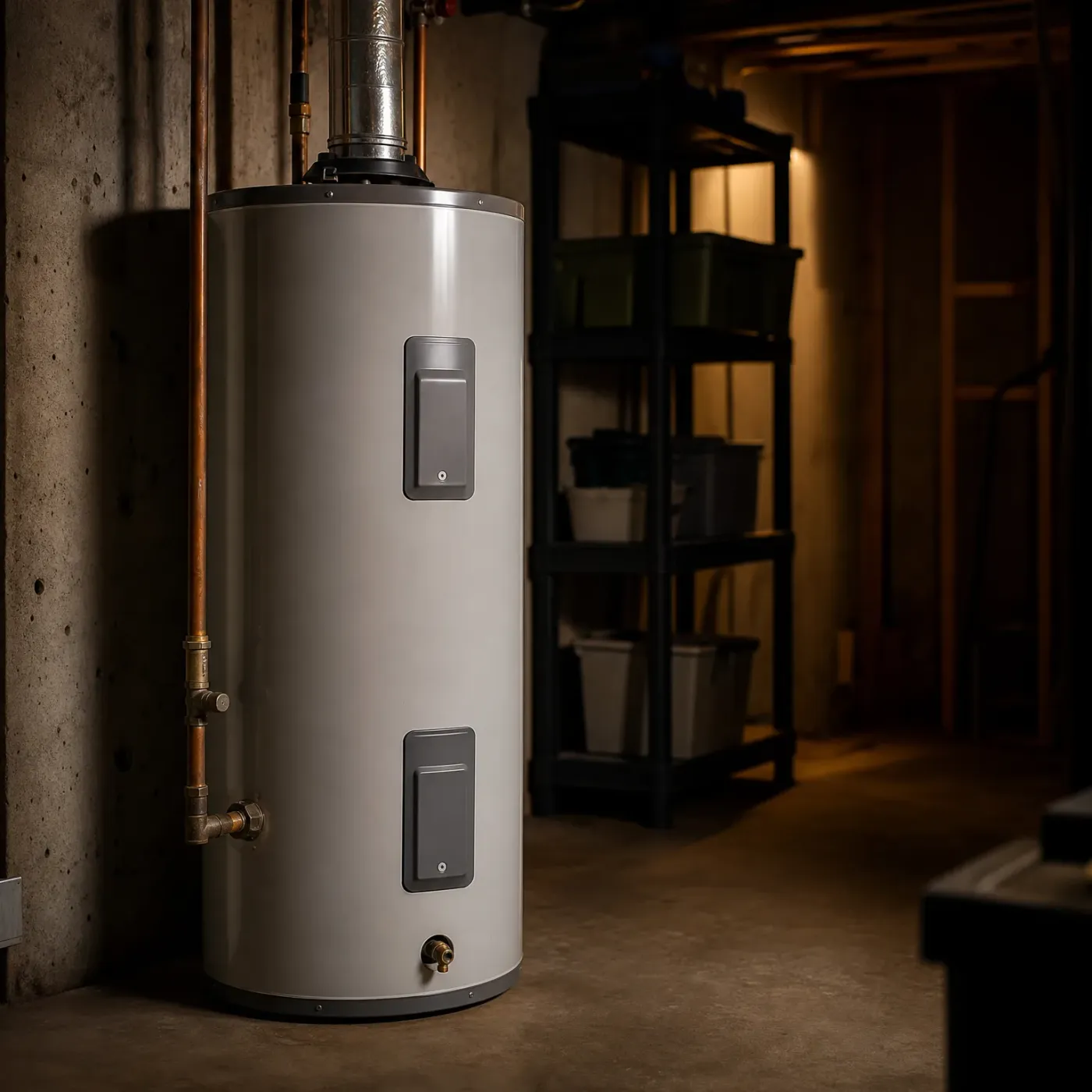
A tall cylindrical water heater with a metal flue pipe and copper plumbing stands against a concrete wall in a dim basement, with a black shelving unit holding plastic storage bins nearby.

Hand off the water heater problem

Water heater leaking in Fremont, NE

A water heater leaking in Fremont or anywhere else in Dodge County usually means a bad fitting, a failing valve, or a tank that's rusted through from the inside. Which one you have changes whether it's worth fixing. Fill out the form below and stop calling around for someone who can look at it.

Send it today

A puddle under your water heater almost always starts in one of three places: a loose fitting or drain valve, a failed pressure relief valve, or the tank itself. Fittings and valves can be tightened or swapped out. The tank is different. Once the steel lining cracks or rusts through, water works its way out through the seam and no amount of tightening stops it, because the leak isn't at a joint, it's in the metal. That's usually the point where a water heater needs replacing rather than repairing. Winters here get cold enough that a failed water heater is more than an inconvenience, especially if it sits in a basement or utility space where a slow leak can go unnoticed until it's a real mess. Telling the two apart often just means checking where the water is coming from, which is easier with someone who knows what to look for.

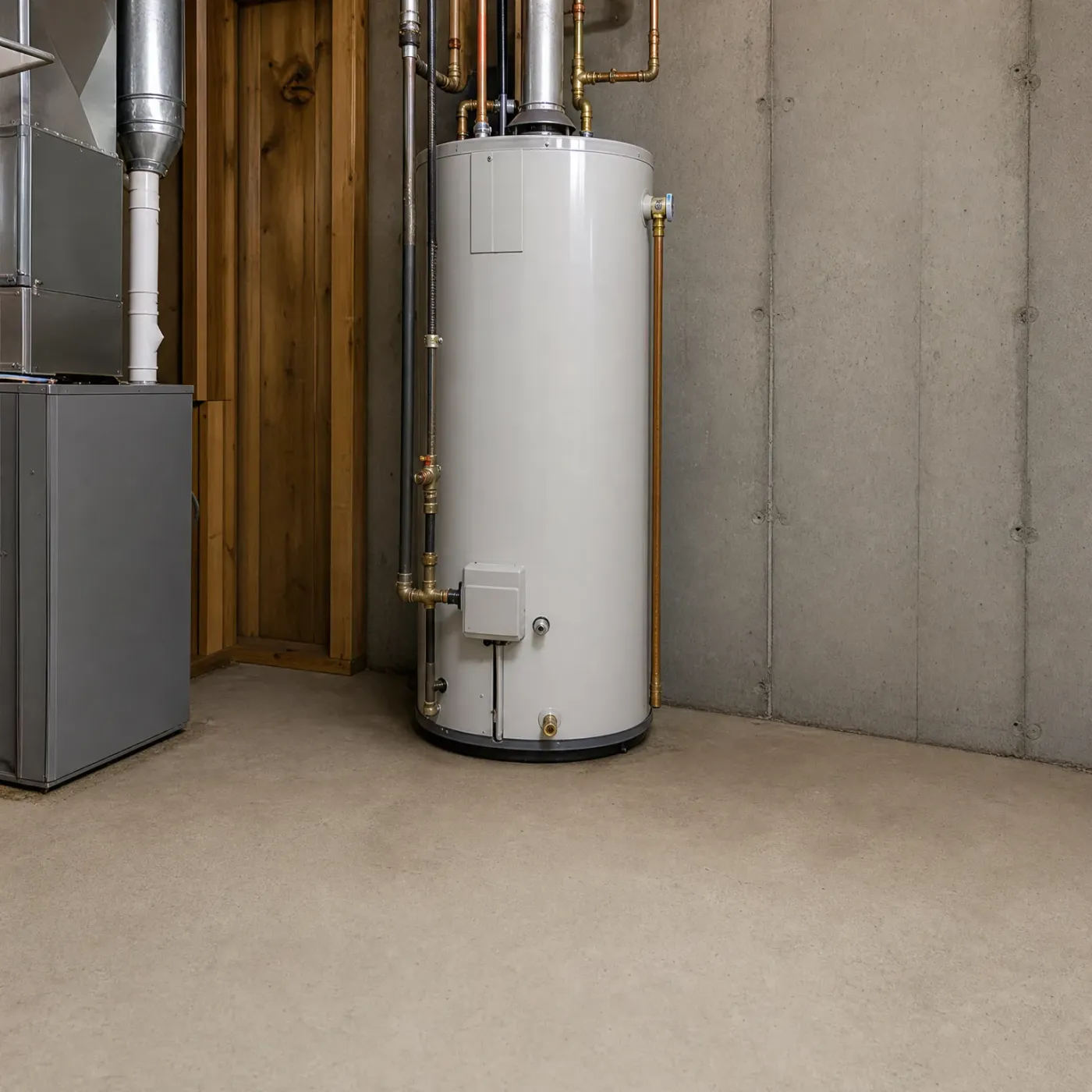
A white cylindrical gas water heater with copper and steel pipes stands against a concrete basement wall beside a gray furnace and wood-paneled wall.

Working as it should

No puddle, no rust, no damp cardboard stacked nearby. The fittings are dry, the drain valve isn't weeping, and the tank holds its water the way it's supposed to. A water heater in this shape just sits there and does its job through a Fremont winter without asking for attention.
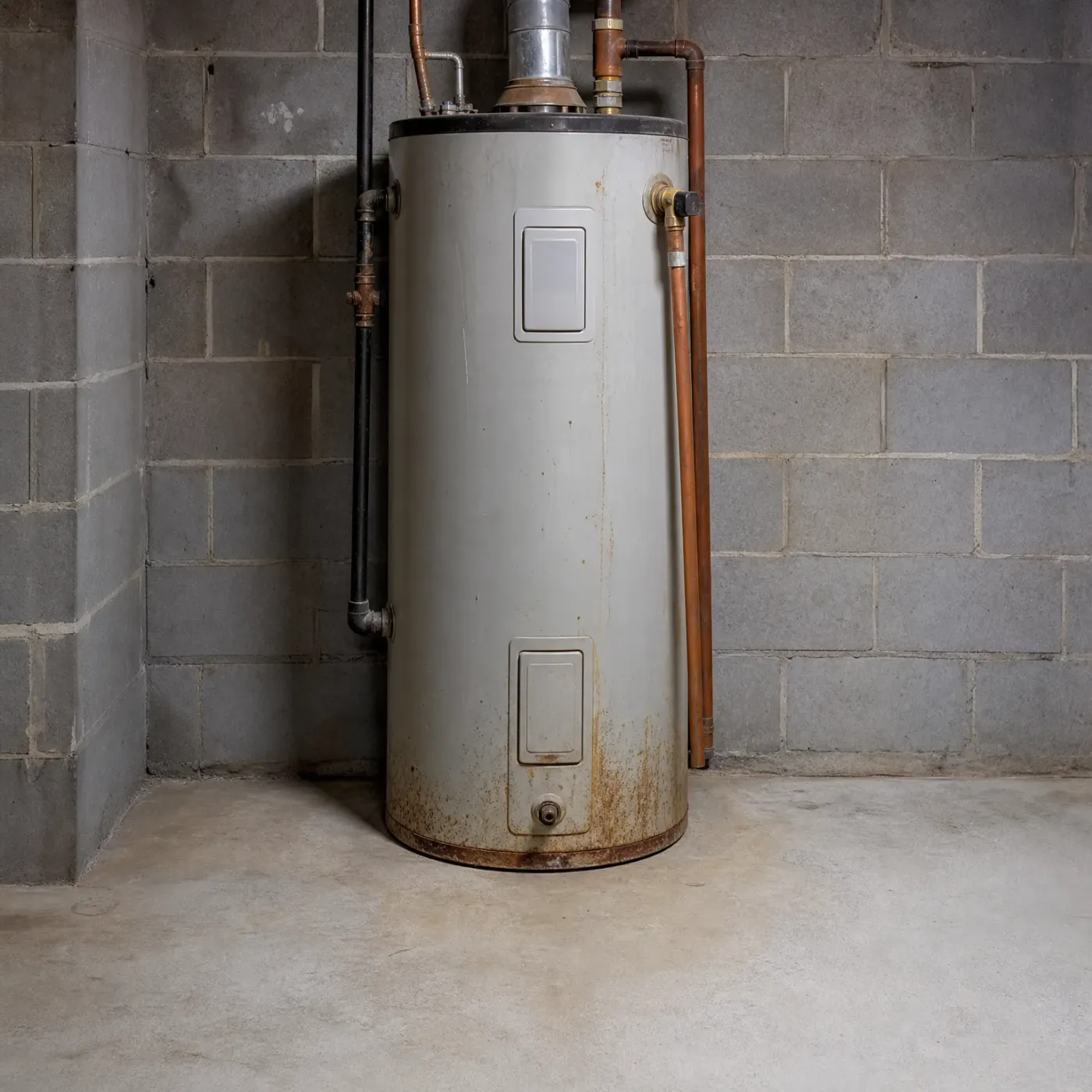
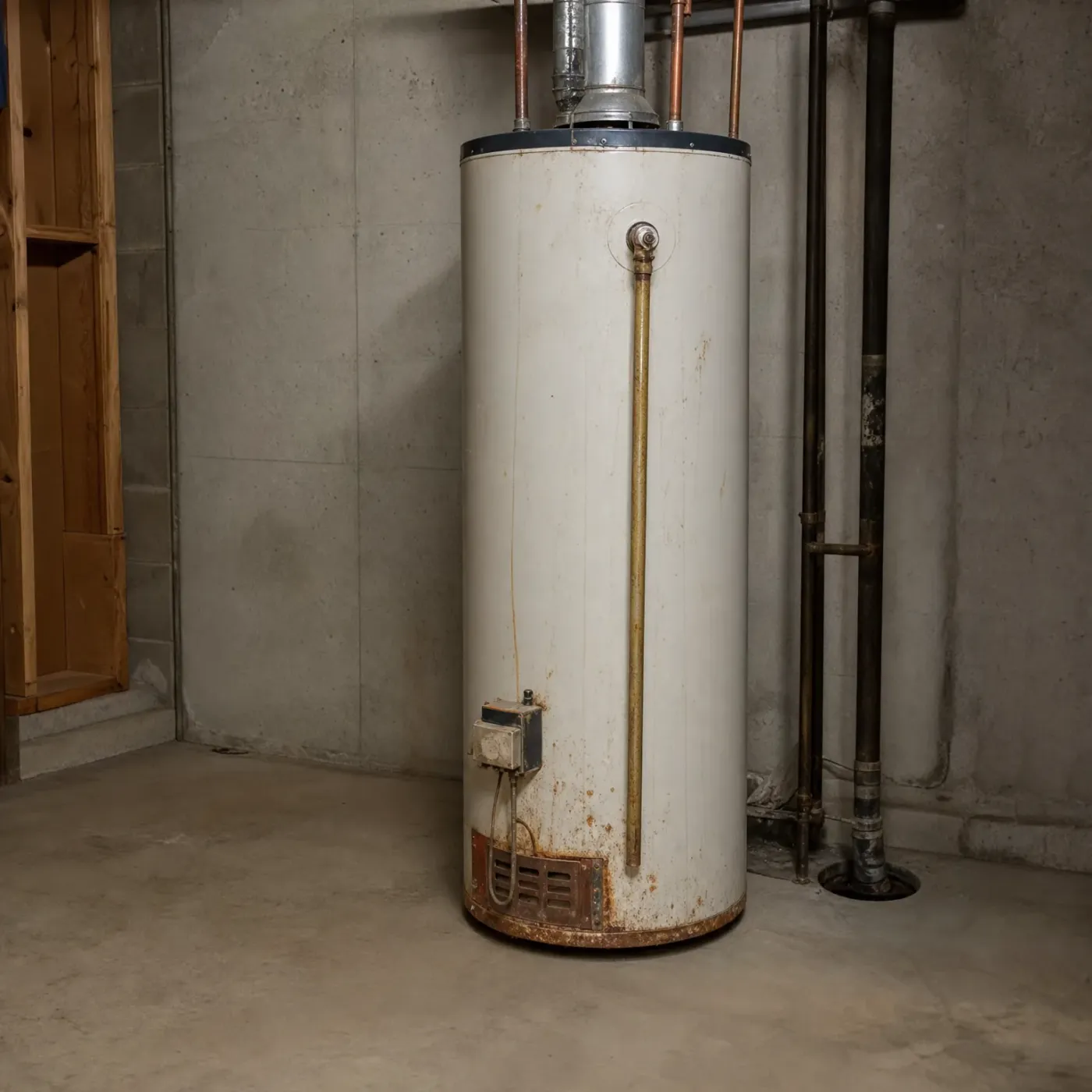
A rust-streaked cylindrical water heater with copper and black metal pipes stands in a concrete-block basement corner on a bare concrete floor.

Tank gone bad

Rust climbs the seams and spreads across the base where steel has been sitting in water it shouldn't be. That's not a fitting you tighten or a valve you swap. Once rust shows like this, the tank itself is failing from the inside, and it's a matter of when, not if, it lets go.

How many people are counting on your water heater not failing?

  • 2.4 people per household on average

    Dodge County households average 2.40 people. That's showers, dishes and laundry all pulling from the same tank, and a leak means all of it stops at once.

  • Half the homes here were built by 1967

    Half the homes in Dodge County were built in 1967 or earlier. A water heater doesn't last as long as the house does, no matter when yours was last replaced.

  • 52.1% of homes heat with gas

    Gas heats 52.1% of homes here, more than any other fuel. A gas water heater has its own vent and gas line, and a leaking tank near either one is worth checking.

ACS 2020-2024

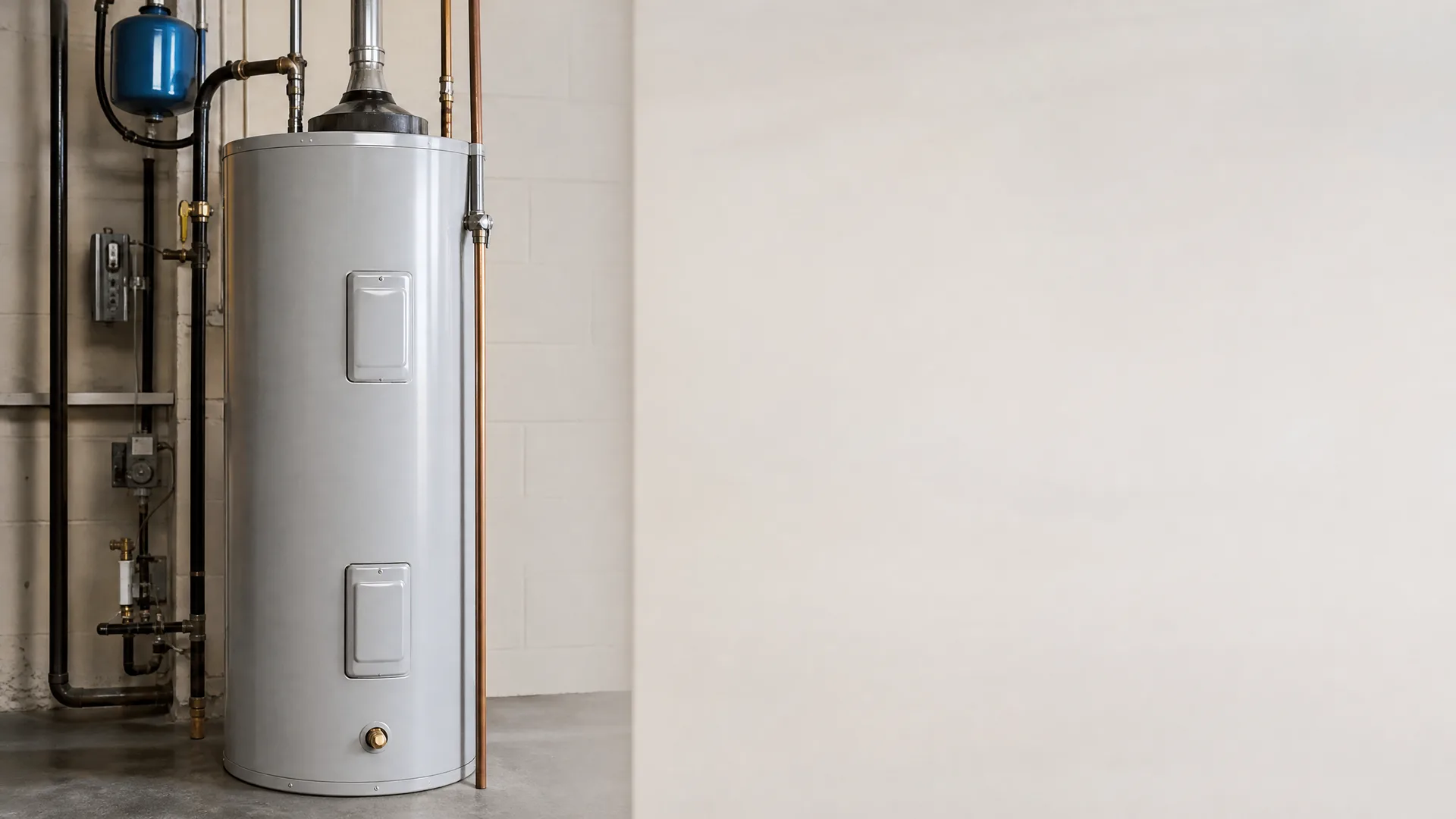
A gray cylindrical water heater with two access panels stands on a concrete floor beside copper and black pipes, a blue expansion tank, and an electrical box against a light wall.

Why the tank fails from inside

A glass lining coats the inside of the steel tank, and a rod inside keeps that steel from corroding where the lining can't reach. Once that rod is used up, the tank itself starts to rust. Rust works from the inside out, so by the time water shows up on your basement floor or garage slab, the steel behind it has already given way. No amount of tightening fixes that. The tank has to be replaced.

A gray gas water heater with copper and black pipes and a metal flue stands in the corner of a room with a beige wall, concrete block wall, and wood studs.

Why a slow leak still matters

Water heaters here often sit in a basement or a utility closet, against drywall or on top of carpet or a wood subfloor. A leak that's only a cup a day still soaks into whatever it's sitting on or near, and drywall and subfloor hold that moisture long after the puddle looks dry. Dodge County winters mean that part of the house often stays closed up, so there's less air moving through to dry things out on its own.

Repair the Leak or Replace the Tank

Fix the leak

  • A fitting or drain valve that's just loose can be tightened in minutes and costs you nothing in tank life.
  • A failed pressure relief valve is a cheap part to swap, and the tank underneath it may still be sound.
  • If the leak isn't coming from the tank itself, the glass lining and steel underneath are untouched.
  • Repair makes sense when the water heater is still within the years its warranty covers.
  • A contractor can trace the water back to its source before anything gets replaced, so you're not guessing.

Replace the tank

  • Once the tank itself is rusted through, no fitting or valve swap stops the leak, because the steel is failing, not a part attached to it.
  • Rust moves from the inside out, so water showing up on the outside means the damage inside is already further along.
  • A tank that's leaking from a seam or the bottom seal will keep leaking, and usually worse, until it's replaced.
  • Replacing it now means you choose the timing, instead of coming home to a tank that's let go overnight.
  • A new water heater comes with a fresh anode rod, which is what kept the old tank's steel from corroding in the first place.
A smiling man with dark curly hair in a dark green henley shirt sits on a light sofa in a living room with large windows, a lamp, shelving, a stone fireplace, and a bowl of popcorn in the foreground.
A smiling man in a dark long-sleeved henley shirt sits on a beige sofa in a living room, with a bowl of popcorn and a remote on the table in the foreground and shelves, a lamp, and a doorway behind him.
A smiling man with graying hair and stubble in a blue henley shirt sits on a gray sofa with cushions in a living room, with a bowl of popcorn on a wooden table in the foreground.
A smiling man in a dark green long-sleeve shirt reclines on a sofa in a dimly lit living room, with a bowl of popcorn on a side table in the foreground and a bookshelf, lamp, and houseplant behind him.

Is it safe to leave a leaking water heater overnight?

You've got towels down and a bucket catching the drip, and it's late. You don't want to call anyone tonight, but you also don't want to wake up to a flooded utility room or a worse mess than you went to bed with. The question is whether this can wait until morning or whether it needs attention right now.

Shut off the water and power, then it can wait until morning

Find the cold water shutoff valve on top of the tank and turn it off so nothing is feeding the leak. If it's gas, turn the gas control valve to pilot or off. If it's electric, shut off the breaker that feeds it. With the water and power off, a slow drip from a fitting or valve isn't going to flood your basement overnight. What it can still do is keep draining the tank onto your floor, so set something under it that'll hold a few gallons and check it before bed. If the leak is coming from the tank itself and it's steady, drain what's left into a floor drain or outside if you can reach a hose to the drain valve at the bottom.

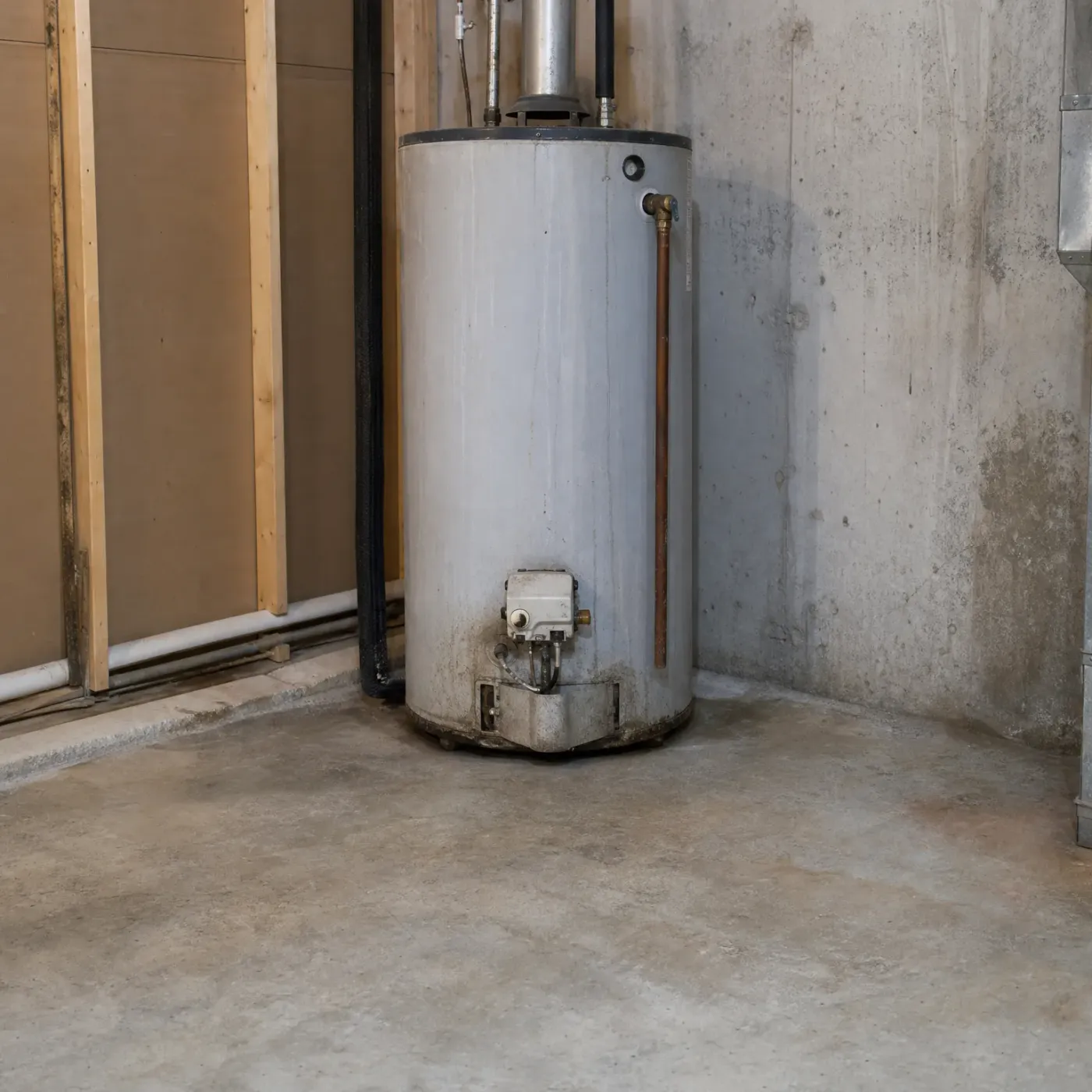
An older white gas water heater with rust staining and an exposed vertical pipe stands against a concrete block basement wall, with a metal flue above and black vertical pipes to the right.
Before you get your water heater repair
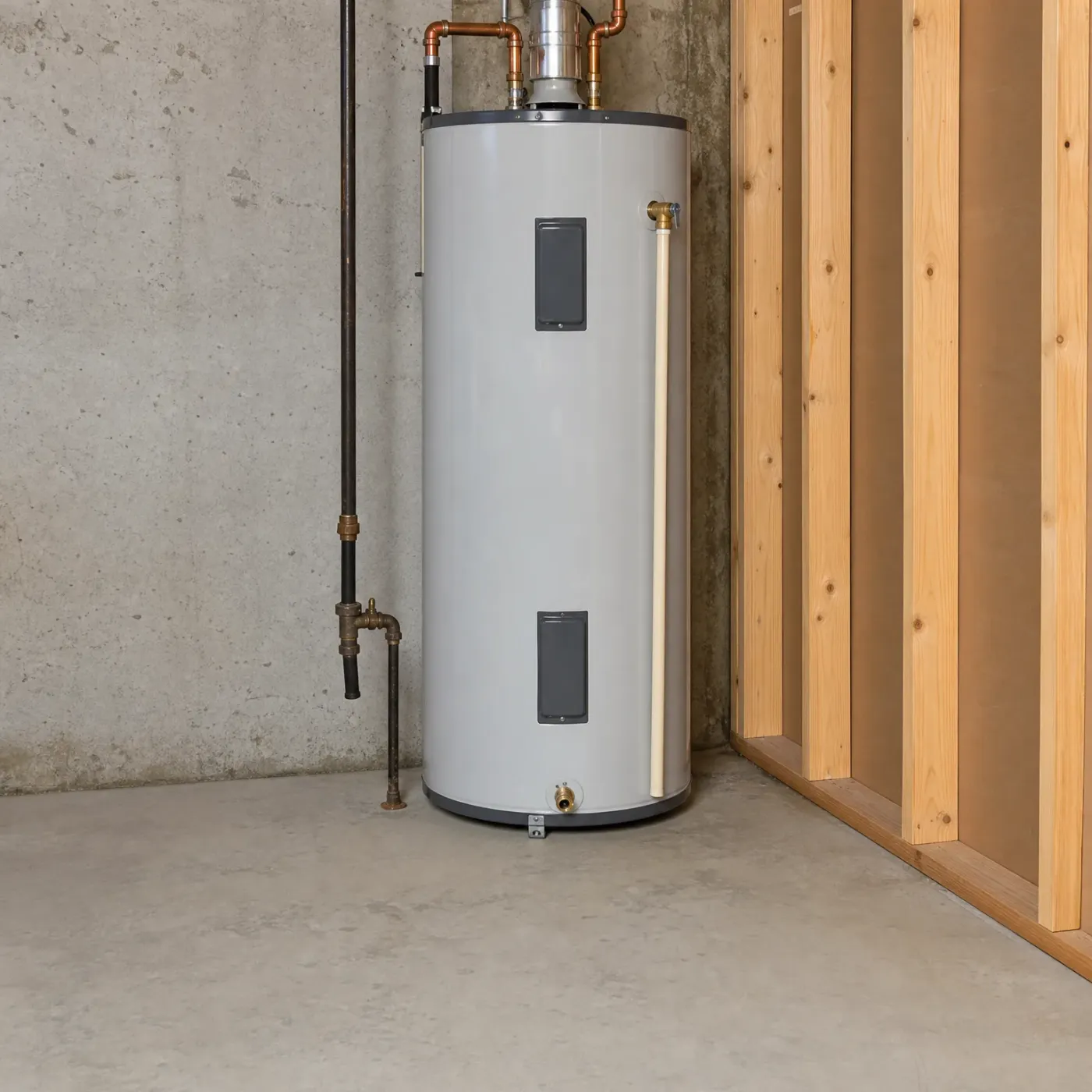
A light gray cylindrical water heater with two access panels stands on a concrete floor against a concrete wall, with copper and black pipes beside it and an unfinished wood stud wall to the right.
After you get your water heater repair

One request and it's handed off

A leaking water heater doesn't wait for a convenient week. Once that water hits the floor, you're looking at calling plumbers, explaining the same leak to each one, asking what a fitting repair runs versus a full tank swap, and trying to tell from a phone call who actually knows what they're doing. That's hours you don't have while a puddle is spreading in Fremont or wherever in Dodge County you're standing right now. Sending this form hands that part off. You stop being the one who tracks down who's available and who's guessing at the problem over the phone. A contractor who deals with this kind of leak, fitting, valve or tank, picks it up from here. You still have a water heater that needs looking at today, but you're not the one making four calls to find out who can look at it.

What a slow leak costs you

A drip from a fitting might just stain the floor under the tank. Water finding its way out of the tank itself is different. It can run for days before you notice, soaking into subfloor, baseboards and anything stored nearby. Drywall swells, wood floors cup, and carpet underneath holds water long after the surface looks dry. None of that shows up on the water heater itself. It shows up on your next look at the utility room, or when someone finally smells it. The longer the tank sits in its own leak, the more of the house around it gets pulled into the repair.

What happens if you wait

A loose fitting stays a loose fitting until someone tightens it. A rusted tank doesn't hold still. The hole that's letting water out now is smaller than the one it'll be in a month, and a slow drip can turn into a steady run with no warning. Once that happens, you're not dealing with a damp spot anymore, you're shutting off the water main and mopping a flooded utility room. Catching it while it's still a puddle means a contractor can look at the tank and tell you plainly whether it's worth saving or whether it's done.

A woman in a dark knit turtleneck sweater reclines on a couch under a cream knit blanket, looking down at an open book, with a lit table lamp and framed pictures behind her.
A smiling middle-aged man in a dark green sweater sits at a candlelit table with wine glasses and a plate of greens in a dimly lit interior.
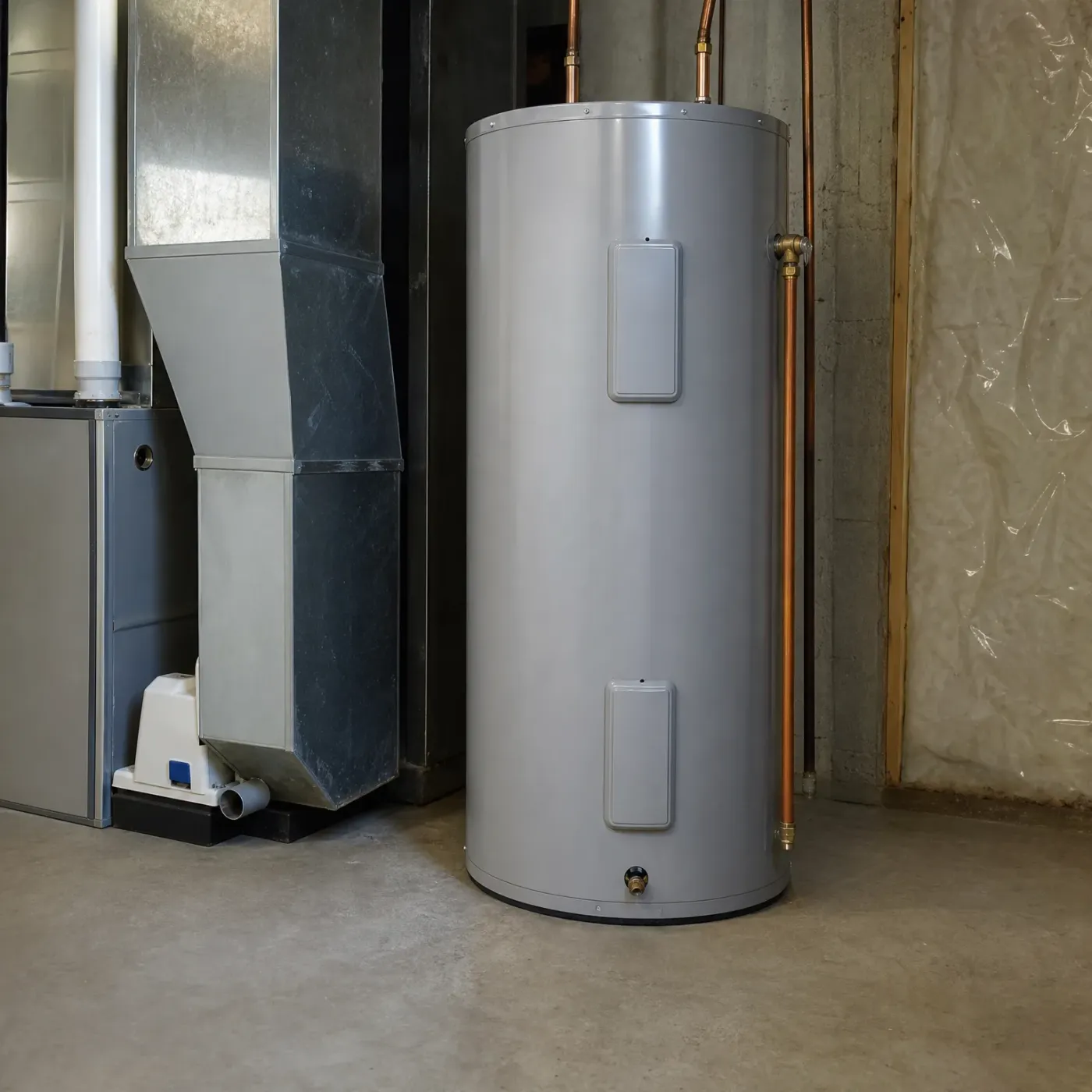
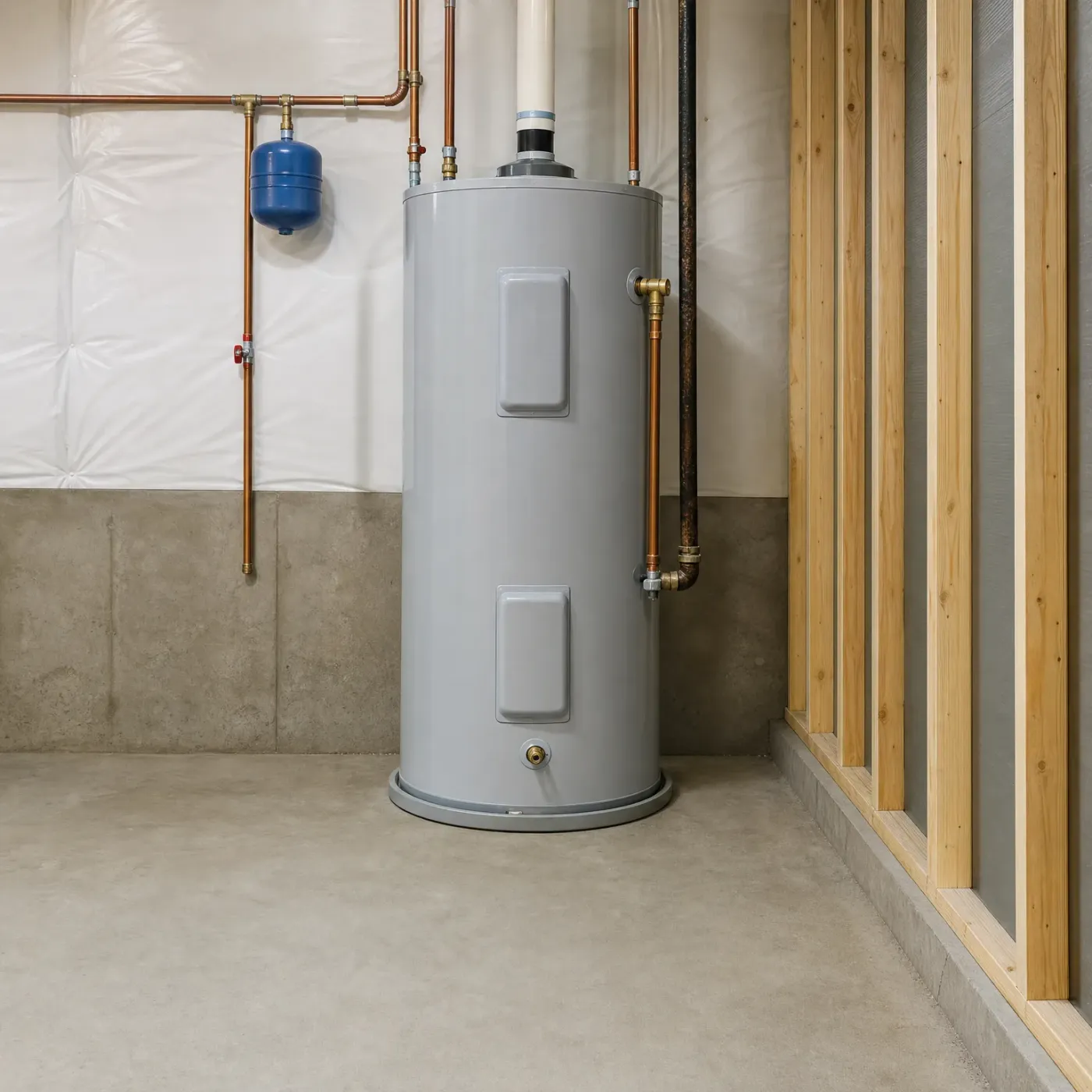
A gray cylindrical electric water heater with two access panels stands on a concrete floor in a basement, with copper pipes above and behind it, sheet-metal ductwork and a furnace to the left, and a plastic-covered insulated wall to the right.

Holding tight and dry

This one shows what you want to see. The copper lines run clean to the tank, the fittings are snug, and the floor underneath is dry concrete, nothing dark or stained. A water heater like this just sits there working, with the furnace next to it doing its own job.

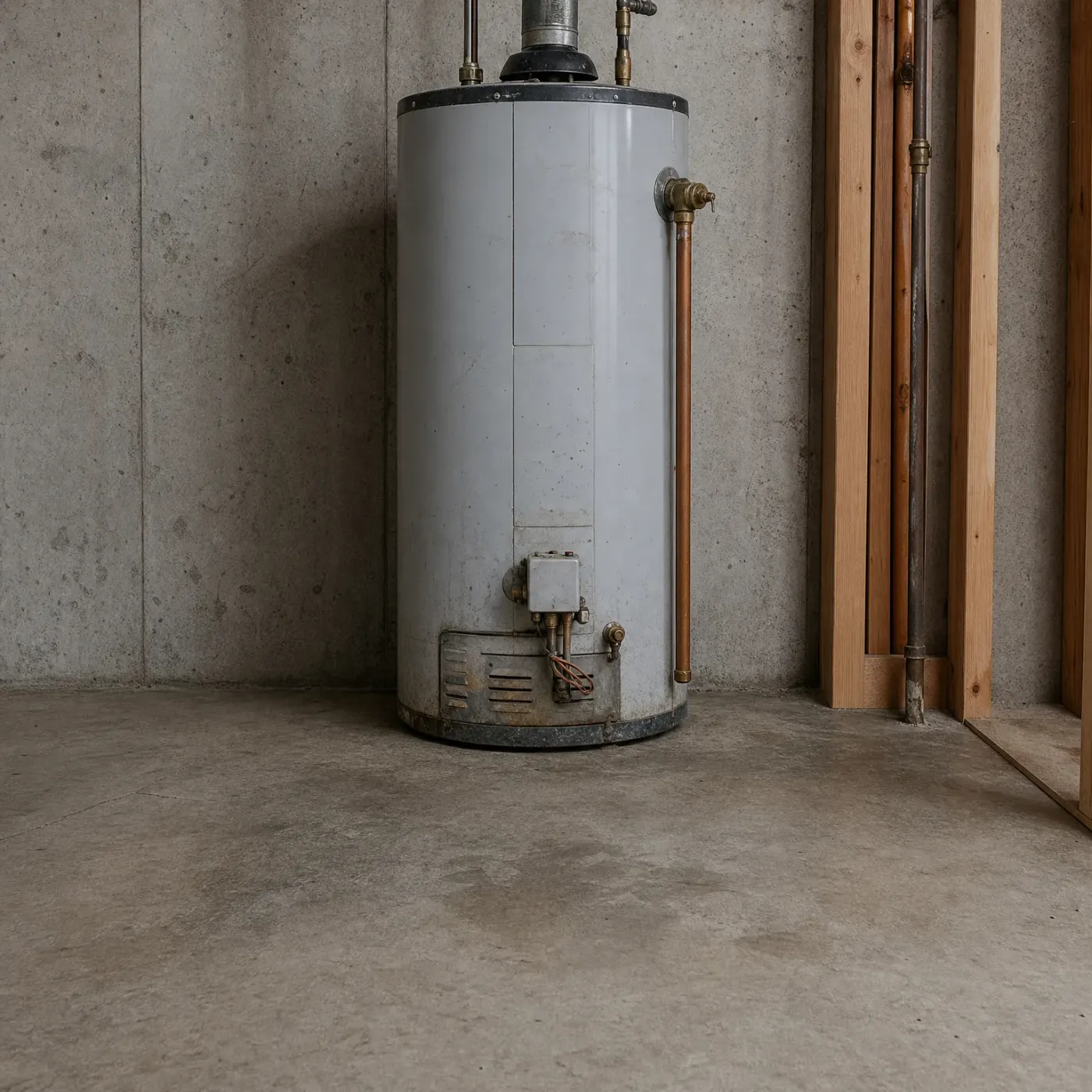
An older gas water heater with a copper pipe and flue stands on a concrete floor in a basement corner between a bare concrete wall and an unfinished wood-framed wall.

Years of wear catching up

This tank has rust and grime built up around the base and the burner assembly, and that doesn't happen overnight. The flue pipe and copper line are still attached, but the corrosion on the outside is a sign of what years of use can do to the steel underneath.

Power here costs 12.41 cents per kilowatt-hour

Power here runs 12.41 cents a kilowatt-hour, so an electric water heater is cheap to keep running day to day. That's no comfort once it's leaking, though. A tank that's rusted through doesn't care what power costs, it just needs to come out.

EIA-861 2025

A gray cylindrical water heater stands on a concrete basement floor against a plastic-sheeted insulated wall, with copper supply pipes, a blue expansion tank, a black vertical pipe, and exposed wood wall framing at right.
An electric water heater like this one holds steady when the fittings stay snug and the expansion tank does its job.
An older gray gas water heater with copper and brass piping stands on a concrete floor against a concrete wall, beside exposed wooden wall framing and vertical pipes.
Rust and grime around the burner on a gas tank this old mean the leak is likely coming from inside the steel.

What's that puddle near your water heater telling you?

Check the floor around the tank first. A damp ring under a fitting or the drain valve usually means a slow, steady drip you can trace with a dry paper towel. Water coming from underneath the tank itself is different, and it tends to show up as a stain spreading across the concrete or carpet nearby, sometimes with rust-colored streaks running down the side of the tank. You might notice a musty smell if it's been going a while, or find the cardboard or boxes stored next to the heater gone soft at the bottom. Left alone, that moisture works into the subfloor and anything stacked close by, and a tank that's rusted through won't stop leaking on its own.

  1. A fitting loosens or a valve wears, and a drip starts.

  2. Water tracks down the tank and pools on the floor.

  3. Left alone, that moisture reaches the steel tank itself.

  4. Rust sets in from the outside, weakening the tank wall.

A wooden table in the foreground holds a closed laptop and a ceramic mug of coffee, with a spindle-back wooden chair behind it, a beige wall with paneled wainscoting, a window at left, and a kitchen counter with a cutting board, bowl of fruit and greenery at right.

Where that leaves you

A fitting or valve, you fix and move on. A tank rusted through, you replace. Either way, the water on your floor already told you something needs to happen this week, not next month.

What you don't have to do is spend tonight calling plumbers one after another, describing the same puddle each time, and trying to guess from their quotes who's actually looked at a tank like yours. Fill out the form below and let someone who knows Fremont water heaters take it from here.

A wooden table holding a stone vase with a bare branch, two stacked books and a small dark bowl, beside a window with green foliage outside and a sofa in the dim background.
A gray cylindrical water heater with copper pipes stands against a concrete wall in a dim basement, with a bare hanging light bulb and a metal shelving unit at right.

Done looking for a water heater pro

Skip calling shops to ask who repairs water heaters in Dodge County.

Step 1 of 3: Equipment