Tell us about the job
Takes about a minute. No obligation.
Gas venting, combustion air, and line pressure are the first things a contractor settles before a replacement water heater gets quoted here. Utility gas heats more occupied homes in Chase County, Nebraska than any other fuel, at 46.4% (2020-2024 ACS 5-year). A home running gas for its primary heat almost always has existing vent runs that were sized for older equipment, and a new heater with a different BTU draw or a power-vent configuration may not share that path cleanly. The contractor checks what is already in the wall before the unit is chosen, because the wrong assumption there changes both the equipment selection and the rough-in work.
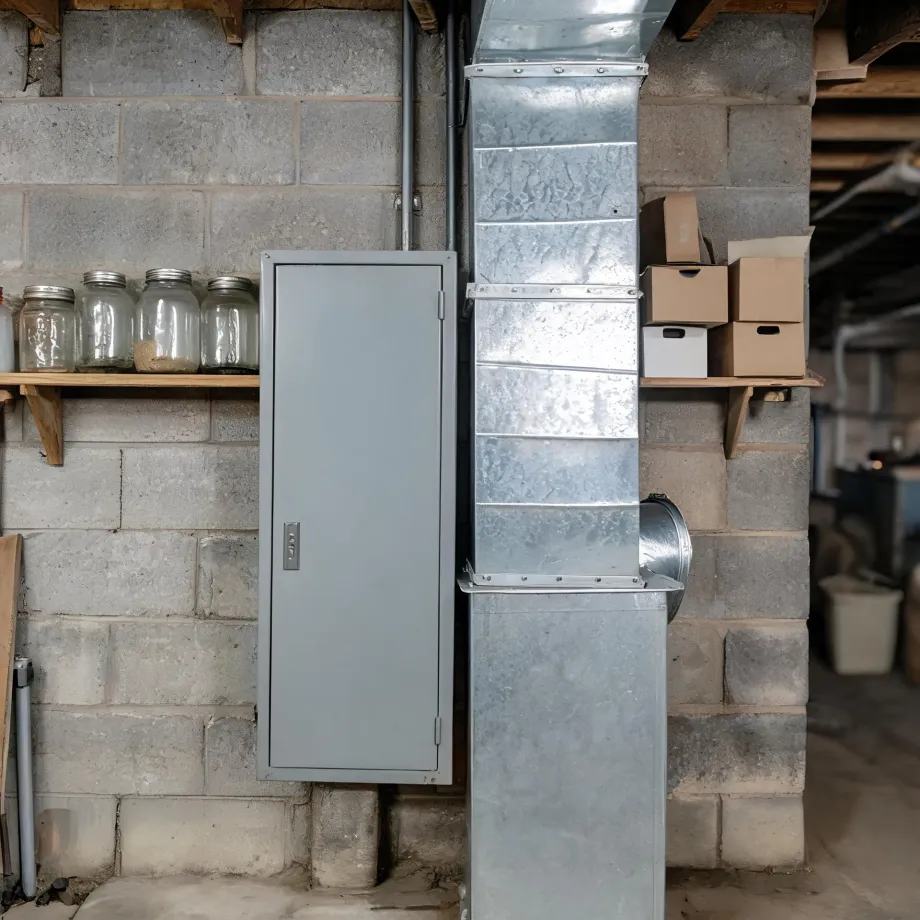
Ductwork and electrical service installed for one generation of equipment and patched across several since then are what a contractor opens up in much of Chase County's housing stock. Half the homes in Chase County, Nebraska were built in 1965 or earlier (2020-2024 ACS 5-year). That history shows up in the work: a water heater installation that would be straightforward in a recently built house can turn on whether the existing supply lines, venting, and panel capacity are adequate for the new unit, or whether they need to be brought up before the job can close. The equipment a contractor brings to the site is the known quantity. What the house already has is what determines the scope.
What a New Water Heater Installation Covers
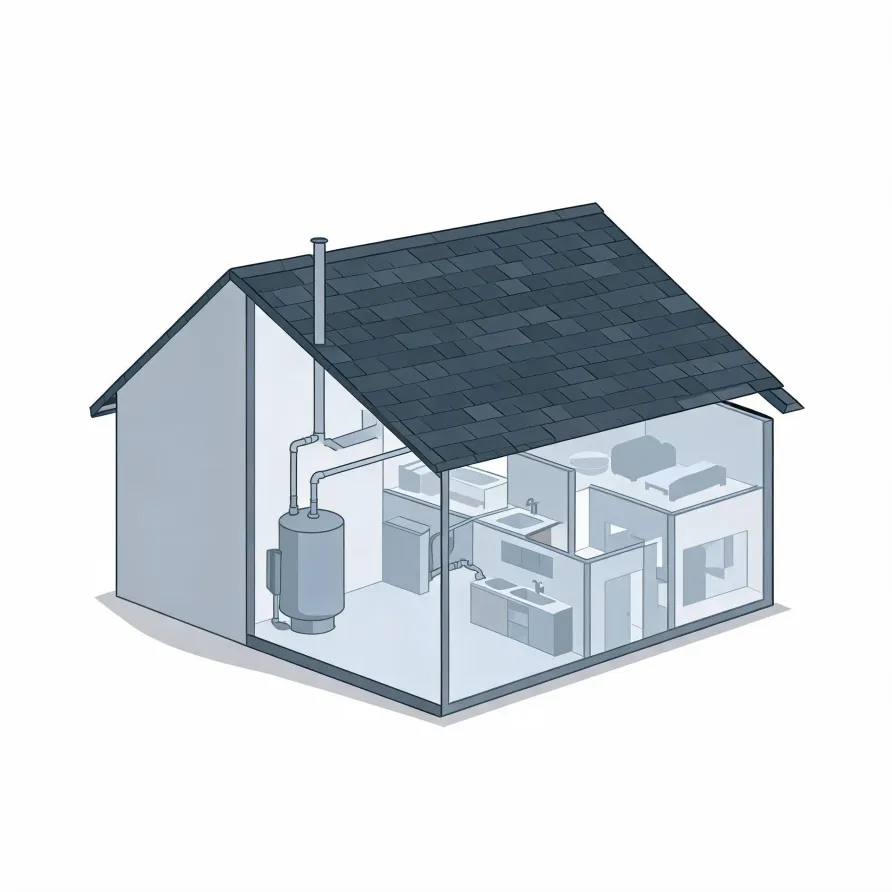
The tank is the piece a homeowner sees first, sitting in a utility room, basement, or garage. It holds and heats the water supply for the whole house. Attached to the tank are inlet and outlet pipes that carry cold water in and send hot water out to every fixture.
A pressure relief valve mounts on the side of the tank and opens automatically if pressure inside climbs too high. The anode rod hangs inside the tank and slows corrosion of the tank walls. A drain valve sits near the base, and the flue or exhaust vent runs from the top of the unit up and out of the house.
The drawing shows a general layout of these components, and a licensed contractor determines exactly what applies to your home.
Get matched in Chase CountyChase County, Nebraska, by the numbers
194 severe weather events were recorded in Chase County, Nebraska between 2015 and 2024.
NOAA National Centers for Environmental Information, Storm Events Database, bulk CSV export, events 2015-01-01 through 2024-12-31.Half the homes in Chase County, Nebraska were built in 1965 or earlier (2020-2024 ACS 5-year).
U.S. Census Bureau, 2020-2024 American Community Survey 5-Year EstimatesChase County, Nebraska holds 1,870 housing units (2020-2024 ACS 5-year).
U.S. Census Bureau, 2020-2024 American Community Survey 5-Year EstimatesOwners occupy 79.1% of the occupied homes in Chase County, Nebraska (2020-2024 ACS 5-year).
U.S. Census Bureau, 2020-2024 American Community Survey 5-Year EstimatesWater Heater Installation Rules on the Books for Chase County, Nebraska1 codes, standards, and licensing rules
Licensing Rules for HVAC Work in Chase County, Nebraska
Nebraska requires registration rather than a licence: a contractor must be registered with the Department of Labor before performing any construction work, though anyone earning less than five thousand dollars a year from construction services is not a contractor under the Act at all.
Weather Stress on Water Heaters in Chase County
Demand on a water heater tracks closely with what the weather outside is doing. Knowing the pattern of severe weather in this area tells a contractor what the equipment here has to absorb, and that shapes the right installation for this location.
194 severe weather events, 2015–2024. Source: NOAA National Centers for Environmental Information, Storm Events Database.