




Get Hot Water Nebraska

No hot water in Fremont, NE

Send it once and finding someone is no longer on you.

Hand off the search

Why is there no hot water in my house?

No hot water means a cold shower and a scramble to figure out what broke. Most of the time it comes down to one of a handful of things: the pilot went out, a gas valve or heating element failed, or the power to the unit got cut. Gas water heaters and electric ones fail differently, so what's wrong in your house depends on which one you have sitting in that basement or closet.

Usually a failed igniter, gas valve or heating element

A gas water heater that won't light has usually lost its pilot or failed its igniter, or the thermocouple that senses the flame has gone bad and is shutting the gas valve off as a safety measure. An electric water heater that's gone cold has usually lost a heating element or tripped its breaker. Since most homes in and around Fremont heat with gas, that's the more common failure locally, but plenty of houses still run electric units and those fail on the electrical side instead. Either way, the tank itself rarely leaks hot water out from the bottom without warning signs first, so if the tank is intact, the problem is almost always in the parts that make the heat, not the tank holding it.

A smiling man in a gray long-sleeved shirt stands in a kitchen looking to the side, with open shelves of dishes, a white mug on the counter, a potted plant, and a view through a doorway into a living room.
A smiling bearded man in a green sweater sits at a white marble kitchen island with a mug, potted plant and bowl of fruit, in a bright white interior with open shelving and an arched doorway.
A smiling man with dark curly hair and a beard, wearing a dark green knit sweater, stands at a white marble kitchen counter with a dark blue mug, with open shelving, pendant lights and a houseplant behind him.
A smiling man in a green ribbed sweater stands behind a wooden table holding a ceramic mug of coffee in a kitchen with white subway tile, shelves of potted plants, and a bowl of fruit.

What does your home's age and setup mean for your water heater?

  • 2.4 people per household on average

    Half the homes in Dodge County were built in 1967 or earlier. If yours is one of them, the water heater has likely been swapped out more than once, and whoever installed the last one may not be around to ask about it.

  • Half the homes here were built by 1967

    With 2.4 people in the average household here, most homes run a standard 40 or 50 gallon tank. That size recovers hot water fast when it's working right, so a cold tap more likely means a failed part than a tank that's just too small.

  • 52.1% of homes heat with gas

    Just over half of homes in Dodge County heat with gas, and gas water heaters usually share that same line. A gas valve or pilot problem can turn up as no hot water and nothing else wrong in the house.

ACS 2020-2024

How your water heater actually fails

  • A gas water heater lights the burner only after the thermocouple or flame sensor confirms the pilot is actually burning.
  • If that sensor doesn't detect a flame, the gas valve shuts off within seconds, even if the pilot looks lit to you.
  • Electric water heaters use two heating elements, an upper and a lower, and either can fail on its own.
  • A tripped high limit switch, sometimes called the reset button, will cut power to both elements until someone resets it.
  • Sediment that settles at the bottom of the tank can cover the lower element and keep it from heating water properly.
  • A failed thermostat on either element can leave the tank reading hot while the water inside stays cold.

Gas and electric water heaters fail in different ways, and knowing which kind you have narrows things down fast. A gas unit won't just light and stay lit because the pilot is burning. The thermocouple or flame sensor has to confirm there's an actual flame before the gas valve allows gas to keep flowing to the burner. If that sensor doesn't pick up a flame, or thinks it doesn't, the valve shuts the gas off in seconds. That's why a pilot can look fine to you and the burner still won't fire. Electric units work differently. There are two heating elements, one near the top of the tank and one near the bottom, and they don't depend on each other. The upper element usually heats first, then the lower one takes over to finish the job. If the lower element fails, you might still get a few minutes of warm water before it turns cold. A high limit switch sits on the thermostat and will cut power to both elements if the water gets too hot, and it stays off until someone resets it by hand. Sediment is its own problem. It settles at the bottom of the tank over time and can bury the lower element, insulating it from the water it's supposed to be heating. A bad thermostat compounds the confusion, since it can show a hot reading on the dial while the water in the tank never actually heats up.

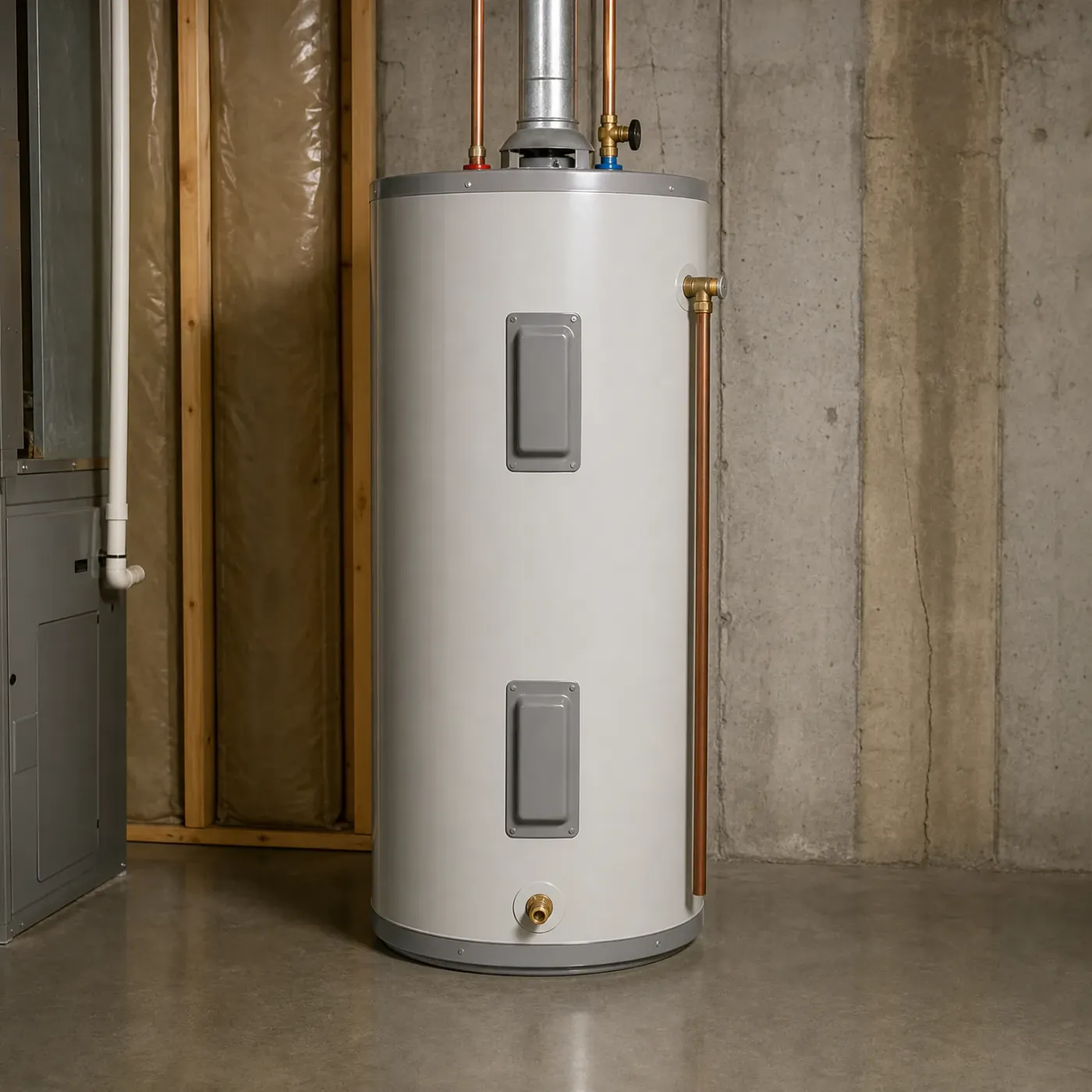
A white cylindrical water heater with two access panels, copper supply pipes and a metal flue, standing on a concrete floor against a concrete wall beside insulated wood framing and a gray electrical panel.
A water heater like this one is still doing its job: no rust, no leaks, tank and vents intact.
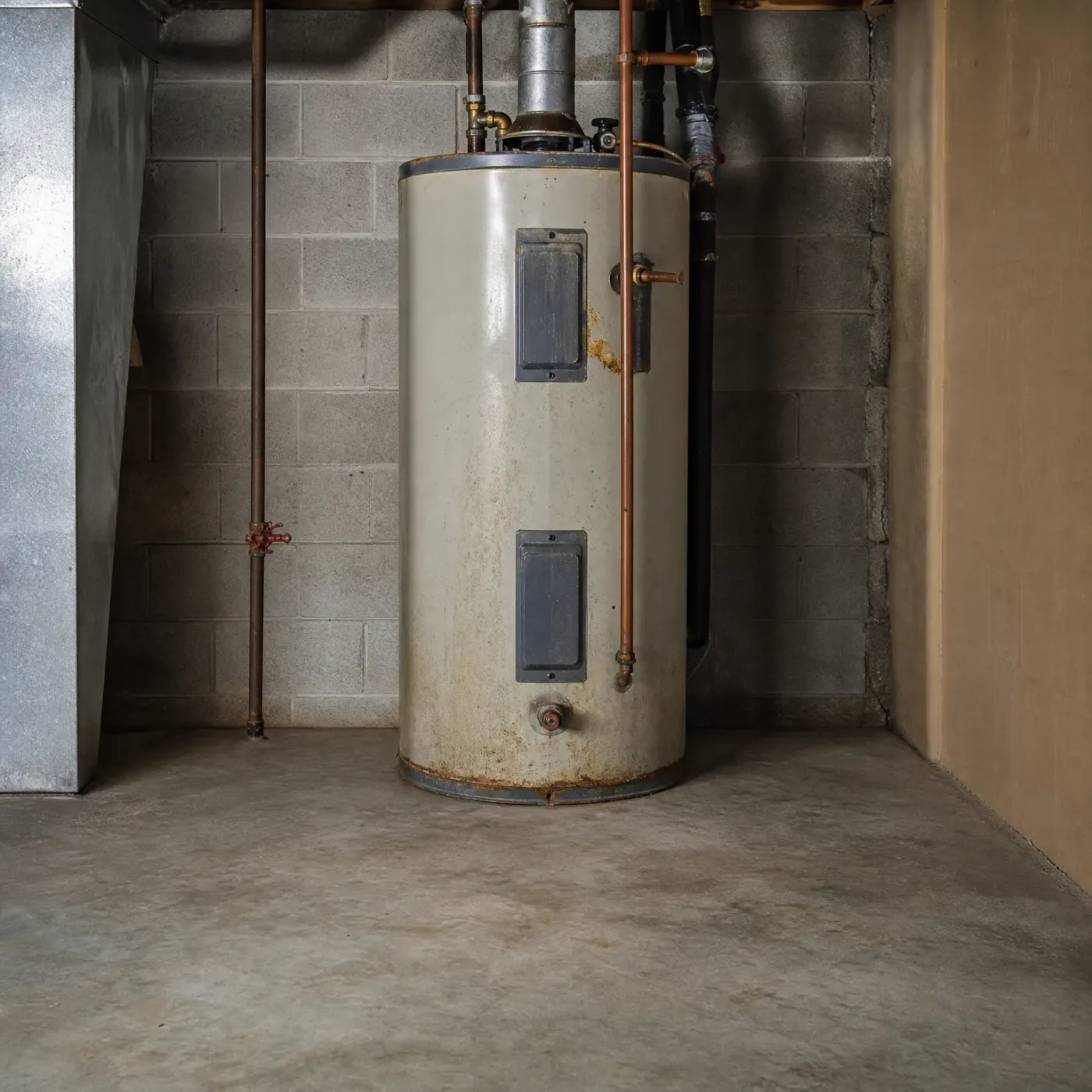
An aging cream-colored water heater with rust streaks and two access panels stands on a concrete floor against a concrete block basement wall, with copper and black pipes running up to the ceiling and a metal duct at left.
This one has gone past the point of a simple fix, with rust eating through the tank and panels.

Fix It Yourself or Call a Plumber

Call a plumber

  • A gas valve or thermocouple that keeps failing usually needs someone who can test the actual voltage and gas pressure, not just swap a part.
  • If the tank itself is rusted or leaking, no repair brings back hot water, and a local plumber can tell you that on the first visit.
  • Electric water heaters trip a breaker or blow a thermal fuse for reasons that aren't obvious from outside the panel, and guessing wrong can mean doing the work twice.
  • A plumber who works on these year round in Dodge County has seen what usually fails first in homes here and checks that before anything else.
  • Gas line and venting problems aren't safe to leave alone, and someone licensed can confirm the system is venting correctly before relighting it.
  • Sending one request means one contractor looks at your water heater, not three or four companies calling you back at once.

Try it yourself first

  • Relighting a pilot is something you can usually do yourself if the manual is still around and the gas smell test comes back clean.
  • Checking the breaker box takes a minute and costs nothing, and it's often the first thing worth ruling out on an electric unit.
  • A sticky high-limit switch can sometimes be reset by hand, though it will trip again if whatever caused it hasn't been fixed.
  • If the water heater is still under warranty, the manufacturer's instructions may walk you through basic checks before anyone needs to come out.
  • Sediment buildup can sometimes be flushed out through the drain valve, which is within reach for someone comfortable working on their own plumbing.
  • Trying the simple fixes first tells you whether this is something small or something that needs a trained eye, and either way you'll know more going in.
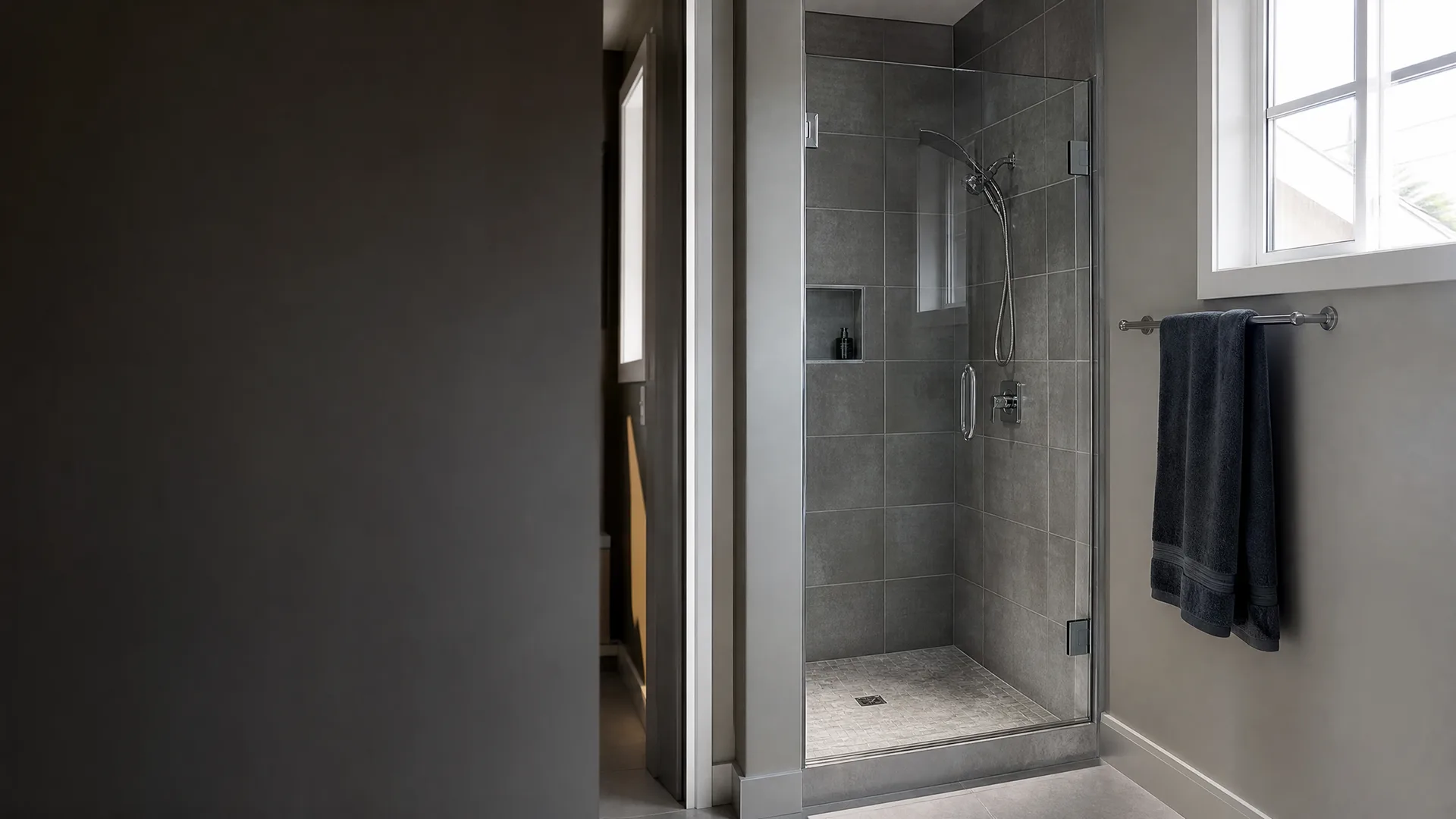
A bathroom corner with a gray tiled walk-in shower with a glass door, a recessed niche, and a dark towel hanging on a rail beneath a window.

You get up before work, grab a towel off the rail, and turn the shower on. No steam. You wait, hand under the water, thinking it just needs a minute. It doesn't come. Outside it's still dark, maybe a hard Dodge County winter morning, and the bathroom is cold enough that the lack of steam is the first thing you notice before you even touch the water. You head down to check the water heater, towel still over your shoulder, already running the morning back in your head to see what you can skip or push later. The form takes a minute. After that, it's someone else's job to find the person who can fix it.

It's off your list after this

A licensed pro who repairs water heaters in Dodge County gets your request.

You're not committing to anything by asking.

Gas water heaters depend on a pilot

A gas water heater won't fire the burner unless the thermocouple senses the pilot flame. That part sits right in the pilot flame and sends a small signal back to the gas valve telling it the flame is real. If the thermocouple wears out or gets coated with soot, the valve reads it as no flame and shuts the gas off, even while the pilot is burning fine in front of you. That's why relighting it sometimes works for a day and then fails again.
Electric units fail a different way

An electric water heater has two heating elements, one near the top of the tank and one near the bottom, each with its own thermostat. If the upper element or thermostat fails, you get no hot water at all, since it controls power to the lower element too. If only the lower one fails, you still get some warm water, just not enough to outlast a shower. A tripped high-limit switch on either thermostat will also cut power and needs to be reset by hand.

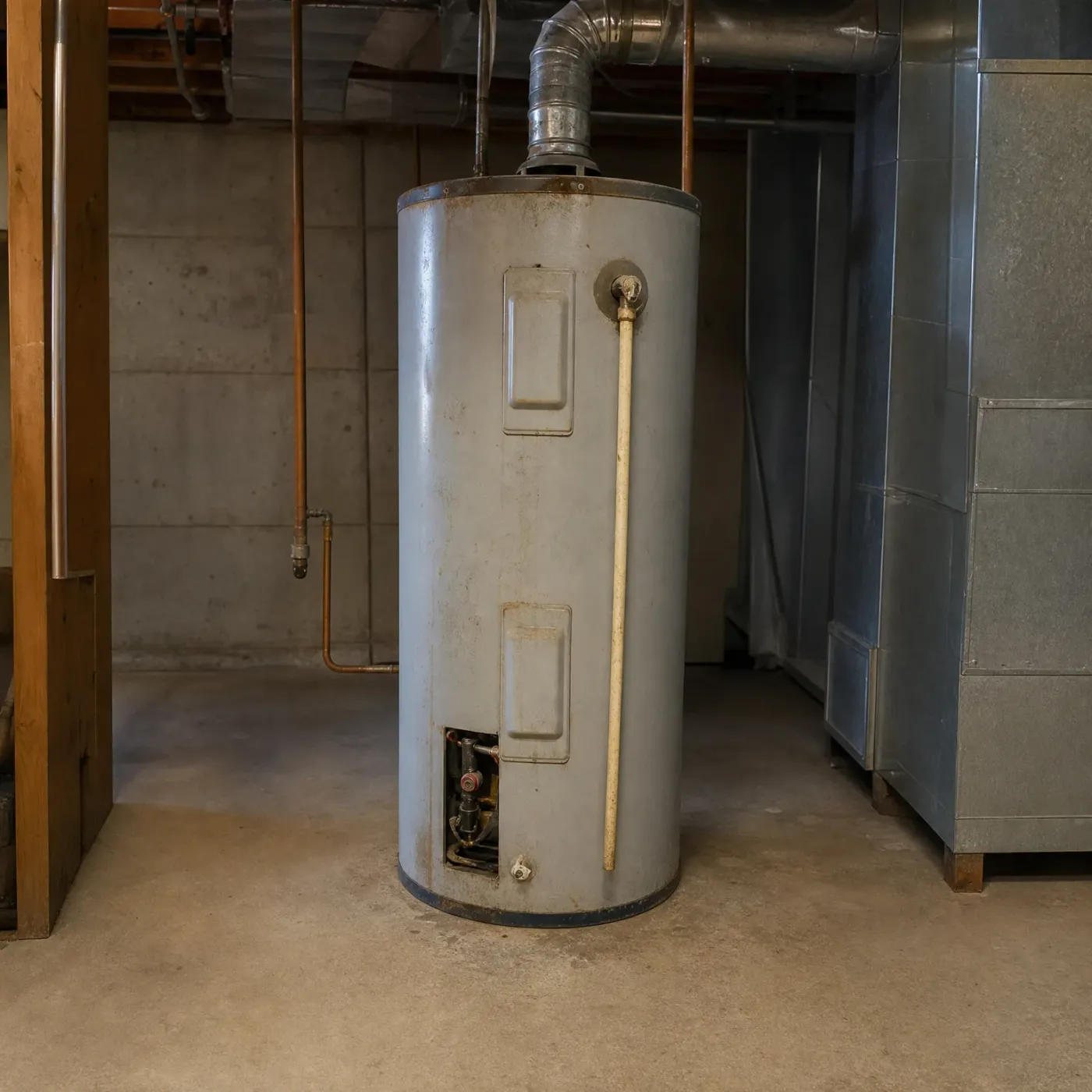
An older gray gas water heater with a metal flue pipe stands on a concrete basement floor beside ductwork and exposed copper piping.
Before you get your water heater repair
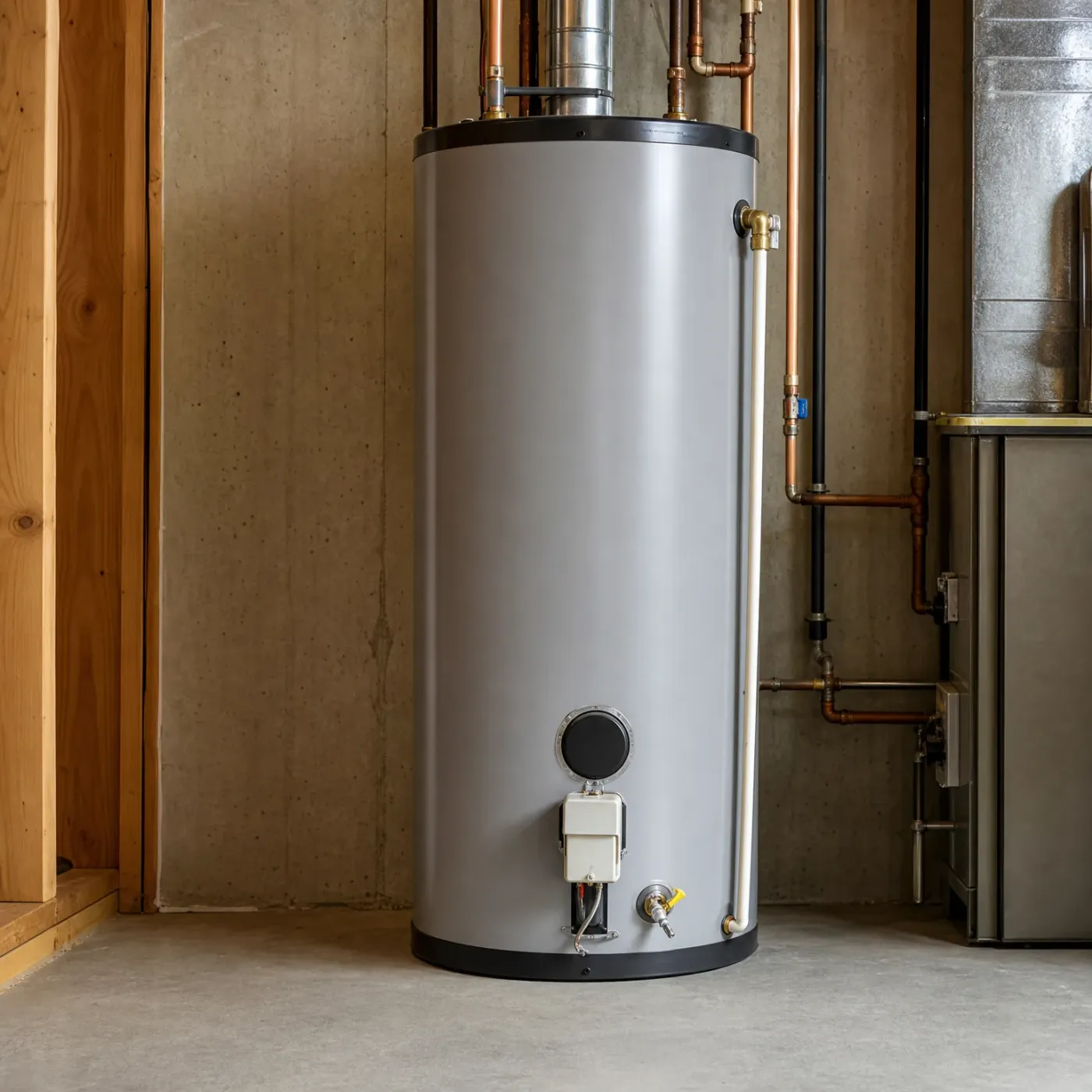
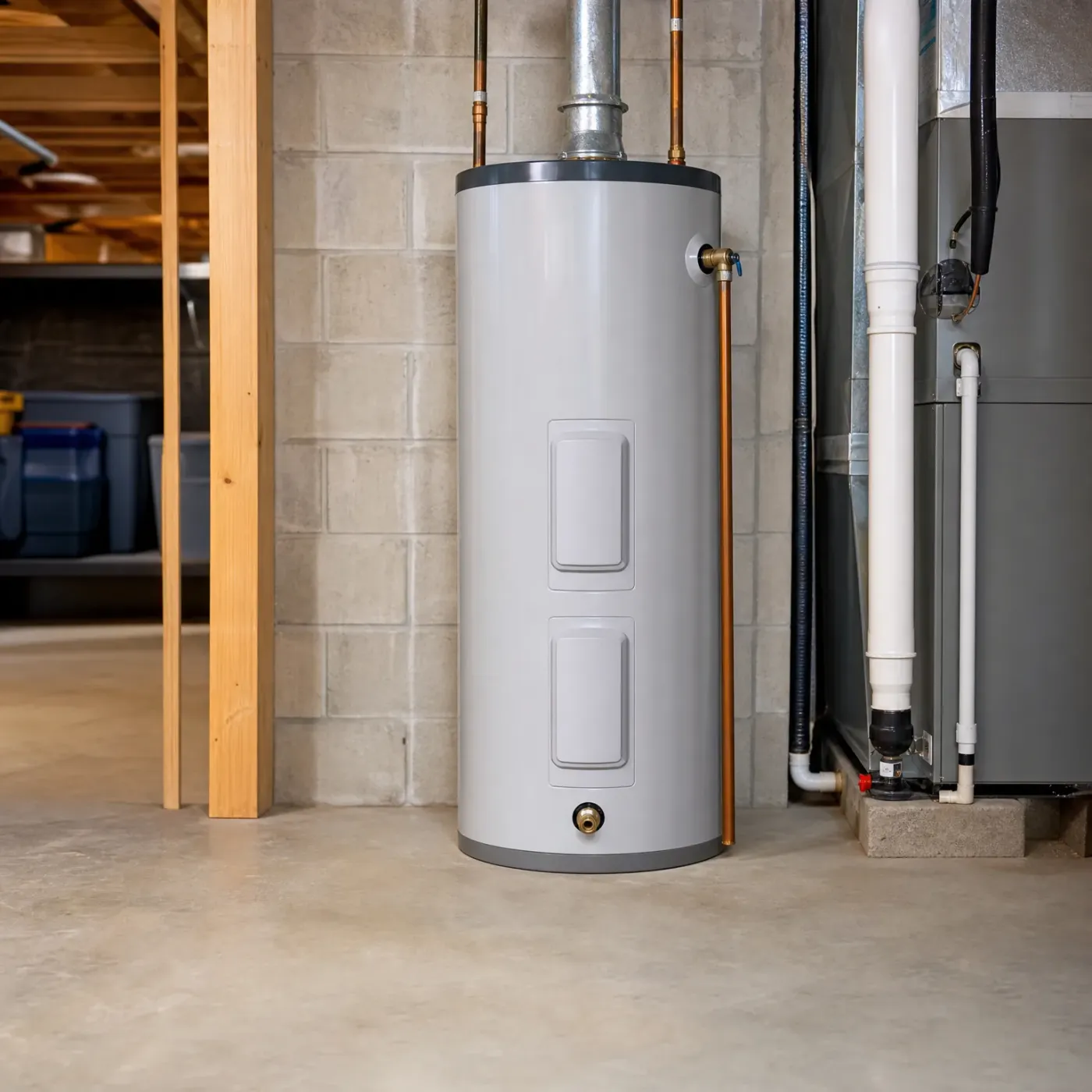
A gray cylindrical water heater with copper pipes stands against a concrete block wall in a basement, next to white PVC piping and a gray furnace, with wood framing and storage bins at left.
After you get your water heater repair
A gray cylindrical water heater stands on a concrete floor against a concrete wall, with copper and black pipes running overhead and a metal duct and dark equipment cabinet to the right.

Working as it should

The tank sits against the wall with the copper lines tight and dry, the flue drawing straight up, no rust streaking down the sides. The gas control box reads steady and the burner lights on the first try. A water heater in this shape just needs the pilot checked and the drain valve cleared now and then.

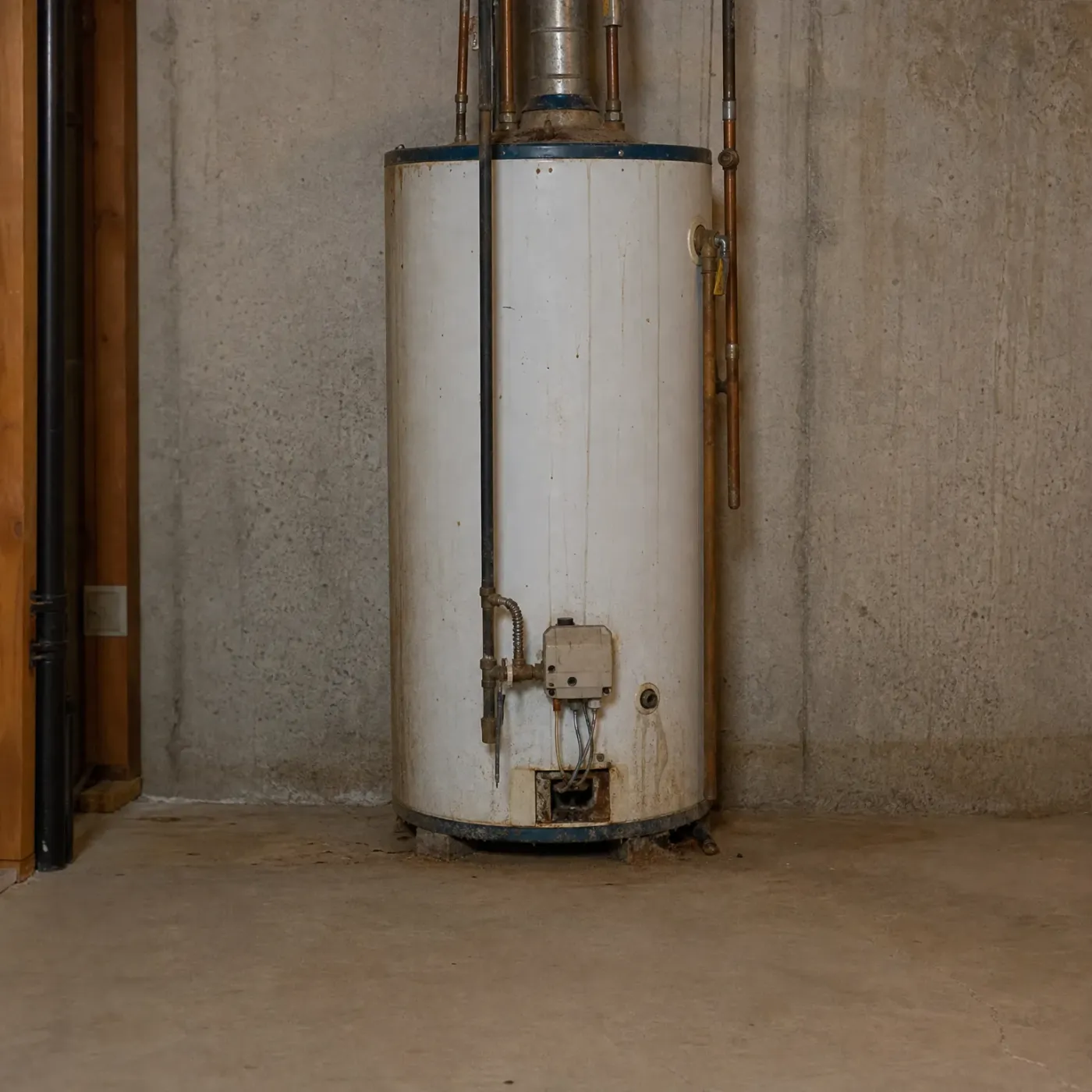
An old white gas water heater with rust stains, copper pipes and a flue stands in the corner of a concrete-walled room with a bare concrete floor and a wooden door frame at left.

Past a simple fix

Rust has worked down the tank and onto the panels, and the flue pipe is corroding at the top. Paint is peeling where moisture has been sitting against the metal for a while. Once rust gets into the tank itself, there's no part a plumber can swap to bring the hot water back.

A smiling man in a dark blue T-shirt sits on a light gray sofa in a living room with a wooden shelf and window behind him, with a laptop edge visible in the foreground.
A bearded man in a plaid flannel shirt stands indoors looking out a frost-covered window, with a steaming dark blue mug on the wooden sill and snow-covered trees outside.

If it worked fine yesterday

A water heater that gave you hot water yesterday and nothing today usually hasn't failed outright. Gas models lose their pilot to a draft, a dirty thermocouple, or a gas valve that's starting to go. Electric models trip a breaker or burn out a heating element, and the tank stays stone cold while the rest of the house runs normal. These are the cases worth a call before you assume the worst. A Dodge County plumber who works on these year round can often get the pilot relit or the element swapped in one visit, and you're back to a hot shower the same day.

If it's been failing for a while

A water heater that's been running lukewarm for weeks, tripping its breaker more than once, or relighting itself only to go back out is telling you something different. Sediment builds up at the bottom of a gas tank over years and starts to insulate the burner from the water above it, so it runs longer and still falls short. An electric element coated in scale works harder and fails sooner. If this has been a slow slide rather than a sudden stop, a repair might buy you time, but it's worth having someone look at the tank itself before you spend money on a part.

Power here costs 12.41 cents per kilowatt-hour

At 12.41 cents per kilowatt-hour, an electric water heater here isn't the expensive part of your power bill. If yours went cold, the cost of running it isn't what's at stake, so don't rule out a repair over worry about what it'll add to your bill once it's fixed.

EIA-861 2025

A cold shower usually traces back to one small part: a pilot that won't stay lit, a thermocouple that's stopped sensing flame, a tripped breaker, or a heating element that's burned out. None of those mean the tank is done. A plumber who works on water heaters around Fremont and the rest of Dodge County all year knows which of these fails most and can usually tell within a few minutes of looking at the unit whether you're dealing with a quick fix or a tank that's actually rusted through. When you send in a request, it goes to one licensed local plumber, not a handful of companies competing for your callback, so you're not stuck fielding calls while your water stays cold. You already know whether this water heater has been acting up before today or quit without warning. Either way, the part that's failing is usually smaller than the problem it's causing, and someone who sees this equipment every week in this county knows exactly where to look first.

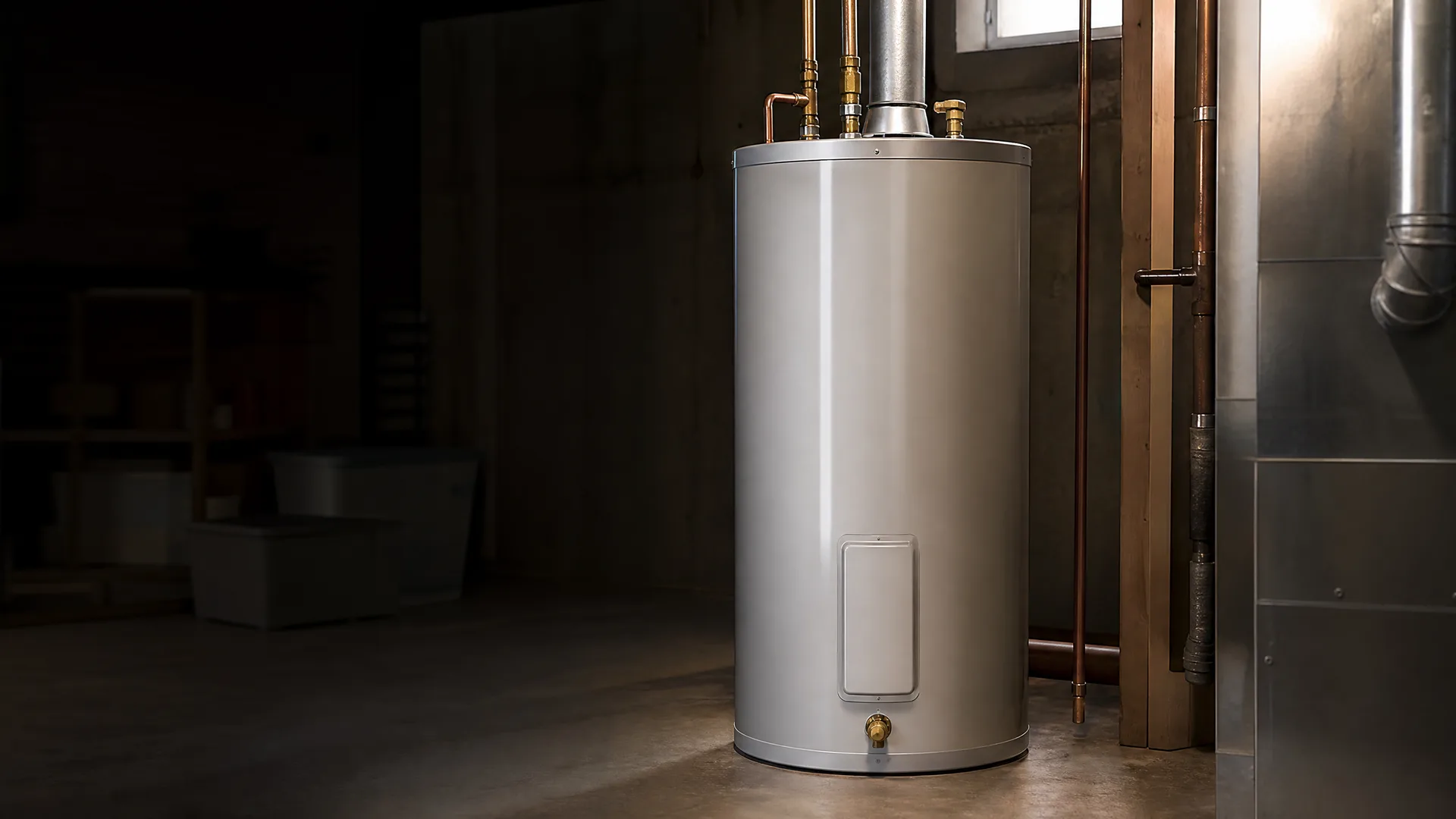
A gray cylindrical water heater with copper pipes and a flue stands on a concrete floor in a dim basement, with metal ductwork and storage bins nearby.

Hand off the search today

Step 1 of 3: Equipment