Tell a local repair pro what your water heater is doing.
Water pooling around your water heater is never nothing. It might be a loose fitting, a failing pressure relief valve, or a tank that's rusted through from the inside. Most homes in Nebraska run gas water heaters, and a leak on a gas unit is worth taking seriously fast, since water near the burner or gas controls can cause more than just a puddle on the floor.
Where the water is coming from changes what it means. A leak from the top, around the pipes, is often a loose connection or a bad inlet valve. A leak from the bottom usually means the tank itself has failed, and that's a replacement, not a repair. Either way, the only way to know for sure is to have someone look at it in person.
That's where a local contractor matters. Nebraska winters are hard on water heaters, and summers here get sticky enough that the unit is working through humidity most of the year too. Someone who services this equipment in this state, season after season, has seen what tends to go wrong in homes like yours and knows what to check first.
When you put in a request here, it goes to one licensed contractor local to your area, not a handful of companies competing for your call. That contractor reaches out to you directly about your specific leak, your specific unit, and what they find when they look at it.
A leaking water heater rarely gets better on its own. The longer it sits, the more likely the damage spreads to the floor underneath or the parts around it. Getting someone qualified to look at it now is the straightforward way to find out whether this is a quick fix or something bigger.
Why is my water heater leaking?
You noticed water around the base of your water heater and you want to know what's causing it before it gets worse. A leak can come from a few different places on the tank, and some of those are simple fixes while others mean the tank itself is done. Figuring out which one you're dealing with matters before you decide what to do next.
Most leaks come from a loose fitting, the drain valve, or a rusted tank
The water line into the tank, the drain valve near the bottom, and the pressure relief valve on top are the usual starting points, and all three can be checked without draining the tank. A loose fitting or a worn valve can be replaced. Water coming from underneath the tank itself is a different story. That means the steel has rusted through from the inside, and once that happens the leak only gets worse. With gas water heaters as common as they are across Nebraska, a leak near the bottom of the tank is also worth checking against the burner compartment underneath it, since water dripping down toward the gas control valve is a reason to shut off the unit until someone looks at it.
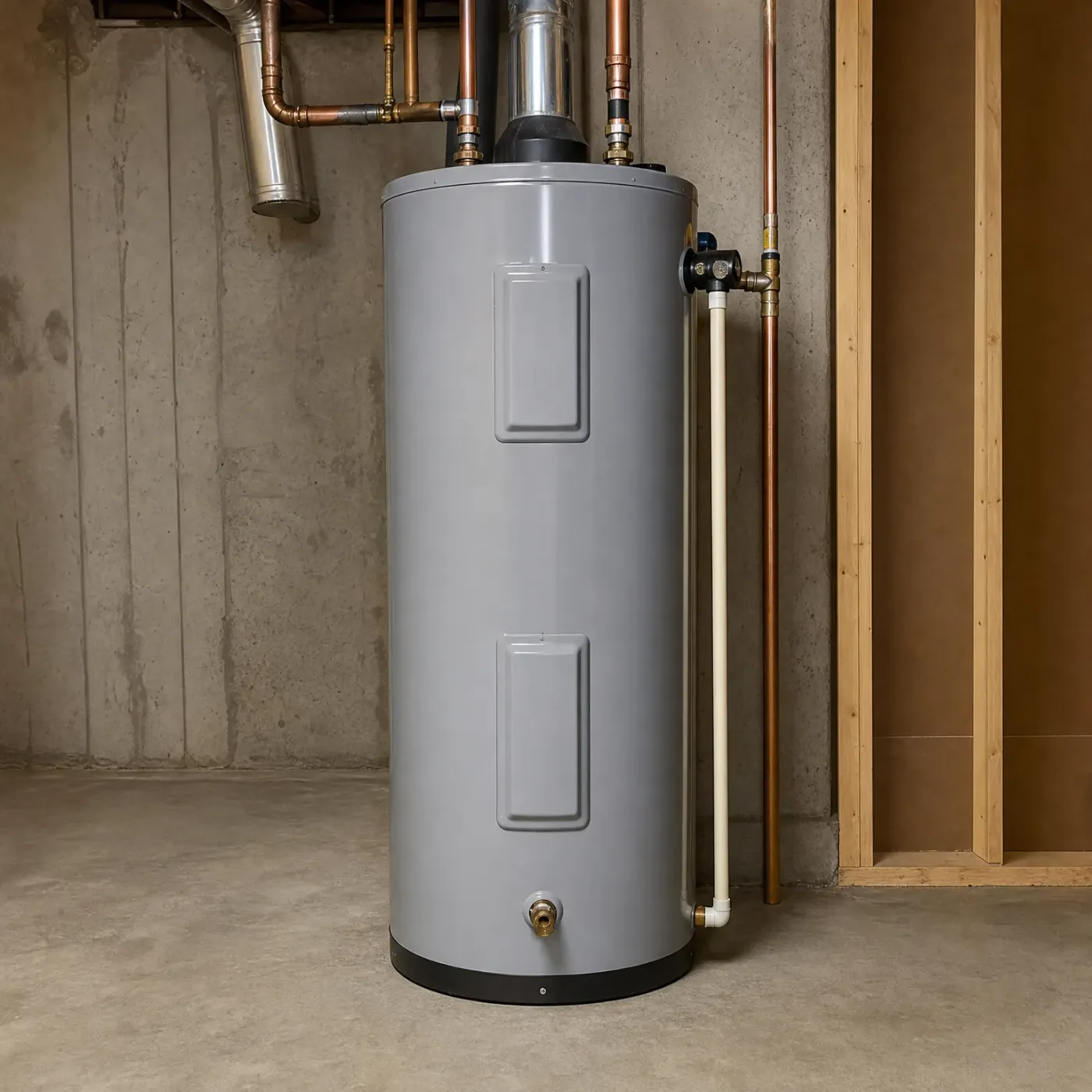
Tank working as it should
No water on the floor. The pressure relief valve on the side stays dry, the access panels are sealed, and the flue vent draws clean at the top. Copper and plastic lines run tight into the fittings with no drips at the joints. This is what a check costs you nothing to confirm.
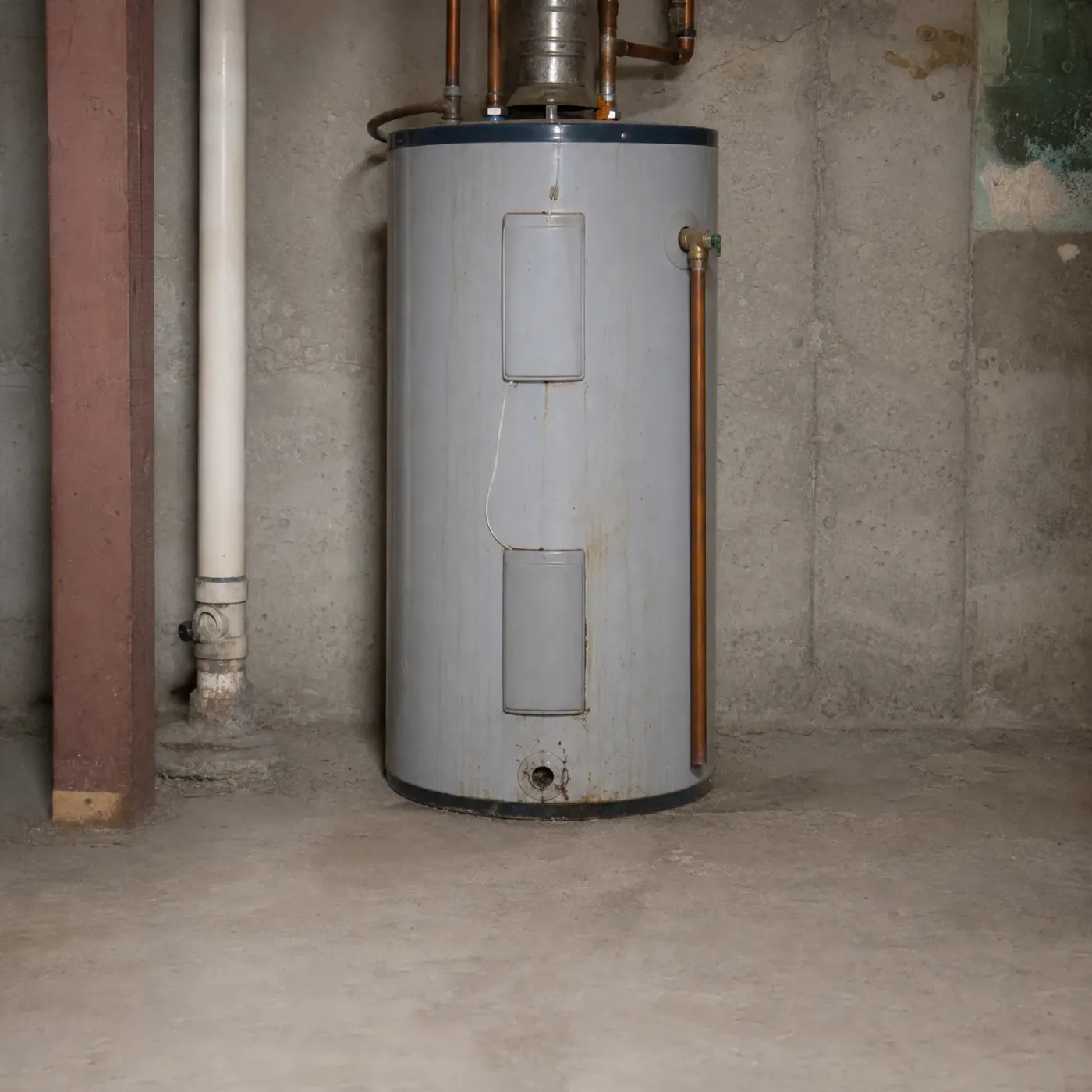
Tank showing trouble
Rust is working its way up the base of the tank, and that's a sign the steel underneath is giving out, not just surface wear. Once rust reaches this point the tank itself may be the problem, not a fitting or a valve. A local contractor who works on these year-round can tell you which one it is.
What's that puddle near your water heater telling you?
Check the floor around the base first. A damp ring on the concrete, a rust-colored stain, or water soaking into nearby boxes or carpet all point to the same problem. Look at the tank itself for sweating or drips running down the side, and check the fittings on top where the pipes connect. If the leak is coming from the bottom of the tank rather than a fitting, that's the steel tank itself failing, and it won't seal back up. A slow leak left alone can warp flooring, soak drywall, and rust out whatever the water heater sits on. If you smell gas near the unit along with the water, that's worth shutting off and addressing right away.
A gas water heater holds water against the inside of a steel tank, and that tank has a glass lining meant to keep the steel from touching water directly. Once that lining cracks, even in one small spot, the steel underneath starts to rust. There's no patching it from inside. Once the tank is rusted through, the only fix is replacing the unit. The anode rod inside is there to slow this by corroding first and taking the damage instead of the tank wall, but it doesn't last forever. If your water heater came with the house and nobody's checked that rod, the tank could be further along than it looks from outside.
A small drip rarely stays small
Water heaters run under pressure, and a fitting or valve that's weeping a few drops a day is under the same strain that will eventually force more through. A loose fitting can sometimes be tightened. A pressure relief valve that's seeping usually means it's doing its job and releasing pressure that's built up too high, which points to a different problem feeding it. Either way, the leak tells you where to look, not how far it's gone. Catching it while it's still a drip, instead of water across the floor, is what keeps a repair a repair instead of a replacement.
A leak that started this week, small enough to catch in a pan, is usually a fitting, a valve, or a drain line you can get to without cutting into the tank. Catching it now is the difference between a repair and a replacement.
A leak that's been going a while, with rust staining the floor or the tank itself damp to the touch, usually means the tank is failing from the inside. No fitting gets tightened to fix that. The tank gets replaced.
59.2% of homes statewide heat with gas
Gas water heaters outnumber electric ones in most Nebraska homes. That matters here because a gas tank has a flue running through the center and a burner underneath, both spots where a leak can hide behind the jacket until water shows up on the floor. Check around the gas valve and burner compartment, not just the top fittings.
ACS 2020-2024 5-year B25040
1
Heat breaks down the glass lining inside the steel tank.
2
Exposed steel starts rusting from the inside out.
3
Rust eats through the tank wall until it pits through.
4
Water seeps out through that pit under pressure.
A leak at the base of your water heater is either a fitting you can tighten or a tank you can't save, and the only way to know which is to have someone look at it before the water damage spreads past the pan. Catching it early, the way you'd want to, usually means a repair instead of a full replacement. A plumber who works on gas water heaters all over Nebraska every week has seen this exact puddle before, on the same tanks, with the same glass lining and the same flue running up the middle, and knows within a few minutes whether it's the pressure relief valve, a loose line, or rust that's already pitted through. You'll be matched with one licensed local contractor for this, not a handful of companies competing for your callback, so the person who reaches out is the one who's actually going to do the work and already knows what to check first.
Water Heater Repair
Matched to your water heater job
Step 1 of 3: Equipment
Say what's going on with your water heater, and a pro who works on them reaches out.
Send the request today and let a water heater pro reach out to you.
Get the water heater repair search off your mind today.
Describe what your water heater is doing once, in one form.
Fill out one short form instead of calling around.
The pro who reaches out is licensed in Nebraska.
Only one pro gets your request, so you hear from one company.