Working the way it should
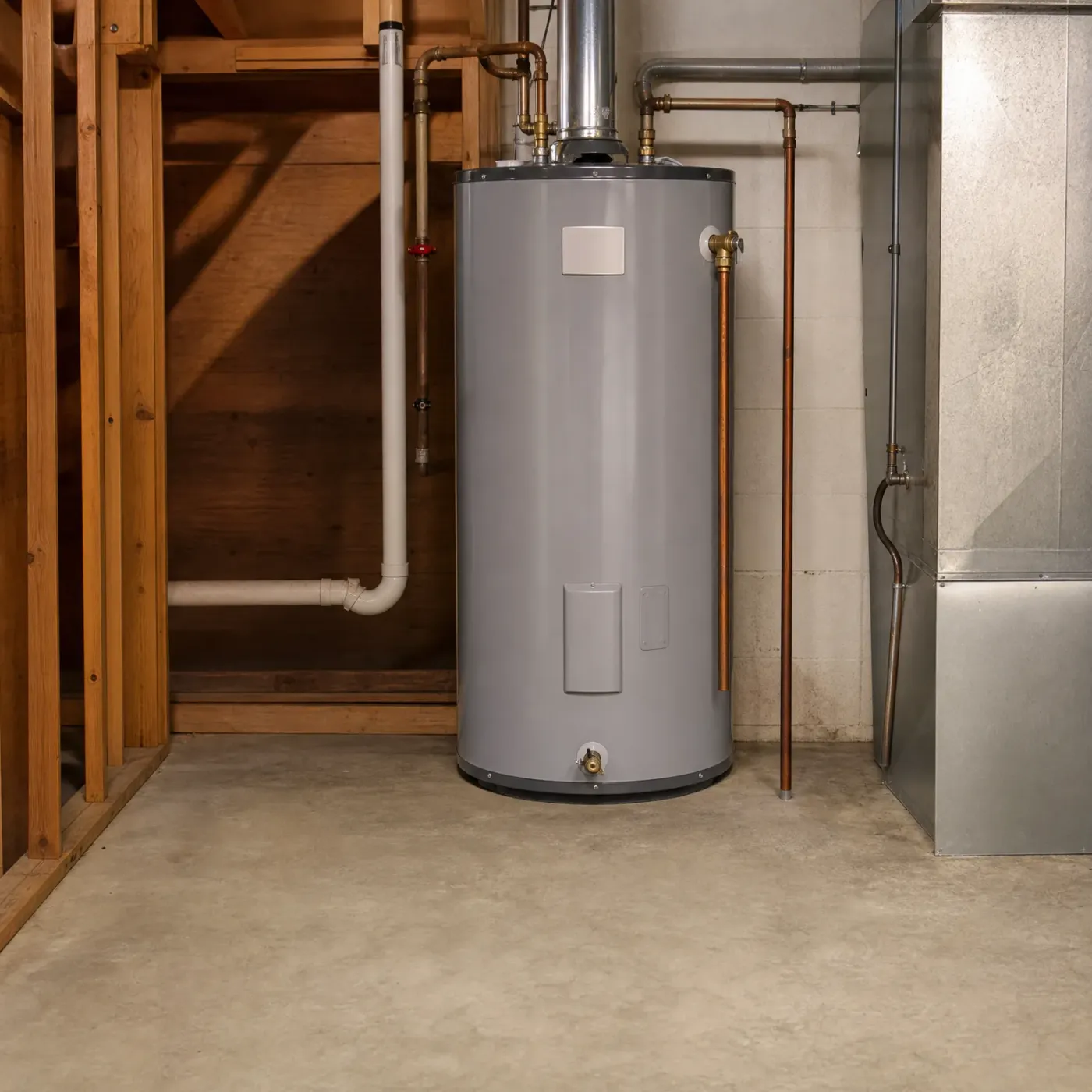
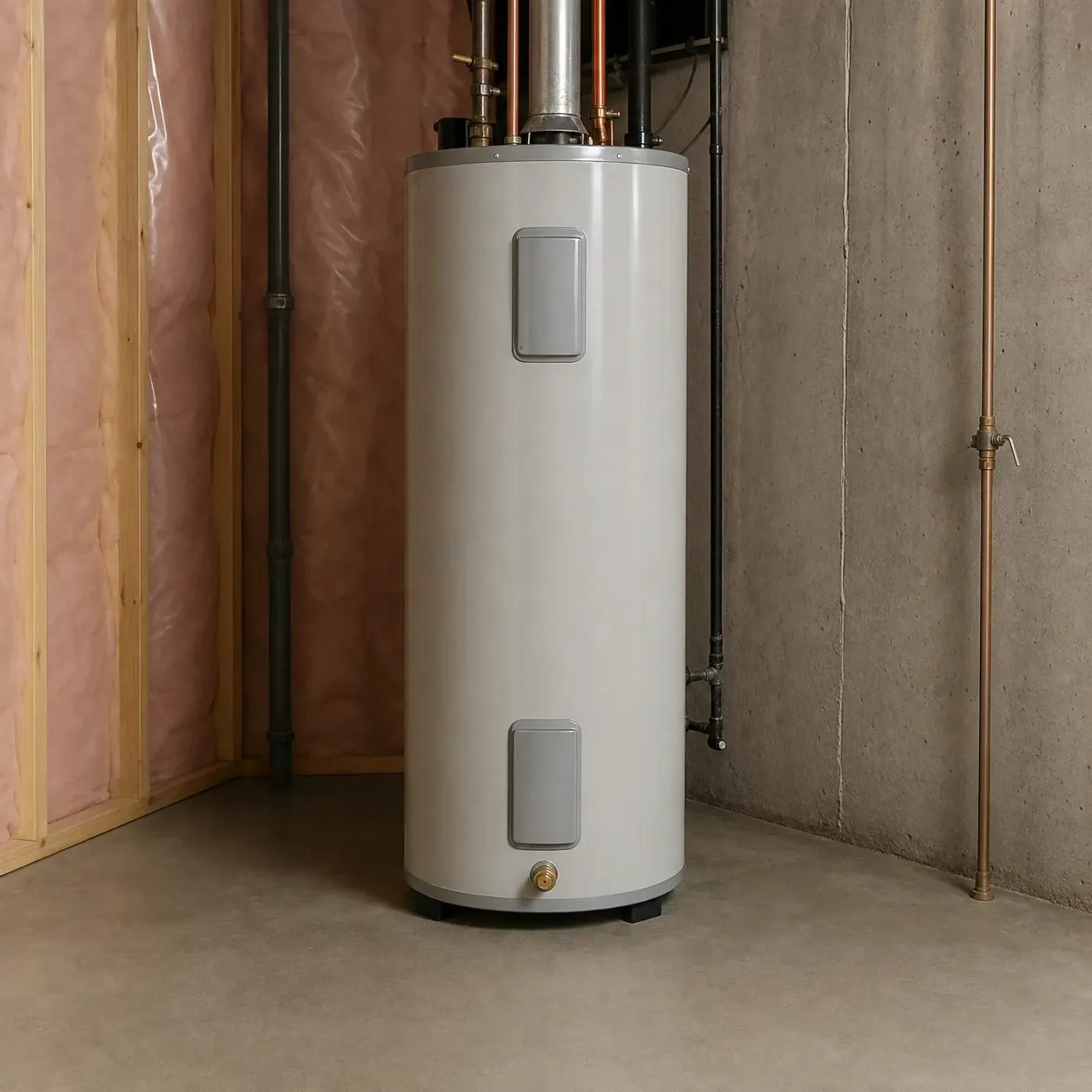
This tank heats the full load and holds it. The relief valve and its copper discharge pipe are doing their job quietly, and the flue at top is drawing exhaust the way it's built to. Nothing here is fighting the burner.

Lukewarm water from a gas water heater usually means the burner isn't staying lit long enough to heat a full tank, or the dip tube or gas control valve is failing. A dirty or weak thermocouple or igniter will let the pilot drop out partway through a cycle, so the tank only half heats before the burner shuts off. Sediment sitting at the bottom of the tank can also block heat from reaching the water above it, which gets worse the longer a tank goes without being flushed. If more than one person is showering back to back, especially with no issue in summer but trouble once the house is running the furnace too, that points to the heater struggling to keep up rather than a one-time fluke. Either way, a water heater that used to run hot and now doesn't has a specific part failing, and it's worth having someone look at the tank itself rather than just turning up the thermostat.




Cold water enters the tank through a dip tube that reaches almost to the bottom, so the burner underneath has to heat the full height of the tank before what comes out the top is actually hot. That only happens if the burner stays running, not just lit. A thermocouple or flame sensor sits in the pilot flame and tells the gas valve it's safe to keep feeding the burner. Once that sensor gets coated or shifts out of position, it reads the flame wrong and the valve cuts gas before the tank finishes heating. Sediment is a separate problem. It settles on the tank floor right where the burner's heat should be going into the water, so the burner can run its full cycle and still leave you with a tank that's only warm. The gas control valve itself can wear out the same way an aging thermocouple does, opening fine but not holding long enough to carry a full cycle. And even a tank that heats correctly can deliver lukewarm water at the tap if the dip tube is cracked or sitting crooked, since that lets incoming cold water bypass the bottom and mix directly into the hot water near the top. A plumber checks these in order, starting with what's fastest to rule out, rather than guessing at parts to replace.
You'll likely notice it first in the shower, when the water turns cool before you're done rinsing off. That's the tank running out of fully heated water partway through, not just a slow heater. If the dip tube inside the tank has cracked, cold water is mixing in near the top, so it's not only showers, every faucet in the house runs cooler than it should. A pilot or burner that drops out mid cycle doesn't fix itself. It tends to repeat, and each time it cuts out, you get a little less hot water than the cycle before. Left alone, a failing gas control valve can worsen over weeks, so lukewarm water now can turn into no hot water later. And a burner struggling to stay lit puts extra strain on the thermocouple and igniter, the parts that keep it lit in the first place, which is how one worn part turns into two. None of this shows up as a higher gas bill, since power here is cheap and gas even more so. It shows up as water that won't stay hot.


The pro who reaches out is licensed in Nebraska.
No fee to send it, and nothing to sign.
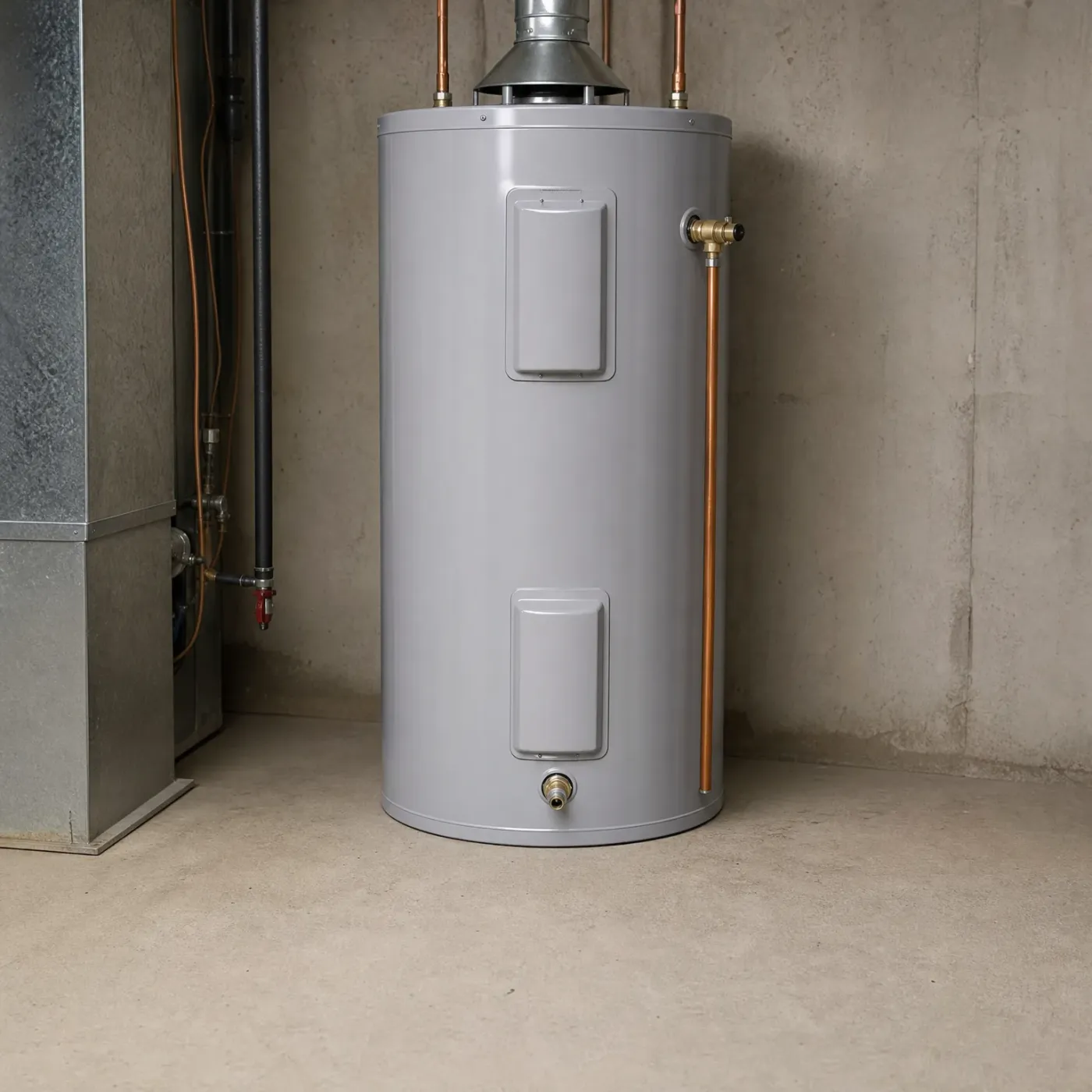
This tank heats the full load and holds it. The relief valve and its copper discharge pipe are doing their job quietly, and the flue at top is drawing exhaust the way it's built to. Nothing here is fighting the burner.
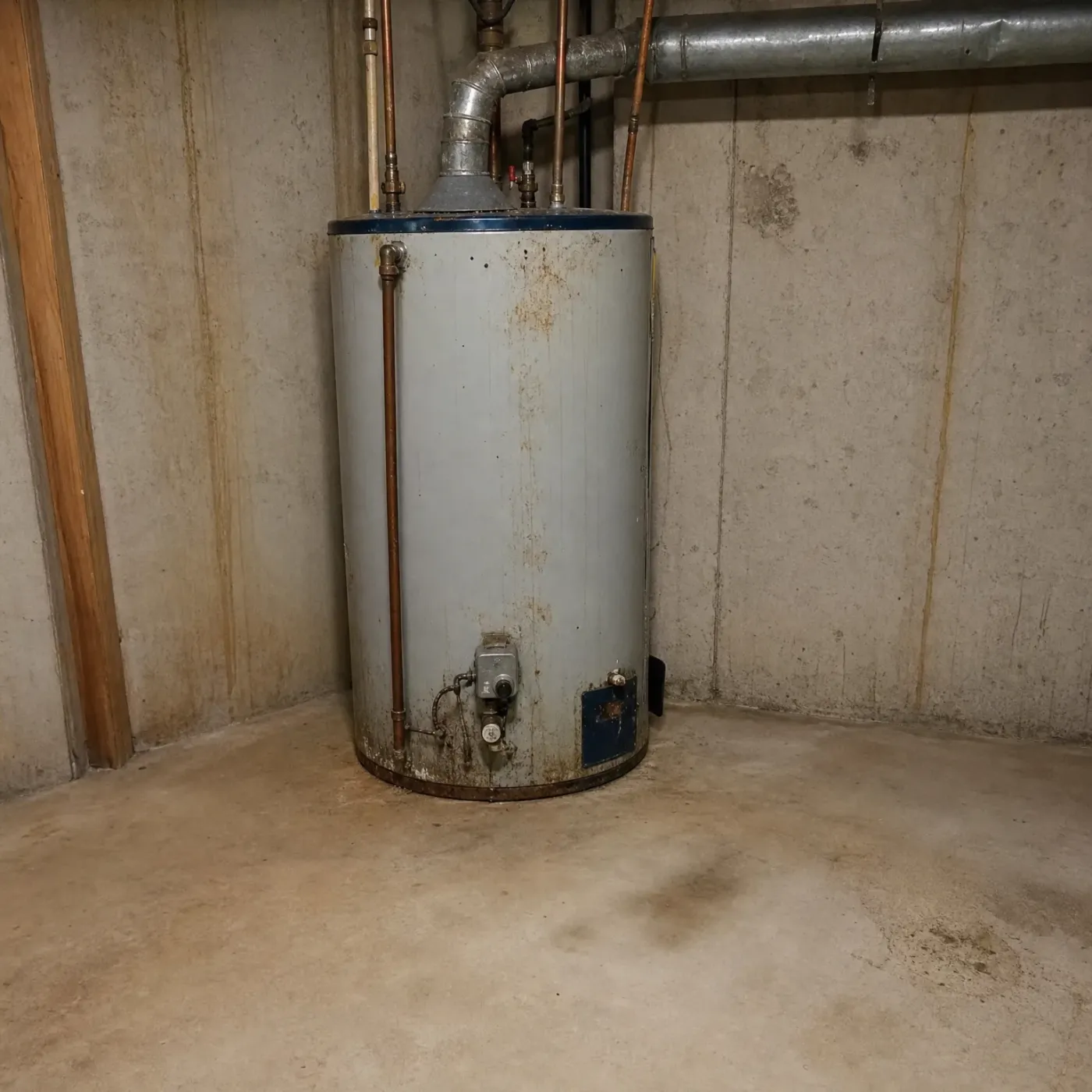
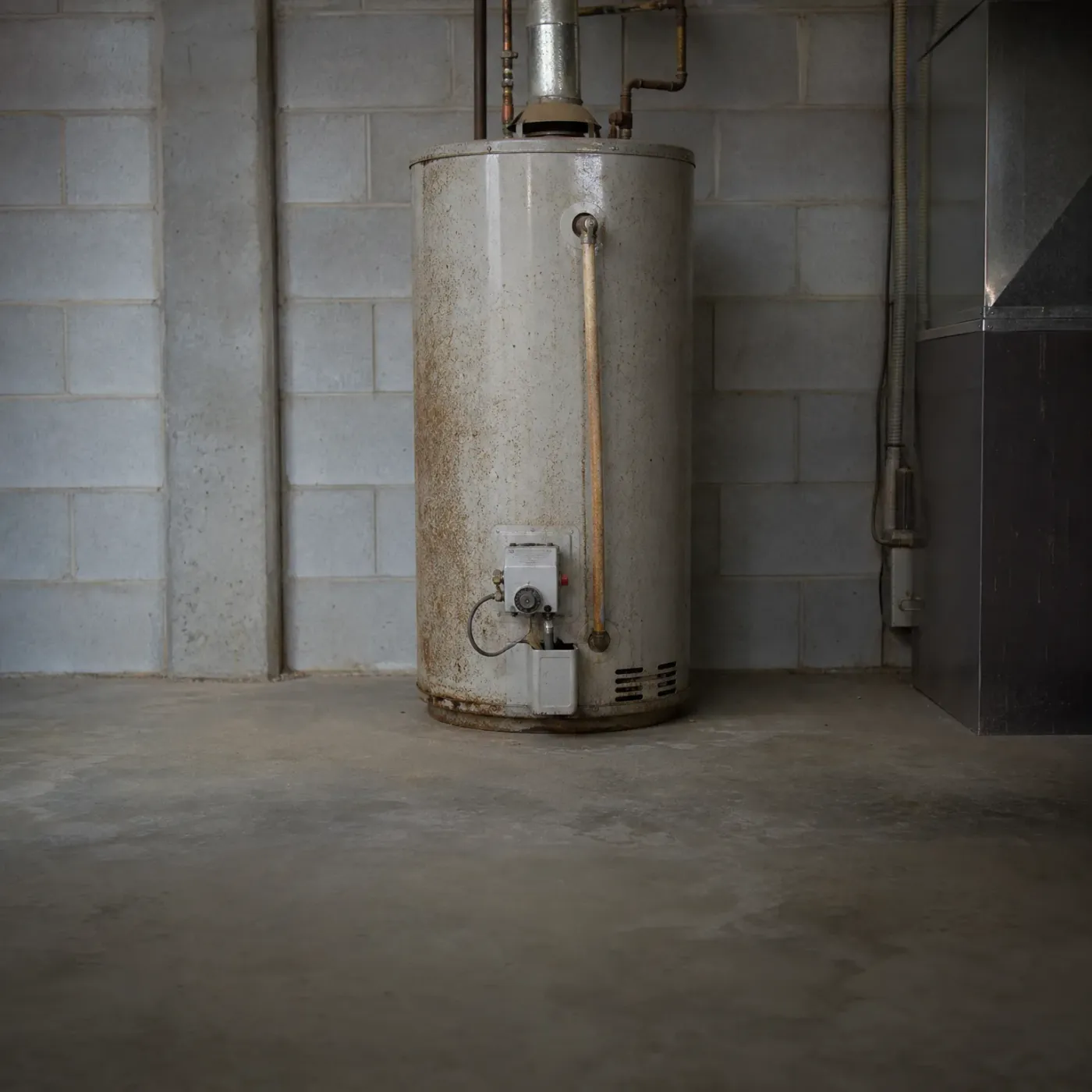
Rust like this on the tank body and the floor beneath it points to a leak that's been going on for a while, not a bad thermocouple. A tank in this shape is why water runs cold partway through a shower, and it won't come back with a repair.
You run the tap and it's warm at first, then it fades before you're done rinsing off. Someone showers after you and gets barely anything. You might hear the burner cycling on and off more than it used to, or notice the pilot area smells faintly of gas. Dishes don't get properly hot water either, even though the tank is full size and worked fine last year. Left alone, a burner that won't stay lit tends to get worse, not better, and a tank that struggles to heat a full load is working harder each time it tries.
Cold water enters the tank through the dip tube near the bottom.
The thermocouple or igniter confirms the pilot or burner flame is lit.
The gas control valve opens and keeps fuel flowing to the burner.
The burner heats the water as it rises through the tank.
Most houses in Nebraska run on gas, and a gas water heater is a mechanical thing: a pilot or igniter, a control valve, a burner. Lukewarm water almost always traces back to one of those parts failing, not the gas itself. A tech who works on these year-round can usually tell which one from how the water fails.
ACS 2020-2024 5-year B25040

Monday, a little before seven. You've got the shower running while you find a clean towel, and you step in expecting it to be too hot for a second the way it usually is. It isn't. It's warm, barely, and the mirror hasn't fogged at all. You stand there rinsing shampoo faster than you'd like, hoping it climbs back up, but it keeps fading instead. By the time you shut it off your shoulders are still cold. The towel on the rail was supposed to be the easy part of this morning. Downstairs, the dog's barking and someone's asking if the coffee's ready, and you're doing the math on whether there's enough hot water left for anyone else to go after you.

A gas water heater that can't hold heat isn't wearing out all at once. It's a thermocouple, an igniter, a gas control valve, or a dip tube that's gone, and a tech who works on these tanks knows which one by how the water fails: all at once, partway through, or slow over a week. That's a diagnosis, not a guess, and it's the kind of job you want done once, by someone who knows gas water heaters and does this every week, not a string of callbacks.
Finding that person is usually its own chore. You'd be searching listings, calling a few companies, explaining the same thing about your shower going cold three times over, then sitting with quotes trying to guess which one is honest. Here you get matched with one licensed Nebraska contractor who already knows what tends to fail in tanks like yours, and you tell the story once.






Only one pro gets your request, so you hear from one company.
Sending the form costs nothing.