Get Hot Water Nebraska
Profile view of a bearded man wearing a black baseball cap and a dark gray T-shirt against a plain light background.

Why you run out of hot water fast in Nebraska

Step 1 of 3: Equipment

Running out of hot water fast usually means your water heater's tank is too small for how your household uses it now, or the burner isn't heating the incoming water the way it used to. In most Nebraska homes, that's a gas water heater, and when the burner struggles, the main causes are sediment built up on the bottom of the tank or a dip tube that's broken down inside. Sediment sits between the gas flame and the water, so the burner runs but the heat doesn't transfer, and a hot shower turns cold halfway through even though the heater fired up fine. A cracked dip tube lets incoming cold water mix straight into the hot water near the top of the tank instead of going to the bottom to be heated first. Either way, the tank reads full but the water coming out isn't actually hot. If this has been getting worse over weeks rather than happening all at once, that points to sediment buildup rather than a sudden part failure.

A woman in a gray turtleneck sweater stands by a window looking outside at snowy ground, with a dimly lit living room containing a sofa, shelves, lamp and a lit candle behind her.
A woman in a cream cable-knit turtleneck sweater stands in a warmly lit living room with a fireplace and shelves behind her, looking out a window toward snow-covered trees and a railed deck.
A woman in a cream knit turtleneck sweater stands by a window looking out at snow, with a lit fireplace, sofa and lamp in the room behind her.
A woman in a gray knit sweater sits by a window looking out at falling snow, with a dimly lit living room containing a sectional sofa, pillows, a lamp and houseplants behind her.

40 to 50 gallon tanks are standard in most Nebraska homes

A tank sized for the household that used to live there often falls short once more people, showers, or laundry loads get added in.

Find a licensed pro

Sediment builds up at the bottom of the tank over time

A gas burner has to heat through that layer first, so recovery slows down even though the thermostat setting hasn't changed.
Find a licensed pro

Sediment or a Weak Burner

Sediment buildup

  • Sediment settling at the bottom of the tank acts as a barrier between the burner and the water, so the burner runs longer to reach the same temperature.
  • A layer of sediment shrinks the space left for actual hot water, even though the tank is still rated for 40 or 50 gallons.
  • You might notice popping or rumbling from the tank, which is water boiling under that sediment layer.
  • Flushing the tank clears the sediment, but if it's built up for years, a technician may find scale damage to the bottom of the tank itself.
  • This tends to show up gradually, so the hot water doesn't run out all at once, it just happens sooner each month.

Failing burner or igniter

  • A weak burner flame heats water slower than it used to, so the household draws down the tank faster than the burner can recover it.
  • A dirty or failing igniter can cause the burner to cycle on and off instead of staying lit, which cuts into recovery time.
  • You'll notice this as hot water that used to last through two showers now running cold partway through the first.
  • A gas valve that isn't opening fully starves the burner of fuel, so it never reaches full heat output.
  • This usually gets worse over weeks, not overnight, since the burner degrades a little more each time it fires.
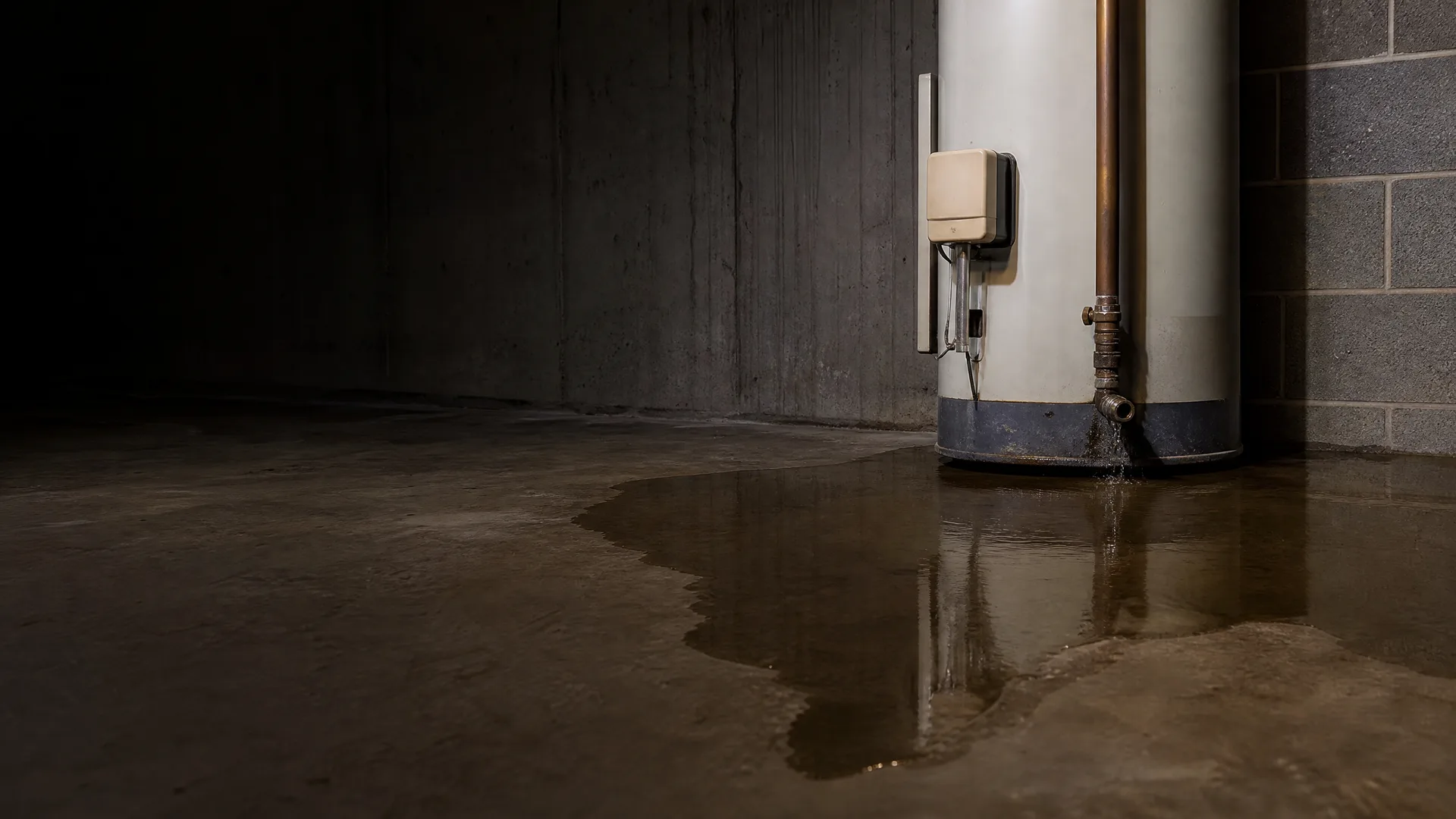
A water heater tank with copper piping and a drain valve stands against a concrete and block wall in a dim basement, with a large puddle of water spreading across the floor.

Saturday morning, laundry going, and you head down to the basement to switch loads. That's when you see it: a thin ring of water spread out around the base of the tank, soaking into the concrete. The heater's still running, you can hear it, but the floor near the drain pan is wet and the pan itself is overflowing a little at one corner. You crouch down and the metal along the bottom seam feels damp to the touch. Nothing's dripping from the pipes above it. It's coming from the tank itself. You turn off the laundry, set a towel down, and go find the number for someone who works on these for a living, because a gas water heater that's leaking from the tank isn't something that waits until Monday.

Get your water heater to the right pro

The pro who reaches out is licensed in Nebraska.

You only hire the pro if you want to.

A burner that can't keep up still runs every time you turn on the tap. It fires, it heats what it can, and the hot water still runs out halfway through a shower.

A failing burner gets caught early by someone who checks it before it quits. A local contractor who works on gas water heaters all year knows what a weak burner looks like before it leaves you without hot water.
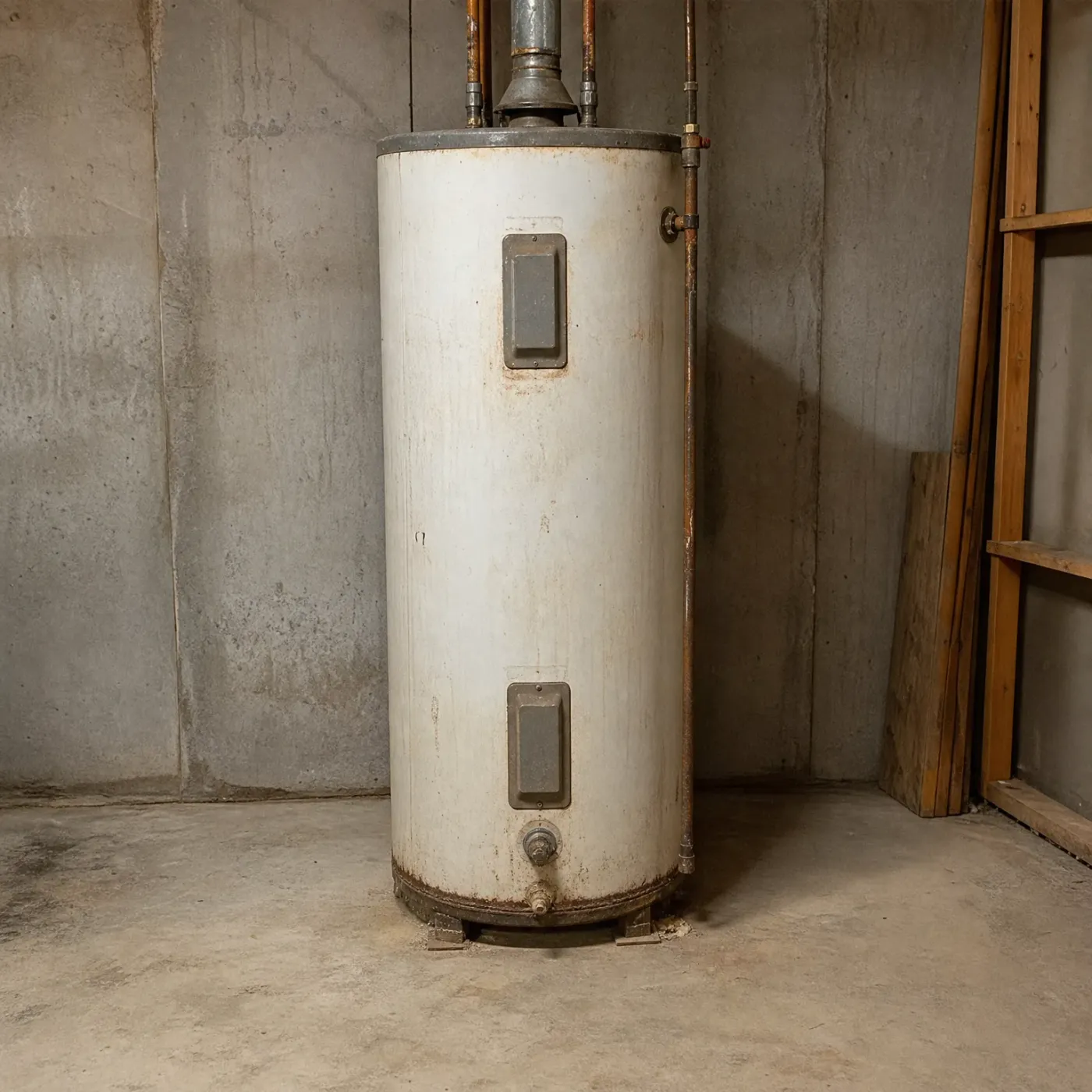
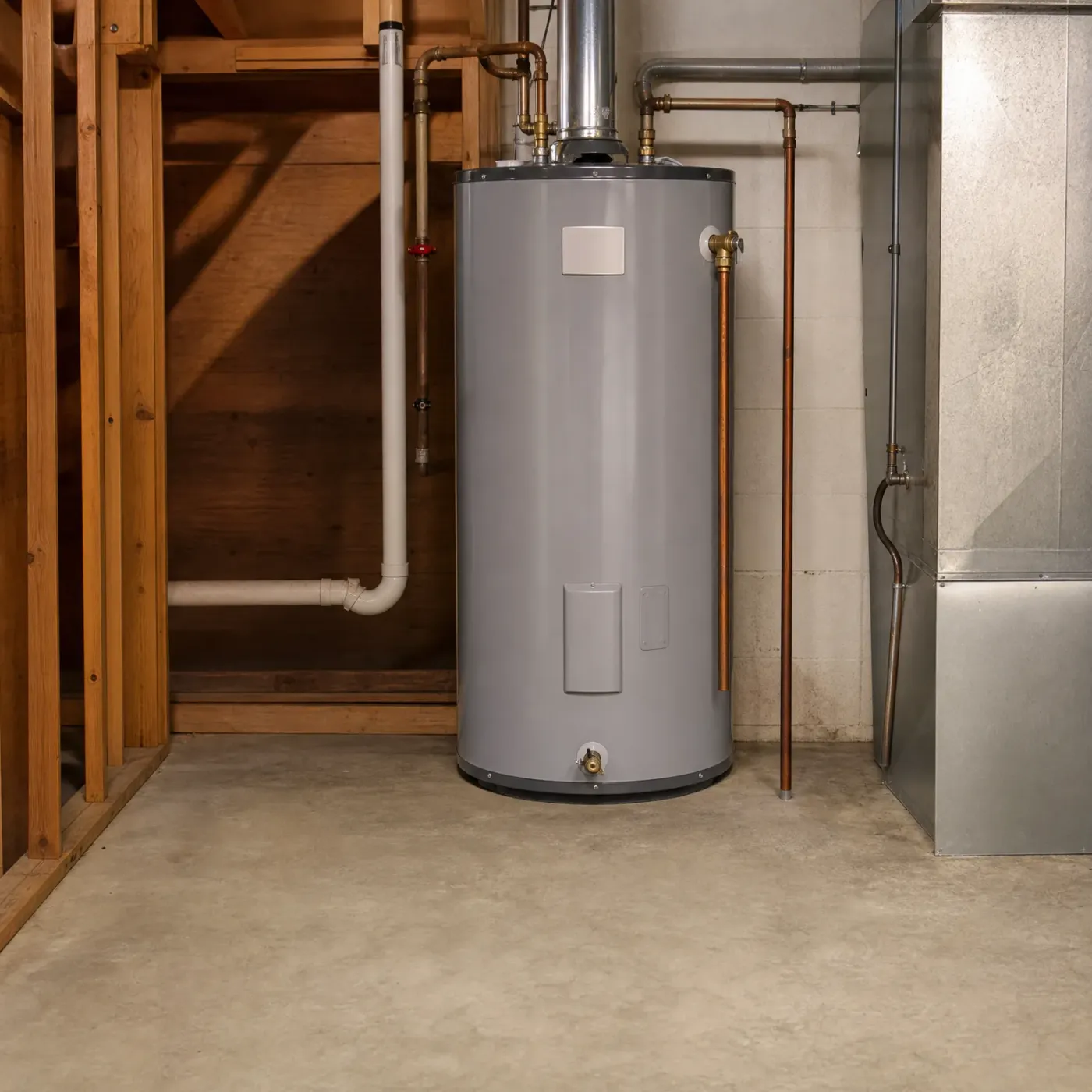
A rusted white cylindrical water heater with two access panels stands in a concrete-walled basement corner, with pipes rising from its top and wooden boards leaning against the wall at right.
Before you get your water heater repair
A gray cylindrical water heater stands on a concrete basement floor between an unfinished wood stud wall and a metal furnace duct, with copper and PVC pipes running along the concrete block wall.
After you get your water heater repair

Cold water comes into the tank through a dip tube that puts it down near the burner, at the bottom. The burner fires in cycles underneath the tank, heating that water from the bottom up until the thermostat is satisfied. Hot water leaves from the top, so the first part of a shower is drawing on water heated a while before, not water the burner is making right now. As long as the burner keeps pace, that handoff is seamless. Once it can't, cold water starts mixing in sooner, and the temperature at the tap falls off faster than it used to. Part of that can trace back to a thermocouple or flame sensor reading wrong, which makes the burner shut off early or run short cycles, so less water gets heated each time it fires. Over years, the anode rod inside the tank wears down too. Once it's gone, the tank itself starts corroding from the inside, which is a separate problem from the burner but shows up the same way, at the tap.
How your tank actually heats water

  • Gas water heaters pull cold water in through a dip tube that runs down near the bottom of the tank, close to the burner.
  • The burner sits under the tank and fires in cycles, heating water from the bottom up until the thermostat reads the set temperature.
  • Hot water draws off the top of the tank, so the first few minutes of a shower are using water heated earlier, not water heated right now.
  • Once the burner can't keep pace with how fast hot water leaves the top, the incoming cold water mixes in sooner and the temperature drops.
  • A thermocouple or flame sensor that's reading wrong can cause the burner to shut off early or cycle short, leaving water underheated before it ever reaches the tap.
  • The anode rod inside the tank corrodes over years of use, and once it's spent, the tank itself starts to wear from the inside.
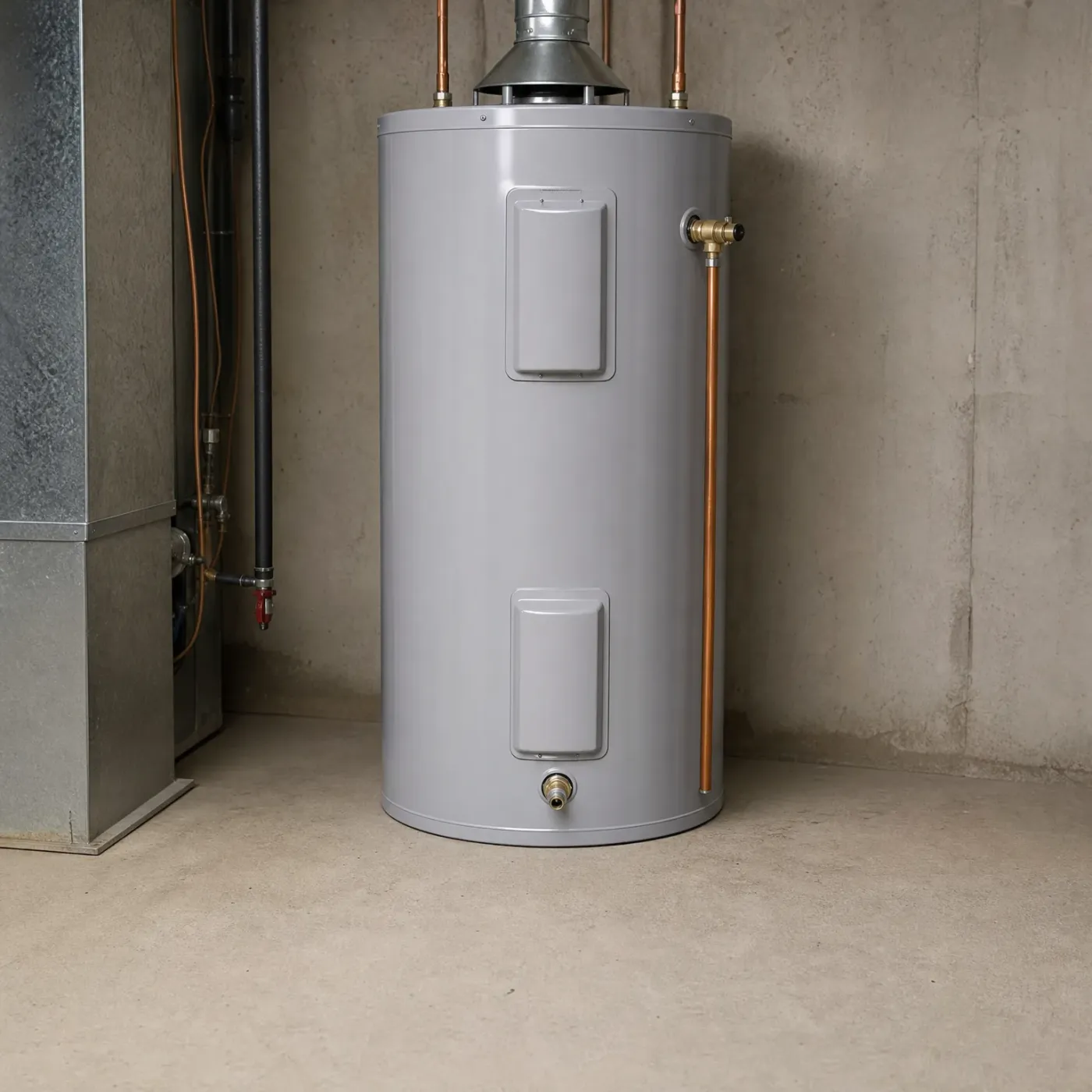
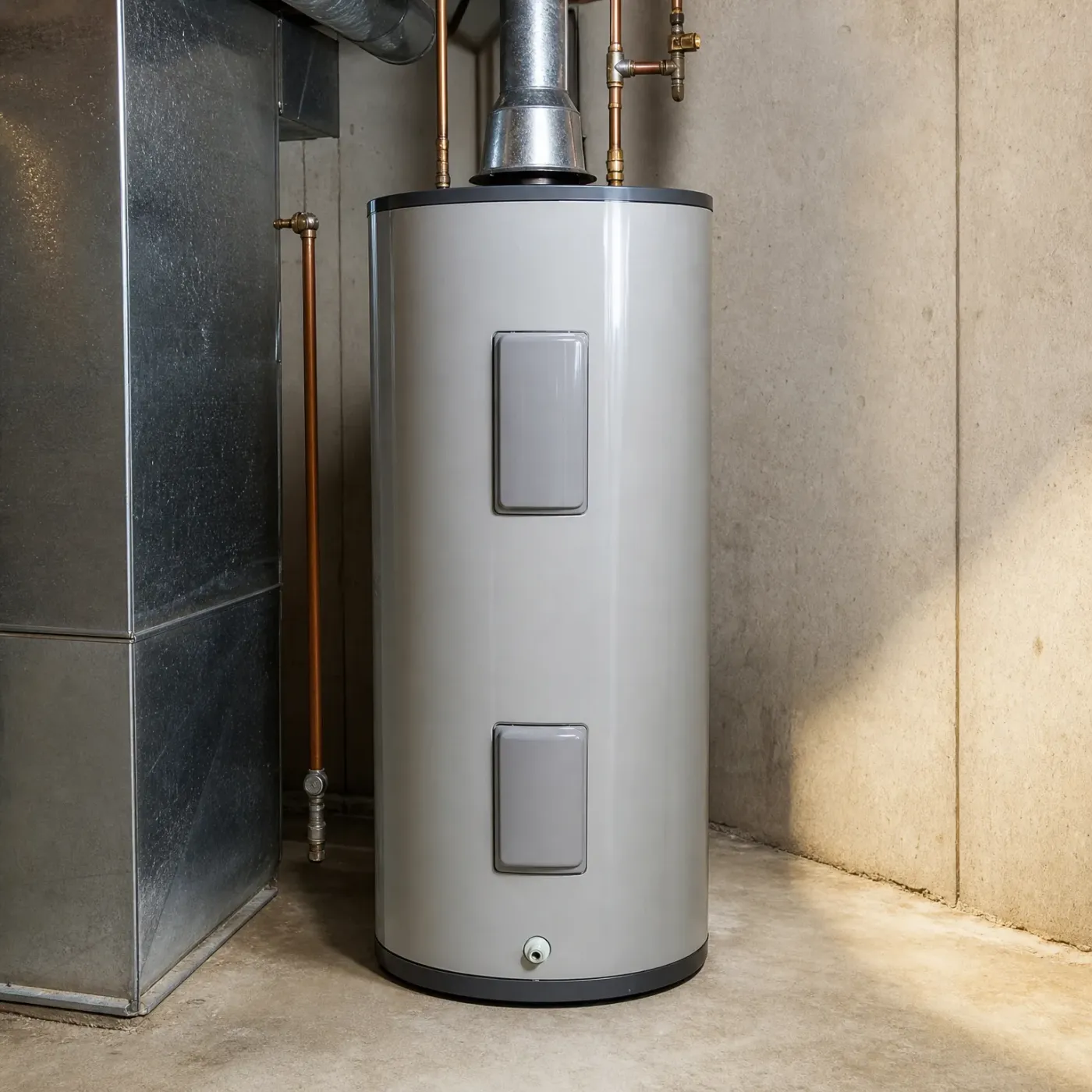
A gray cylindrical water heater with copper piping and a flue stands on a concrete floor in a basement corner beside ductwork and metal equipment.
A water heater working the way it should: burner cycling on and off as the thermostat calls for it, tank holding its temperature.
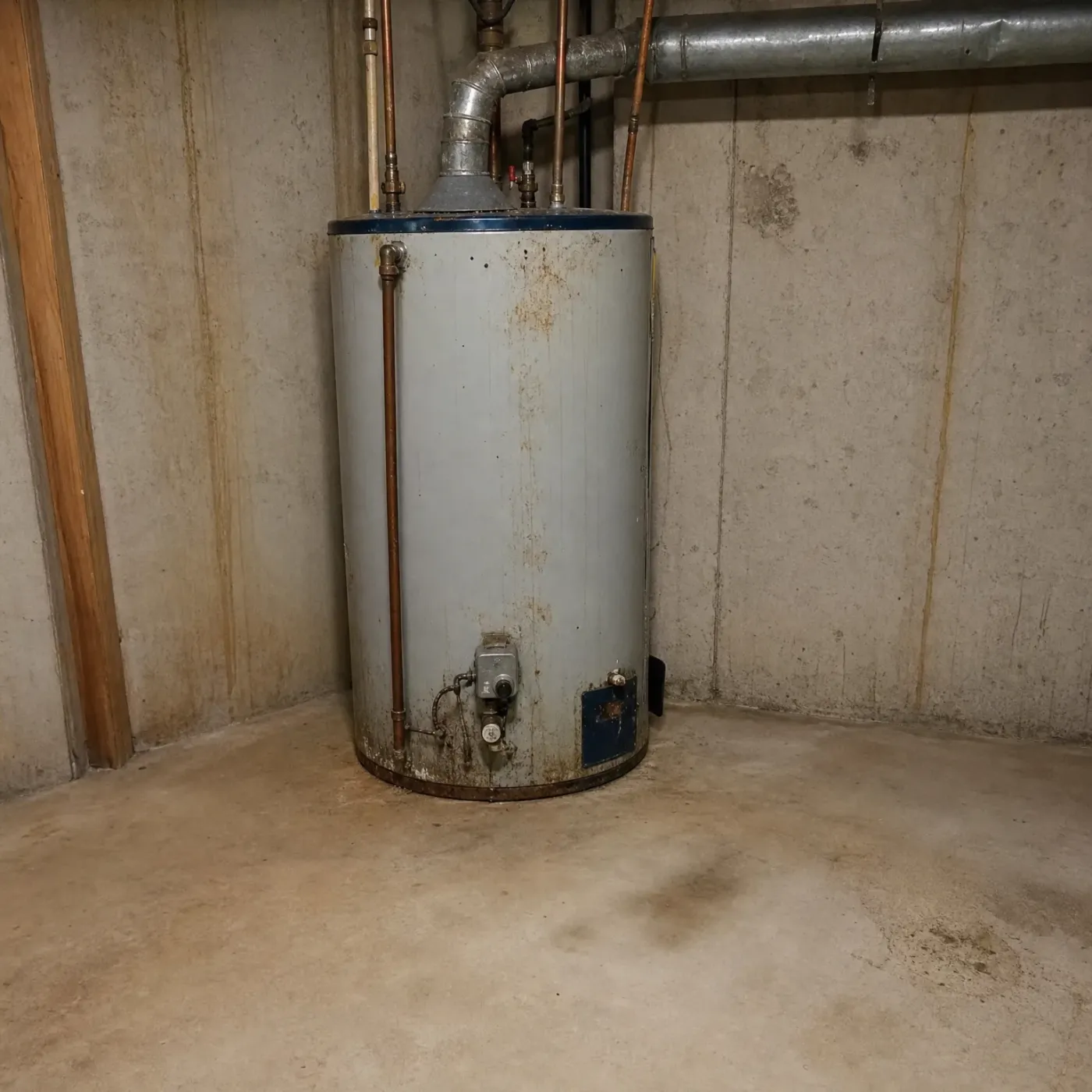
An aging gas water heater with rust streaks stands in the corner of a concrete-walled basement, with copper pipes and a metal flue duct running overhead.
Rust on the tank and staining on the floor mean the tank is failing from the inside, and no repair brings a tank back from that.
  1. Cold water enters the tank through the dip tube first.

  2. Burner fires beneath the tank until the thermostat is satisfied.

  3. Heat rises, so the hottest water sits at the top.

  4. Hot water draws off the top as you run the tap.

A bearded man in a plaid flannel shirt stands in a kitchen looking out a window toward snow-covered shrubs, with a steaming mug on the windowsill and potted plants on a shelf behind him.
A smiling man with dark curly hair in a navy t-shirt sits on a gray couch indoors, with a large-leafed plant and a window in the background.
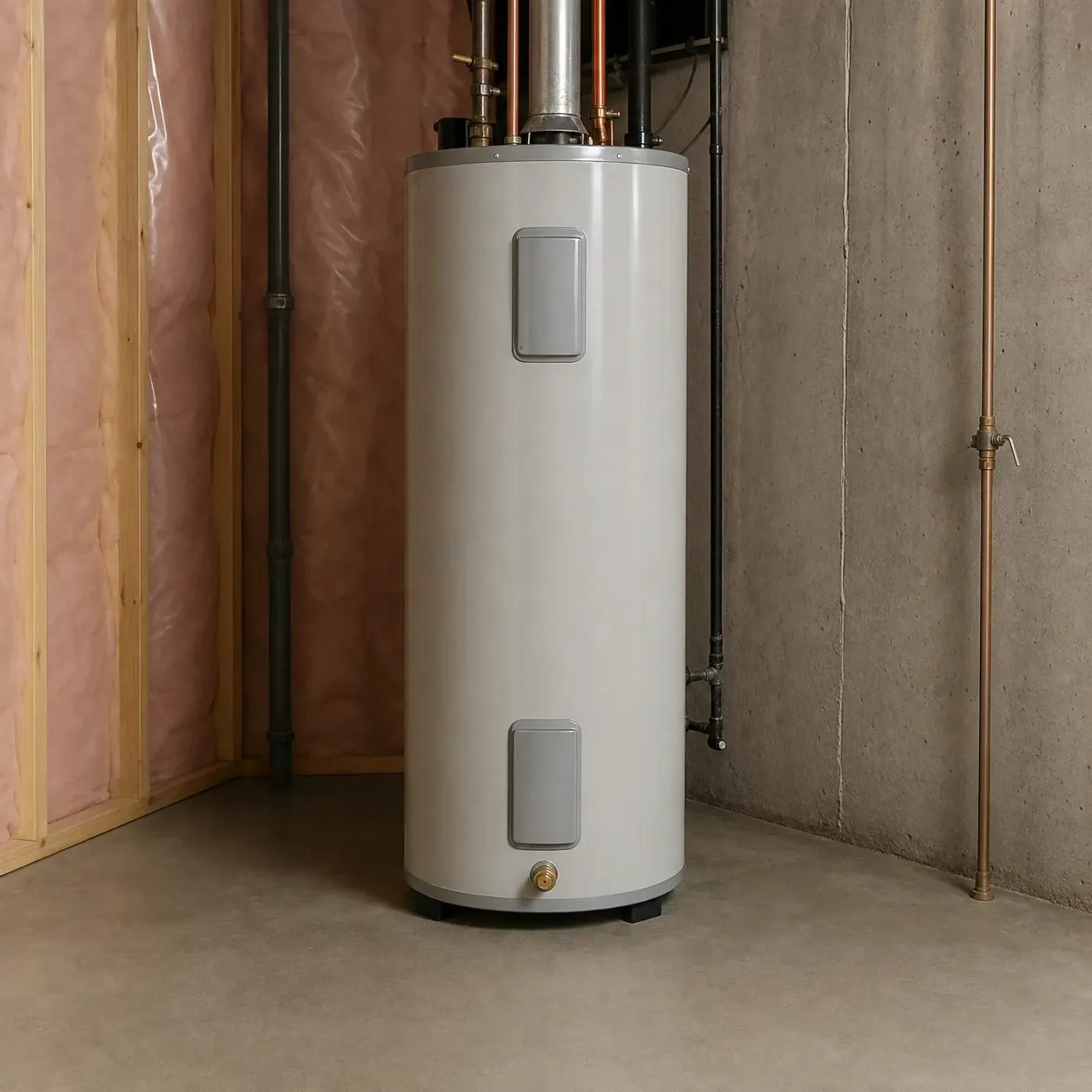
A white cylindrical water heater with two access panels and a brass drain valve stands on a concrete floor in a basement corner, beside a pink-insulated stud wall and a concrete wall with copper and black pipes.

Still doing its job

This is what a water heater looks like when it's keeping up. The tank holds its heat, the pipes run clean, and nothing around it shows a stain. If yours looks like this, a slow burner or a small tank is more likely than a tank on its way out.
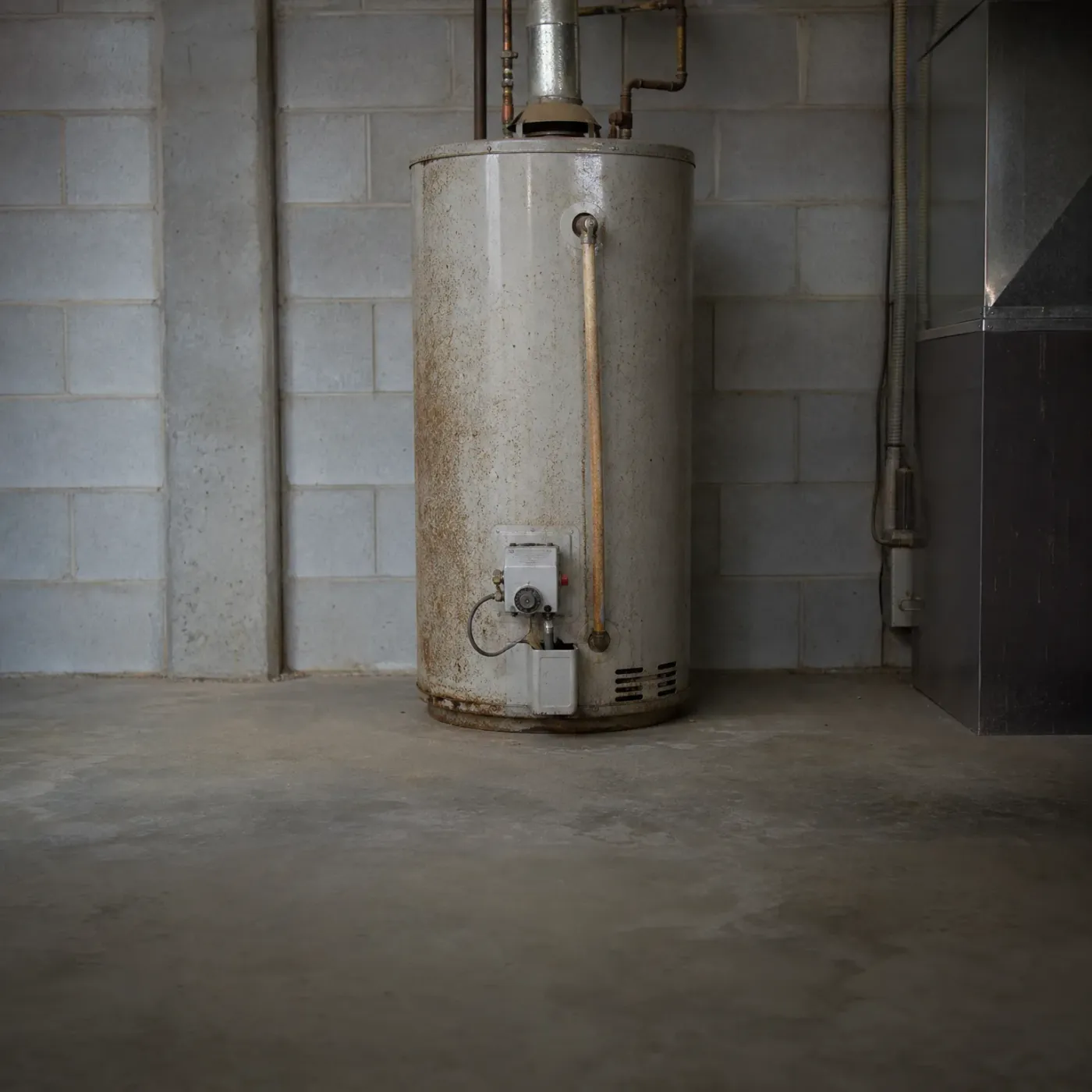
A rusted gas water heater with a flue pipe stands against a concrete block wall on a bare concrete floor, next to a dark metal duct or furnace cabinet at right.

Rusted through

This tank has gone past the point a repair can fix. Rust like this eats through steel from the inside, and once it reaches the outside, the tank is failing, not just struggling. A contractor who sees this on a call checks for that before anything else.

59.2% of homes statewide heat with gas

Most homes in Nebraska heat with gas, and that includes the water heater. A gas burner that's slow to fire or losing output still runs the tank dry just as fast as one that's undersized, so the fix isn't always a bigger tank. Sometimes it's the burner itself.

ACS 2020-2024 5-year B25040

A woman in a cream cardigan and jeans stands with one hand raised facing an open front door of a gray horizontal-siding house, with a black lantern wall light, a potted shrub with yellow flowers, and a stone-faced porch column.

A water heater that can't keep up tells you so

Running out of hot water fast comes down to one of two things. Either the tank was never sized for what your household asks of it now, or the burner underneath it has lost enough output that it can't heat water as fast as you're using it. Sediment makes that burner work harder than it should, and a stain on the floor means the tank itself is done. None of that gets better on its own.

A local contractor who works on gas water heaters all year has seen every version of this, from a burner that's just slow to one that's barely firing. You'll be matched with one who takes on jobs like yours, and they'll reach out to look at your tank, your burner, and how your household actually uses hot water before saying what it needs. One contractor, not a handful calling you back at once.

A living room corner with a beige upholstered armchair holding navy and striped cushions, a small round wooden side table with a carved bowl and a potted green plant, a framed landscape picture on a pale wall, built-in shelving, and a curtained window.
A gray cylindrical water heater with two access panels stands on a concrete floor in a basement beside metal ductwork, with copper pipes and a vent duct above.

The right pro for this job

Get a licensed local pro

Only one pro gets your request, so you hear from one company.

Asking costs nothing, and the choice to hire stays yours.