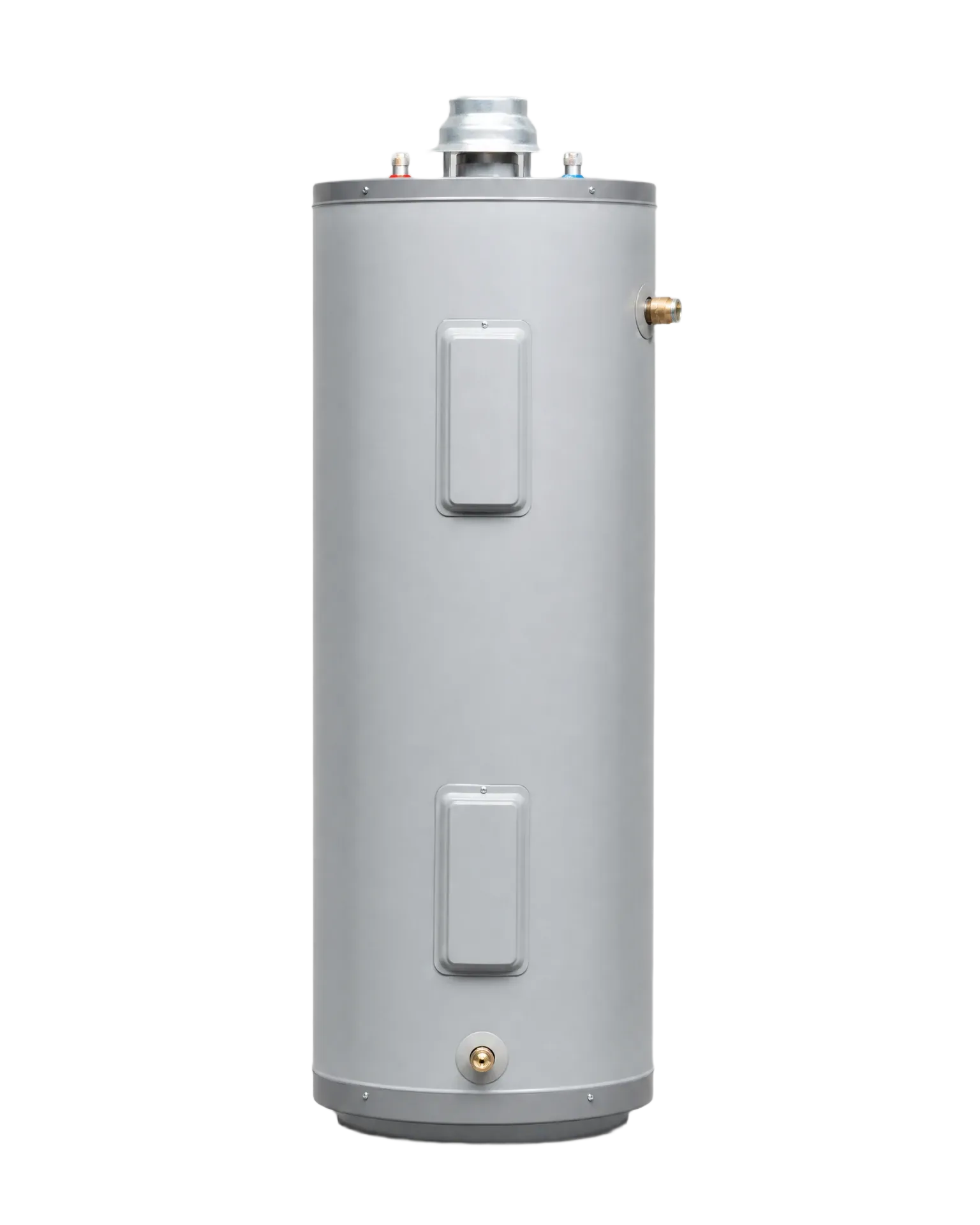
Working as it should
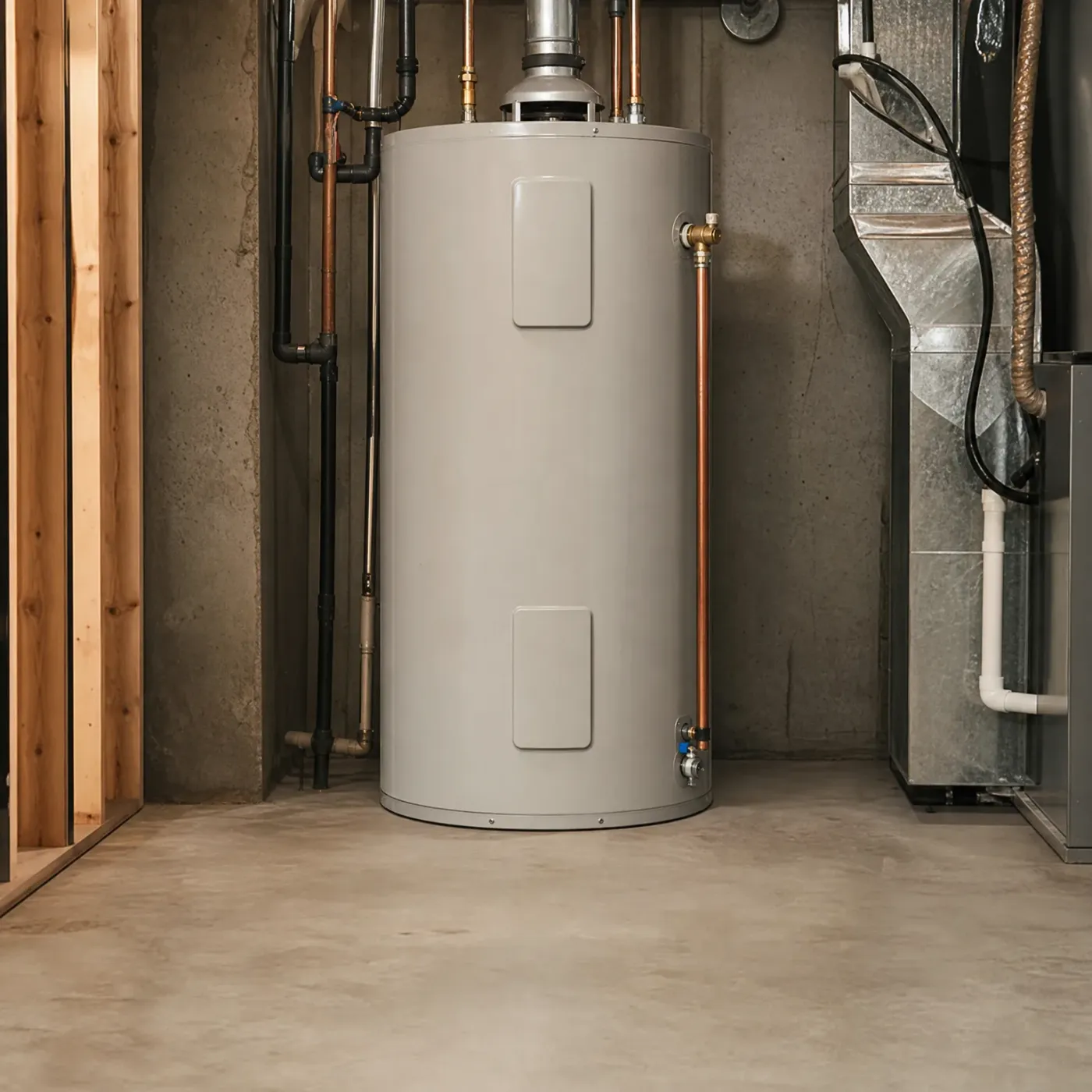
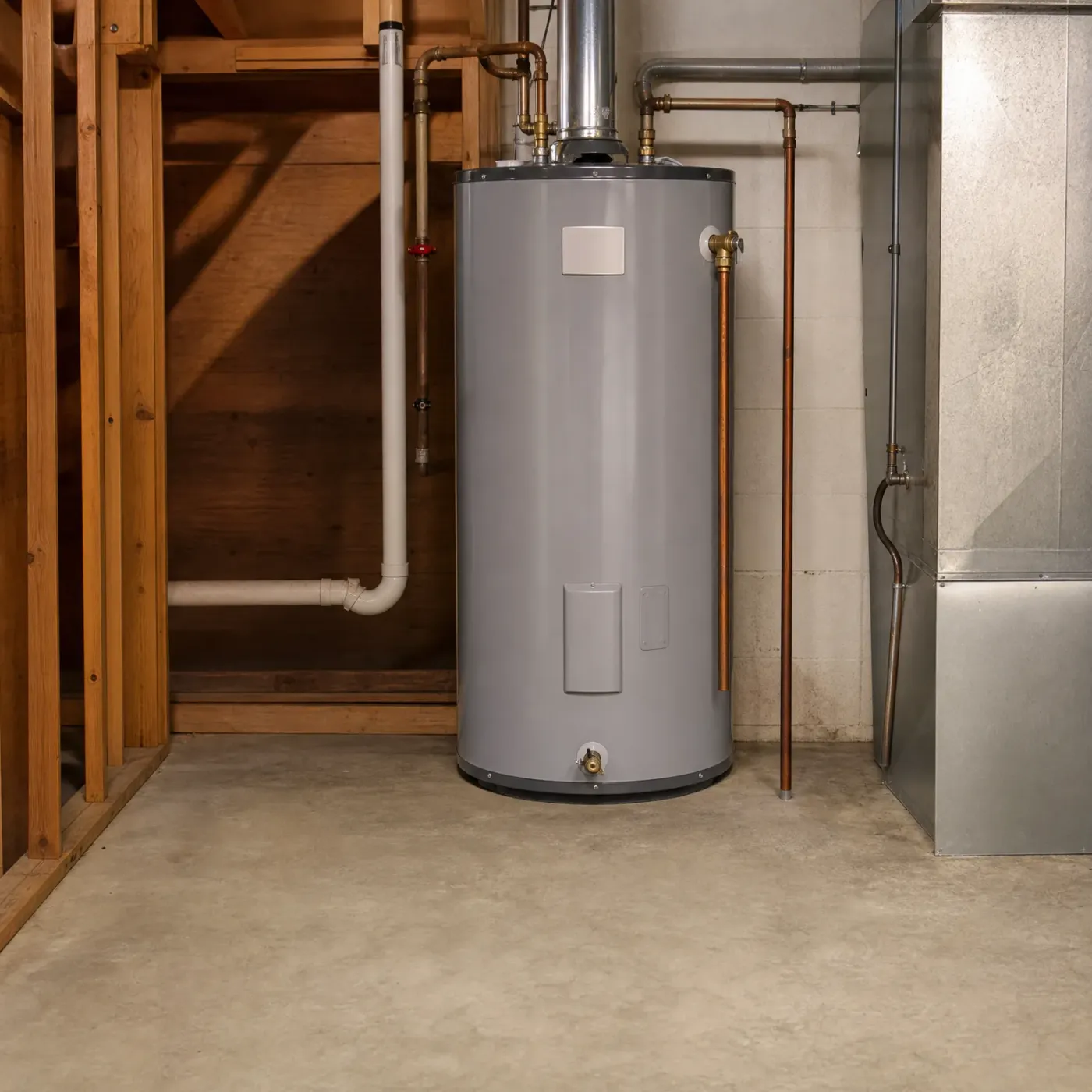
This one heats on schedule, with copper fittings tight and no rust on the tank or the relief valve. The pipes to the furnace and the rest of the basement stay dry. Nothing here points to a failure coming soon.
Most water heaters last about 10 to 12 years, and in Hall County that's usually the number that decides it rather than any single breakdown. The tank itself is what gives out, the steel liner rusting through from the inside until it starts to weep at the seams or the bottom, and once that starts there's no patching it. Past that age, a repair bill on a gas water heater is worth comparing to the cost of a new one, since the next part to fail might be the tank itself. Watch for rusty water, a pool forming at the base, or a unit that can't keep up with hot water like it used to. If yours is near that age and the water isn't as hot as it used to be, or the tank makes a rumbling sound when it runs, that's your sign. Waiting past that point usually means dealing with a flooded closet or utility room instead of planning the swap on your own schedule.


Every tank water heater has a glass or ceramic lining over the steel, and that lining is what keeps the water from eating the metal. An anode rod hangs inside the tank for the same reason, drawing corrosion to itself instead of the tank wall. That rod wears down over years of doing that job, and once it's spent, the steel has nothing left protecting it. From there, corrosion moves to the tank itself, and a tank doesn't get patched or resealed once it starts leaking from the body rather than a fitting. Sediment adds to the problem from the other direction. It settles at the bottom of the tank over time, and the burner or the elements have to work through that layer to heat the same water they always did. That's often what's behind a bill that's crept up with no other explanation. None of this shows up as one dramatic failure. It's a slow trade, lining to rod to steel, and by the time water is on the floor, the tank has been losing ground for a while.




2.51 people per household on average
With 2.51 people in the average Hall County household, most tanks here are running close to their rated capacity, which wears on the tank sooner.
Half the homes here were built by 1975
Half the homes in Hall County were built in 1975 or earlier, so a lot of water heaters have been swapped out once or twice already since the house was new.
63.7% of homes heat with gas
Gas heats 63.7% of homes here, more than any other fuel, so most of these tanks have a flue running through them that can rust from the inside too.
ACS 2020-2024
This one heats on schedule, with copper fittings tight and no rust on the tank or the relief valve. The pipes to the furnace and the rest of the basement stay dry. Nothing here points to a failure coming soon.
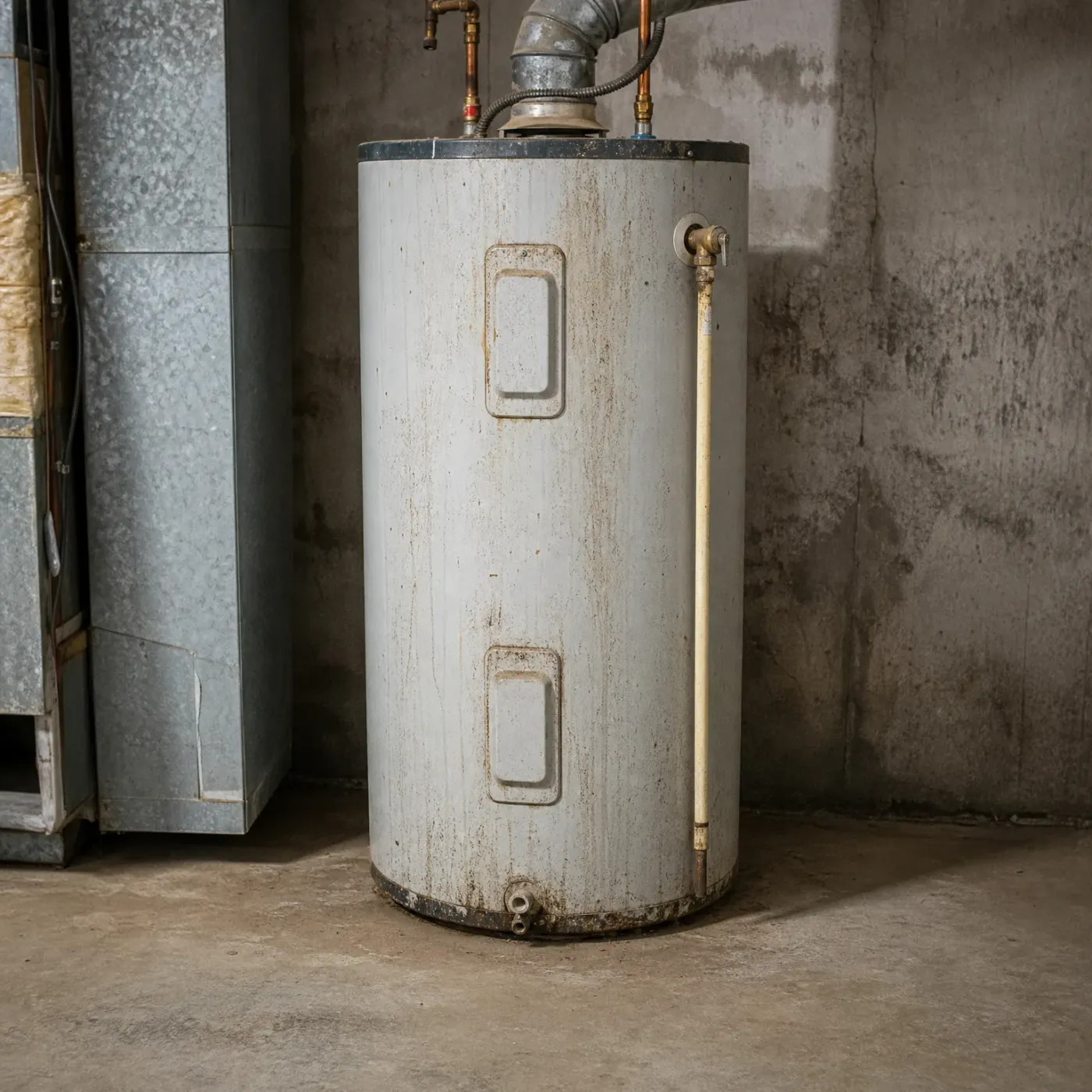
Rust has spread across the tank and down to the access panels, and the fittings at the top are crusted where copper meets galvanized pipe. A tank in this shape can let go without much warning, and a leak here means a flooded basement floor, not just a repair.
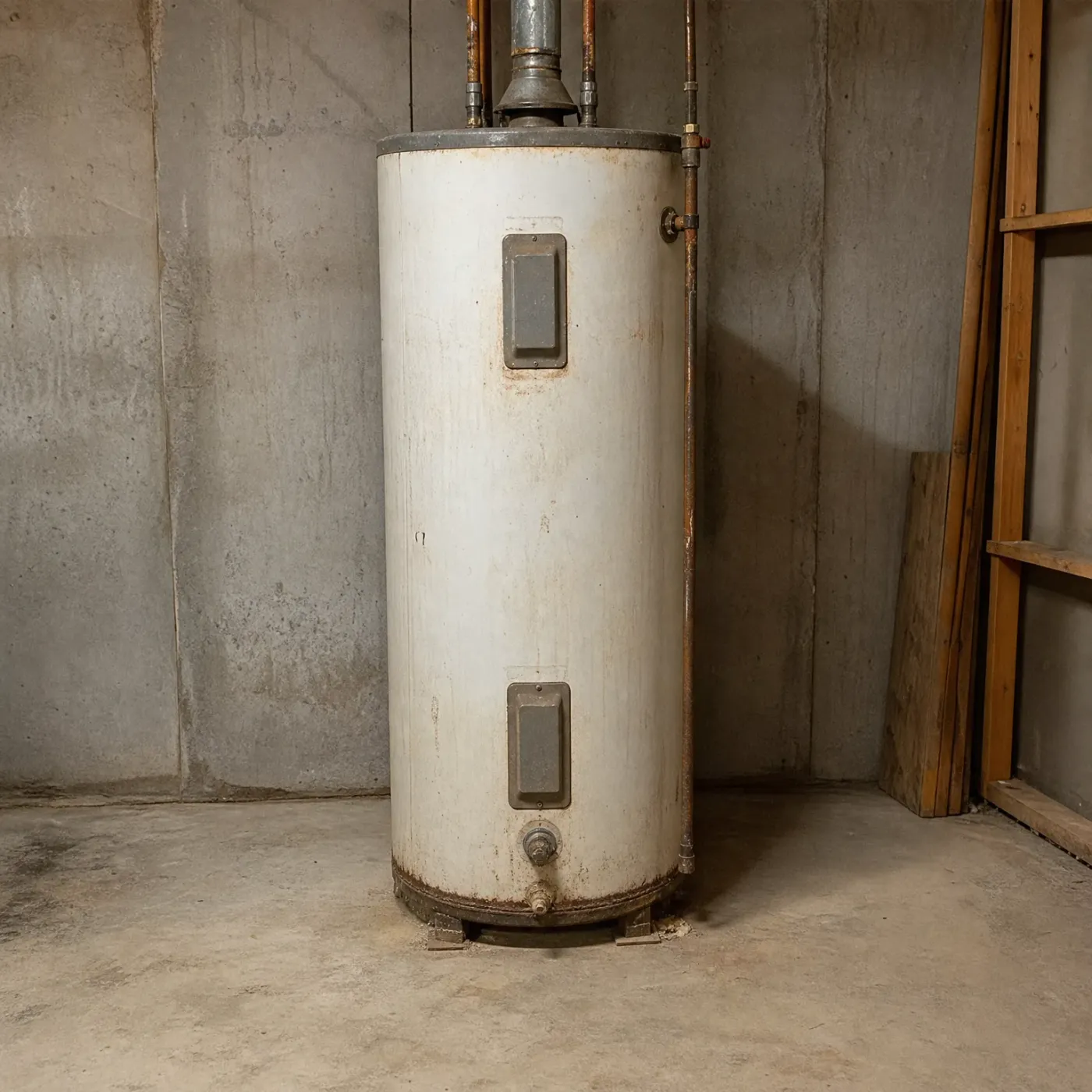
The anode rod inside the tank finally wears down to bare wire.
Without it, the steel tank itself starts absorbing the corrosion.
Rust works through the glass lining from the inside out.
A pinhole opens in the steel and water starts weeping.
A licensed installer who works in Hall County gets your project.
There's no charge for the request.
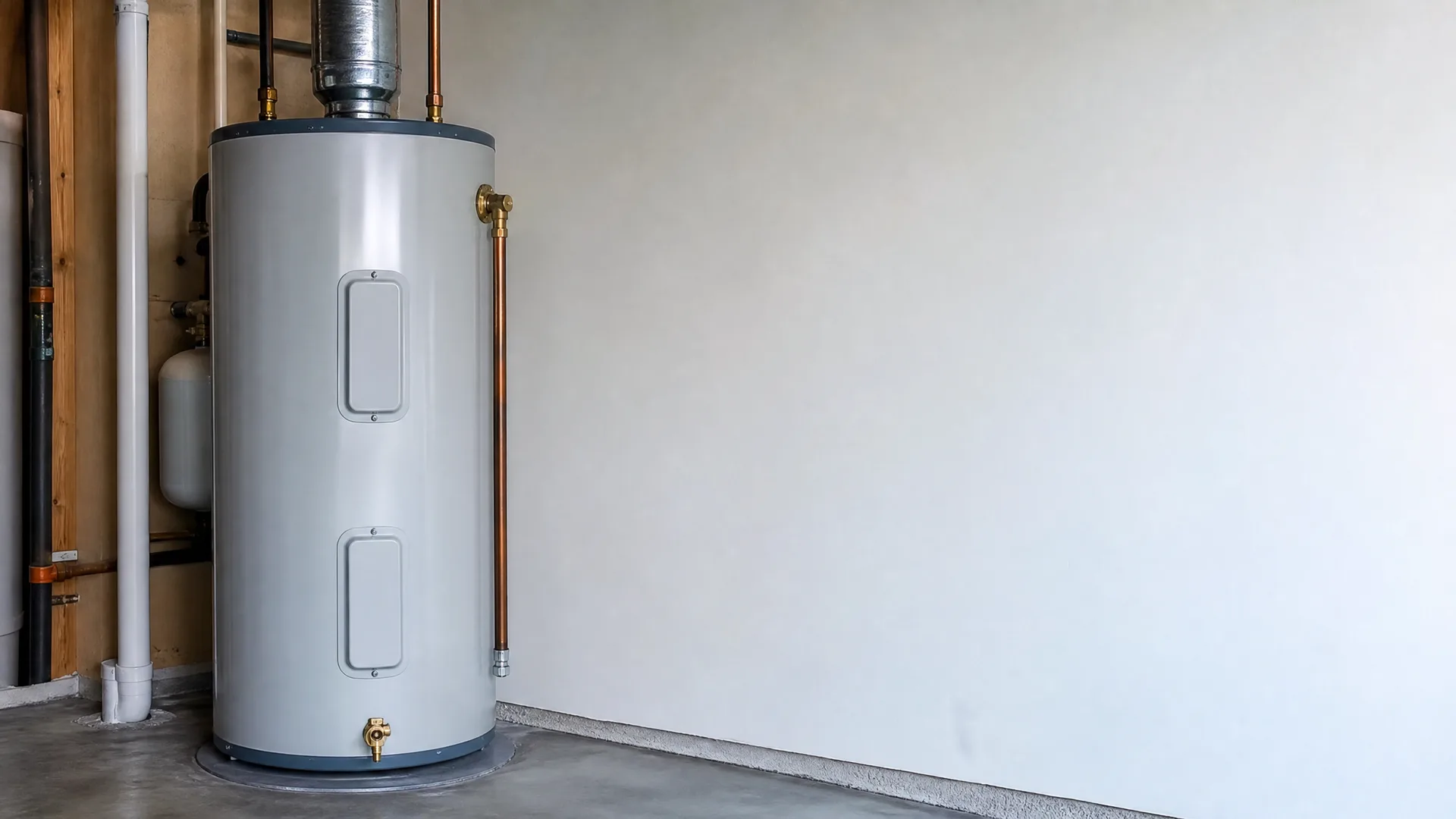
Hall County water leaves minerals behind as it heats, and they settle at the bottom of the tank. That layer sits between the burner or element and the water, so the heater works harder to do the same job. Over the years it can harden into a crust that traps heat against the steel. A tank that rumbles or pops when it runs is usually telling you this has already happened.
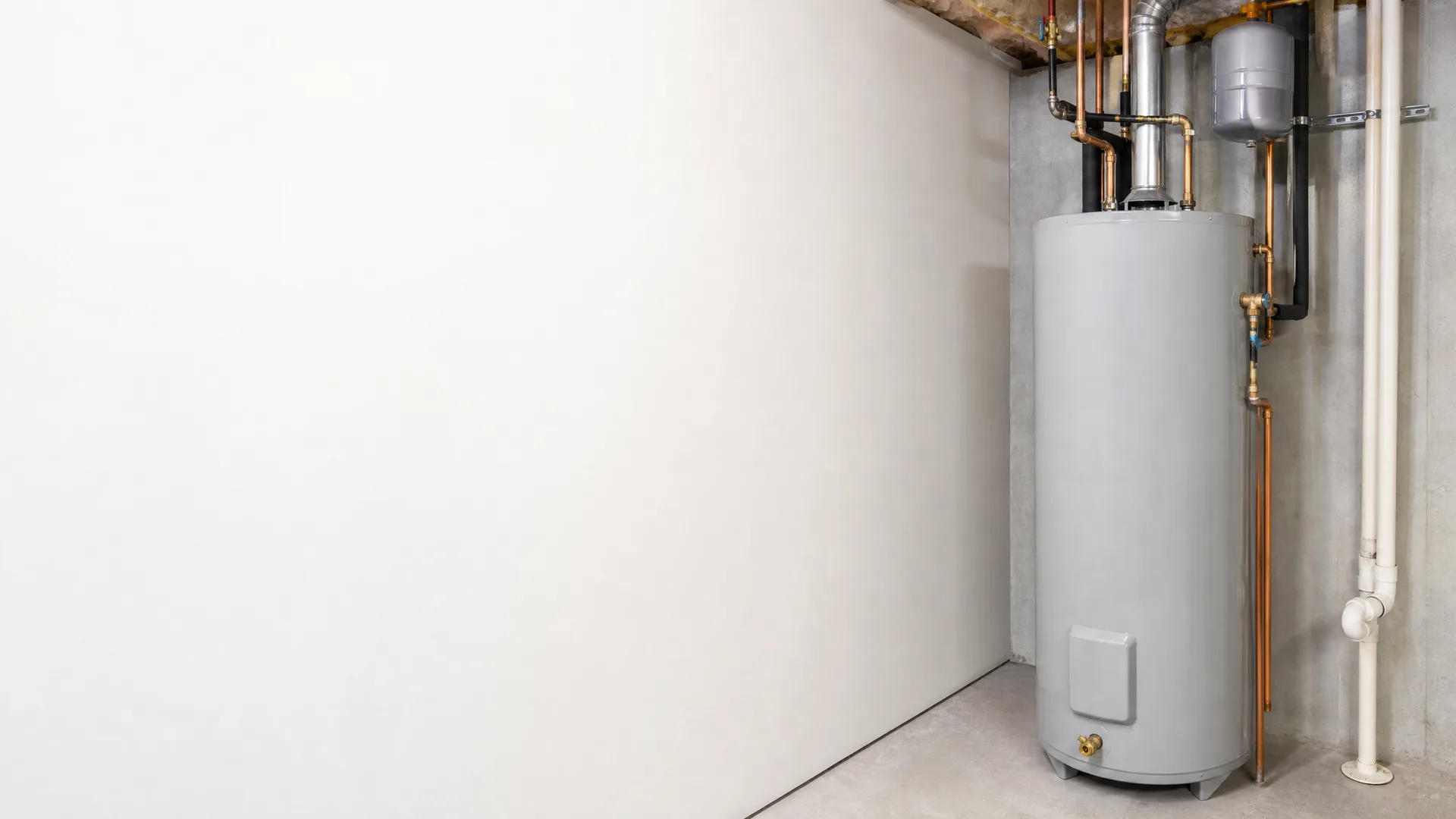
Most homes in this area heat water with gas, and a gas water heater has a flue running up through the tank to vent exhaust. That flue is another spot where steel can corrode from the inside. Electric heaters skip that part, but the tank itself still rusts the same way once the lining fails. Either way, the fuel source doesn't change when the tank is done. The steel does.
At 10.34 cents per kilowatt-hour, running an electric water heater here doesn't cost much to keep hot water flowing. That makes the decision to replace less about your power bill and more about the tank itself, whether it's still holding water without rust or strain.
EIA-861 2025
The answer comes down to the tank, not the calendar alone. If yours is 10 to 12 years old and rust has shown up at the fittings or the tank itself, that's the end of it, and no part swap changes that. If it's younger and holds water clean, a failed thermocouple or heating element is a repair, not a reason to replace. The sediment that settles at the bottom and the anode rod that wears down inside are the slow steps that get a tank to that point, and neither one announces itself until the rust shows up or the tank starts weeping. Once it's weeping, that's your answer. Waiting past that point risks water on the basement floor, not just a bigger repair bill.
Someone who services water heaters across Hall County all year has seen this pattern enough times to read it fast: which 10-year-old tanks still have a couple of good years left, and which ones are done no matter how clean the burner looks. That's a local contractor's job, not a guess made from a chart. And it's one contractor handling it, not three different companies asking you to explain the rust and the age and the leak all over again. One visit, one look at the tank, one answer about whether it's worth fixing or time to put in a new one.

No quotes to chase