

Profile view of a bearded man wearing a dark green baseball cap and a dark gray T-shirt against a plain light background.

What size water heater a Nebraska home needs

Step 1 of 3: Equipment

What size water heater do I need for my house in Nebraska?

You want a straight number before you call anyone: how many gallons, or what flow rate, fits your house. A water heater that's too small means cold showers when more than one person needs hot water at the same time. One that's too big costs more to run than it should, especially with how many Nebraska homes heat water with gas. The right size depends on how many people live in your house and how many bathrooms you're running at once.

It depends on your household size, usually 40 to 50 gallons for gas tanks

For most Nebraska households, a 40 to 50 gallon gas tank covers a family of three or four. A couple or a single person can often get by with 30 to 40 gallons. A larger household running two showers back to back, or a washing machine and a shower at once, needs the higher end of that range or a tank built for higher recovery. Gas water heaters recover faster than electric ones, which matters here since most homes heat water with gas. If you're replacing a tank that never kept up, going up a size class, not just matching what's there, is usually the fix. A plumber sizing your replacement will look at your fixture count and peak demand, not just the number of people in the house.

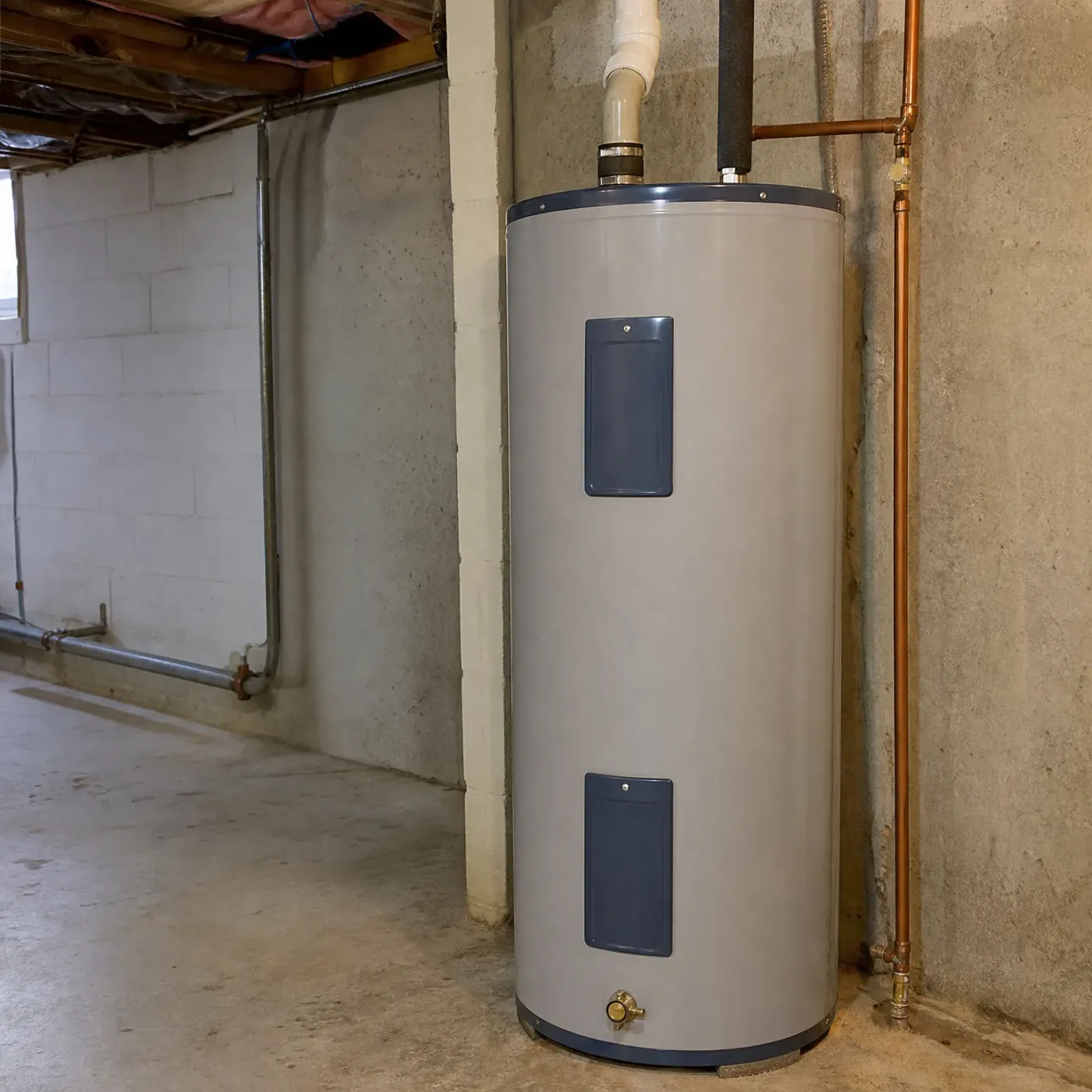
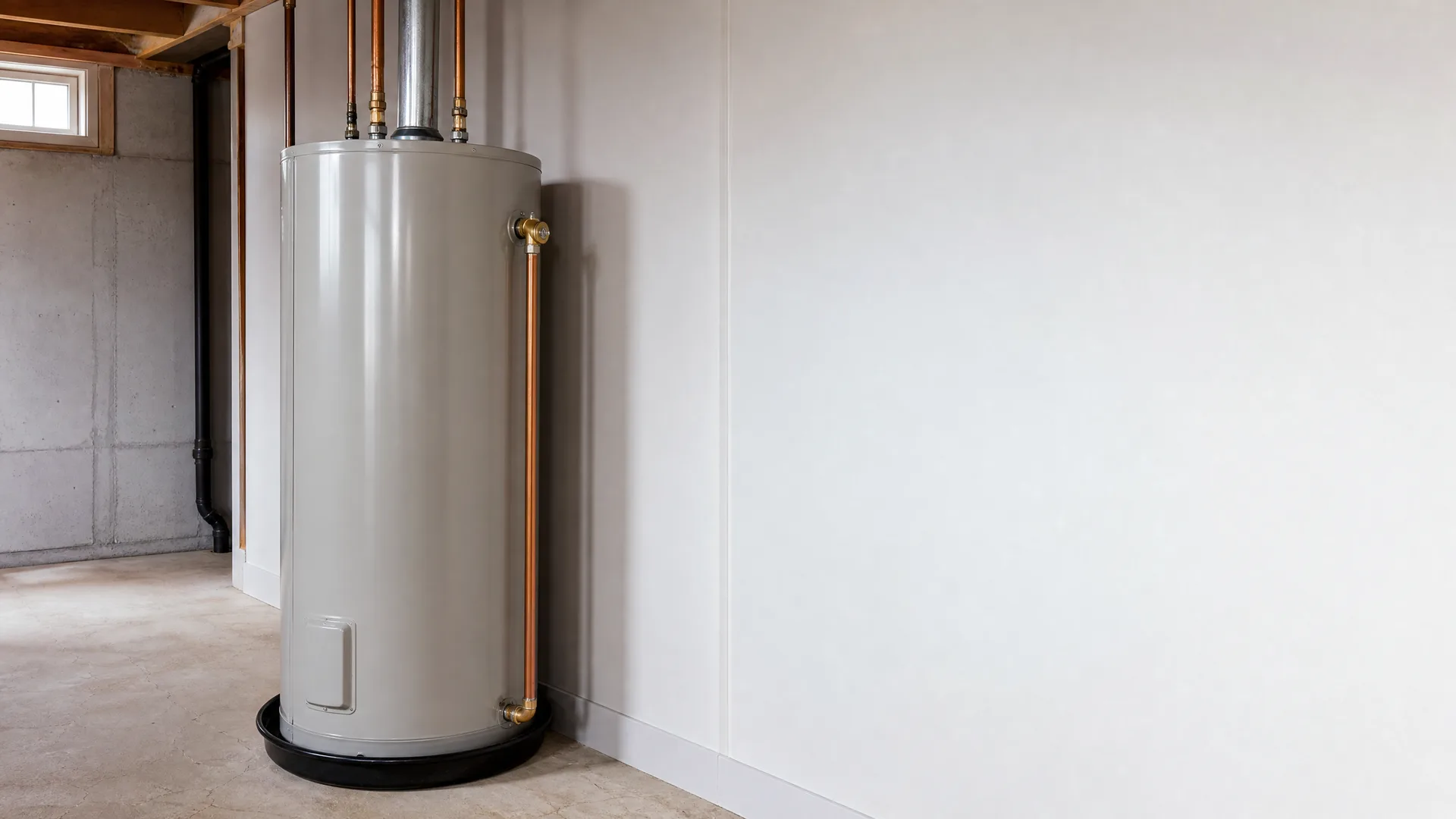
A beige cylindrical water heater with copper pipes and a black drain pan stands in a corner of a basement with white walls, a concrete wall and small window at left, and a concrete floor.

Tank size runs on people, not square feet

A house with two bathrooms and four people drawing hot water at the same time needs more tank than the square footage alone would suggest. Sizing goes by how many fixtures run hot water at once, how many bedrooms, and how many people are actually showering, washing dishes, and running laundry back to back. Two people and one bathroom asks for less tank than four people and two bathrooms, even in the same size house.

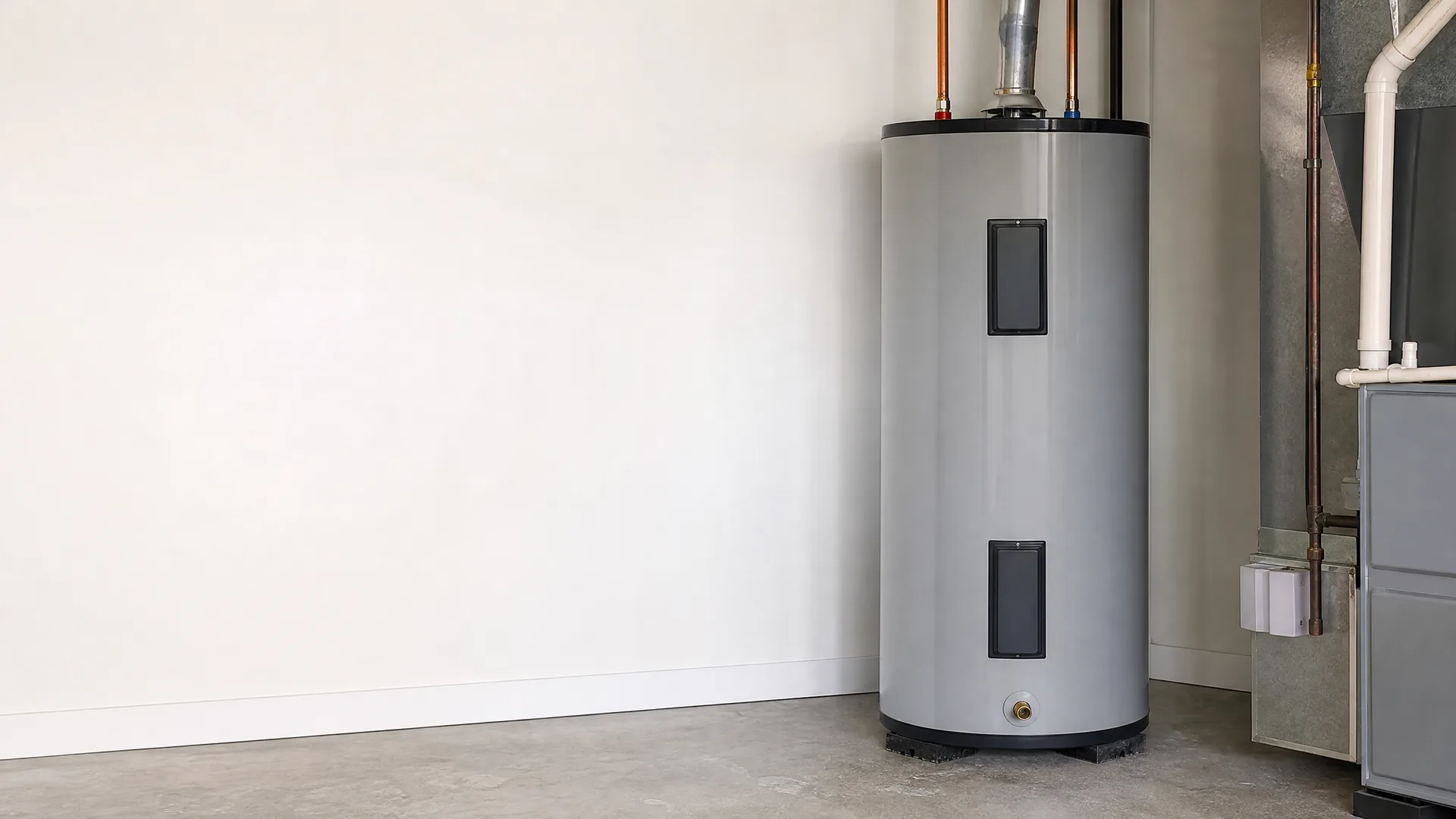
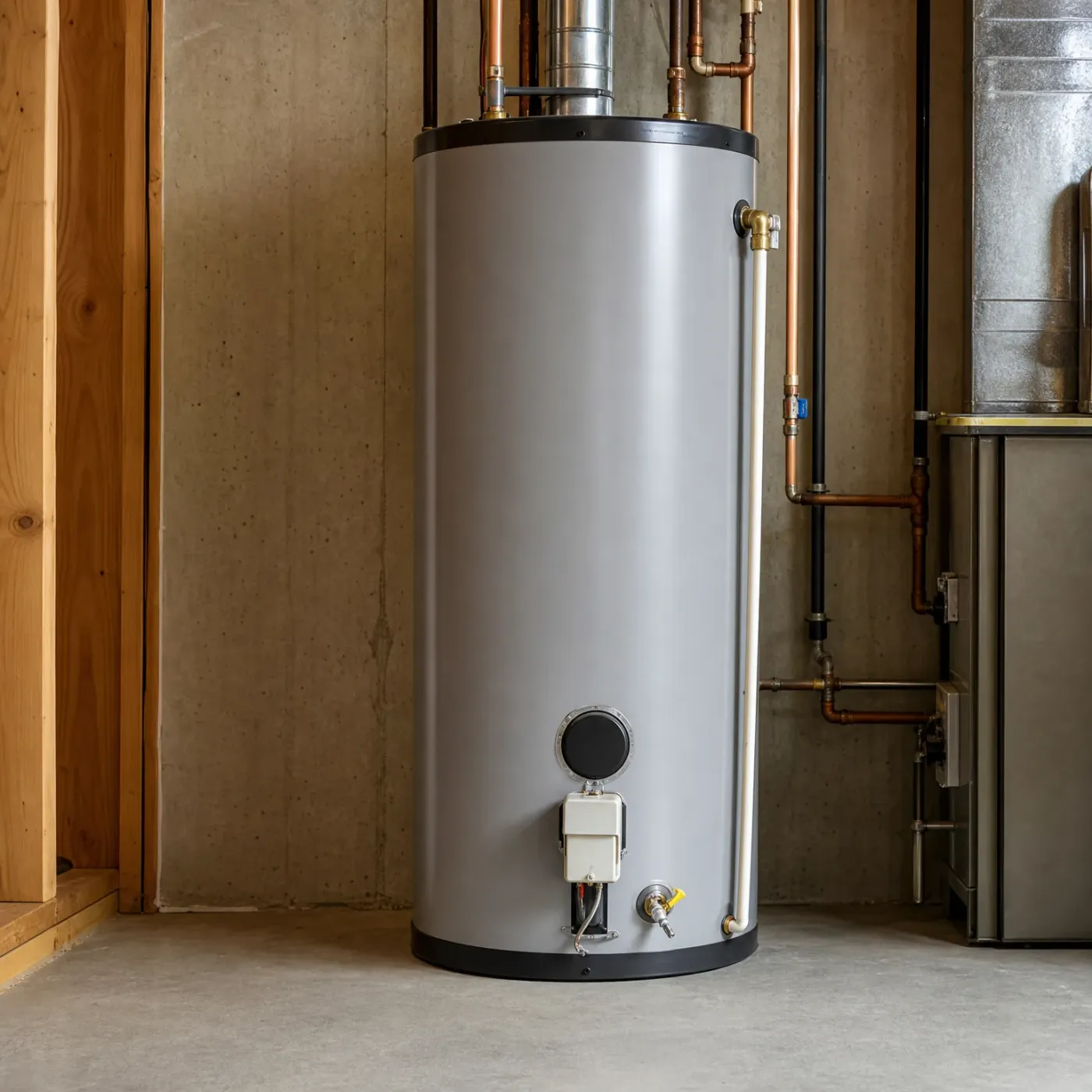
A gray cylindrical water heater with two black access panels stands on a concrete floor against a white wall, with copper pipes and a flue above it and ductwork to the right.

Gas recovers faster than electric

Most homes in Nebraska heat with gas, and a gas water heater recovers its hot water faster than an electric one of the same tank size, since the burner heats the tank directly instead of waiting on electric elements. That means a gas tank can often run a size smaller than electric and still keep up with the same household. Electric runs cheap here, so an electric tank sized a notch up covers the slower recovery without costing much more to run.

A woman in a cream sweater and jeans stands in the open doorway of a white stucco house, holding the dark door, while a man in a dark quilted jacket seen from behind walks toward the entry past potted plants.

Guess wrong and you'll feel it at 7am

Run a 40 gallon tank in a house that needed 50 and you'll find out on a Monday morning, when the dishwasher's going, someone's in the shower, and the water turns cool halfway through. Undersized sits quiet until the house actually uses it the way it's built to, then it shows up as a cold shower or a tank that never catches up. Oversized just costs you every month in standby losses, heating water nobody's using yet.

Most Nebraska homes run gas water heaters, and getting the size right matters more with gas than with a small electric unit, since a gas tank that's the wrong size wastes more fuel keeping that extra water hot or running out faster than it should. Matching the tank to your house, your fixtures, and how your household actually uses hot water isn't something to eyeball from a chart. A contractor who looks at your actual bathrooms, your actual gas line, and your actual household can tell you the number instead of a range, and that's the person worth getting matched with before you buy anything.

Interior corner with a beige sofa holding a dark green and a light cushion and a textured throw, a potted small-leaved tree beside a white-framed window, and a dark shallow bowl on a wooden coffee table in the foreground.
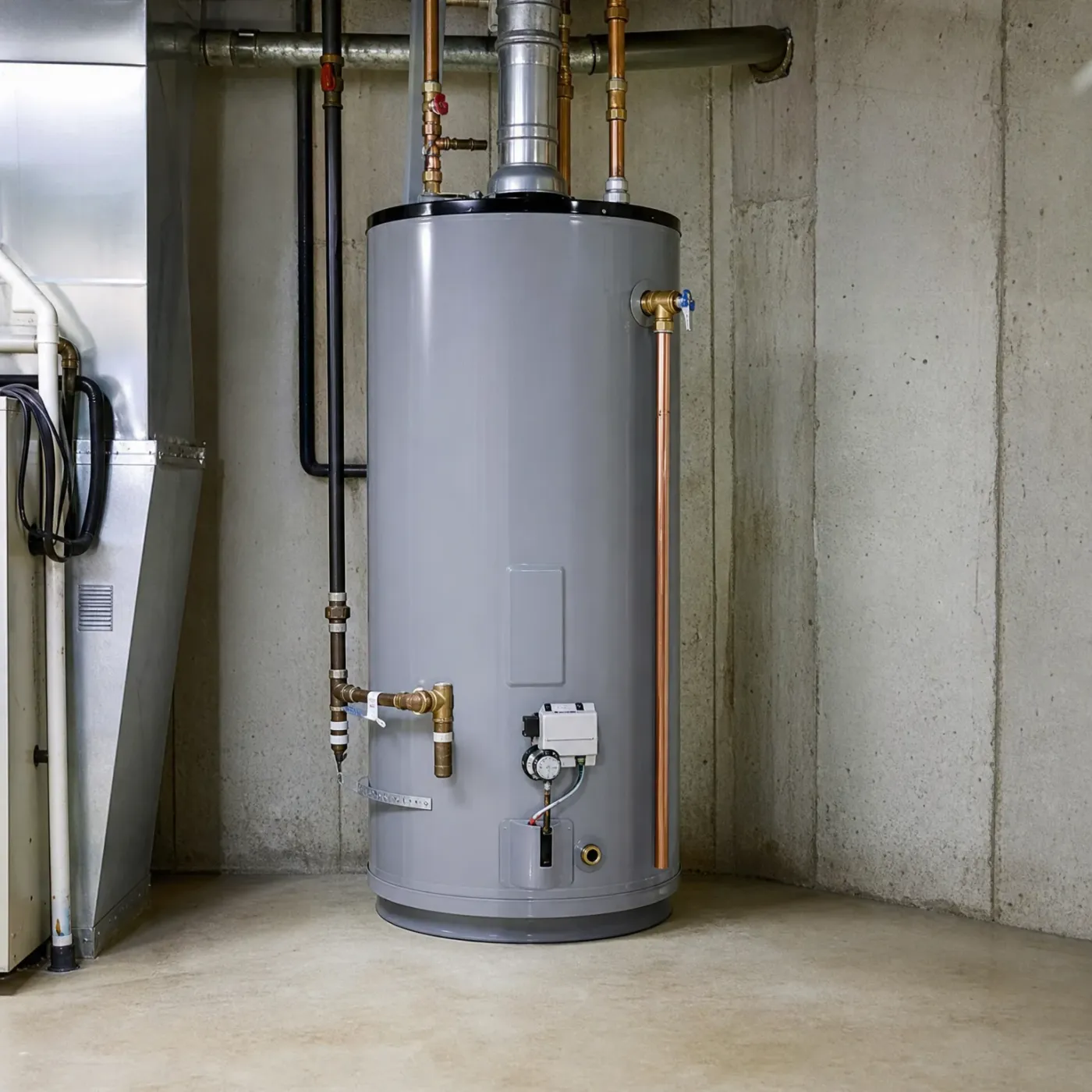
A gray cylindrical water heater stands on a concrete floor against a concrete wall, with copper and black pipes running overhead and a metal duct and dark equipment cabinet to the right.

Sized right

A water heater matched to your household keeps up without you noticing it. Two showers back to back, the dishwasher running, a load of laundry going, and the tank still has enough behind it. The gas valve and flue do their job quietly, and nobody downstairs thinks about any of it.
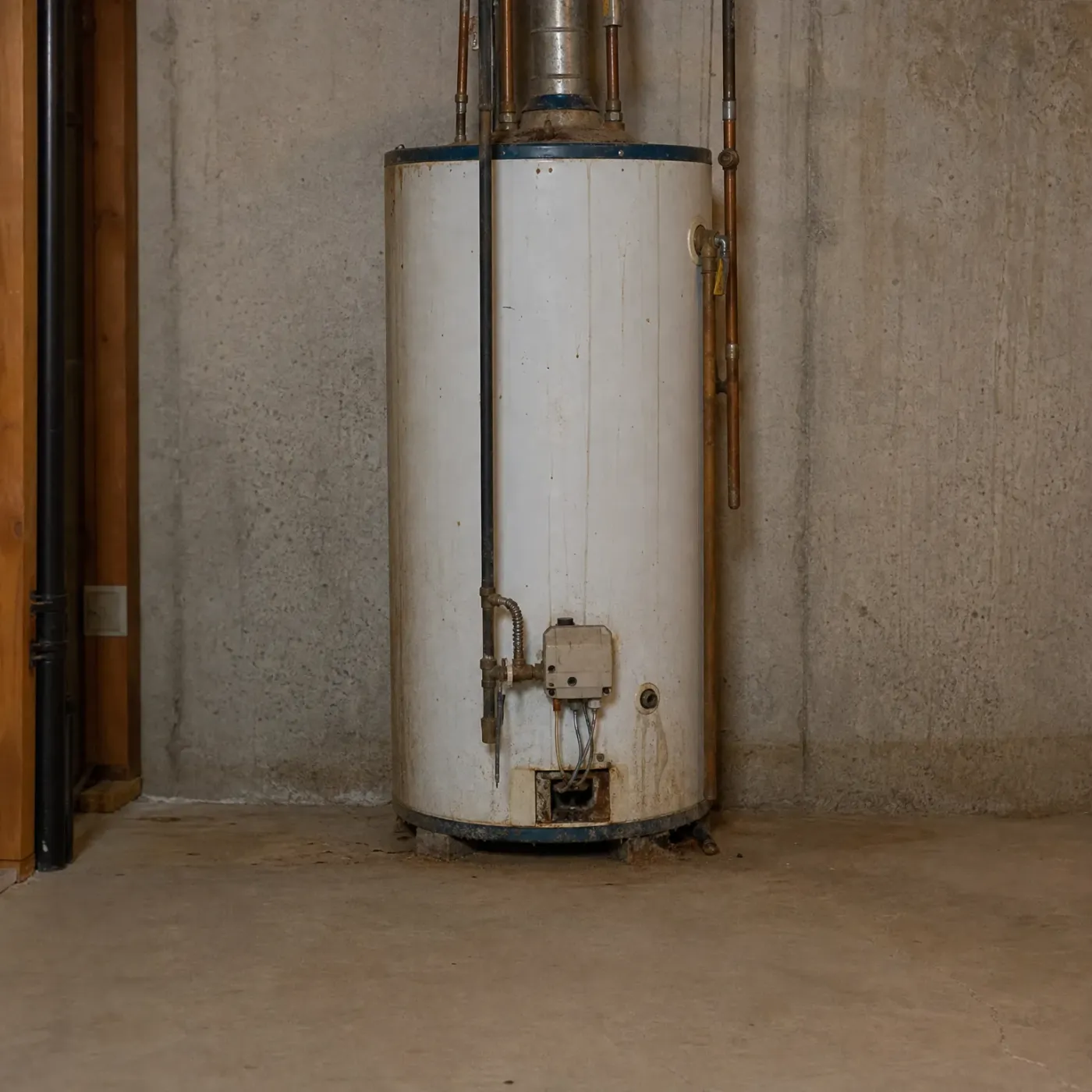

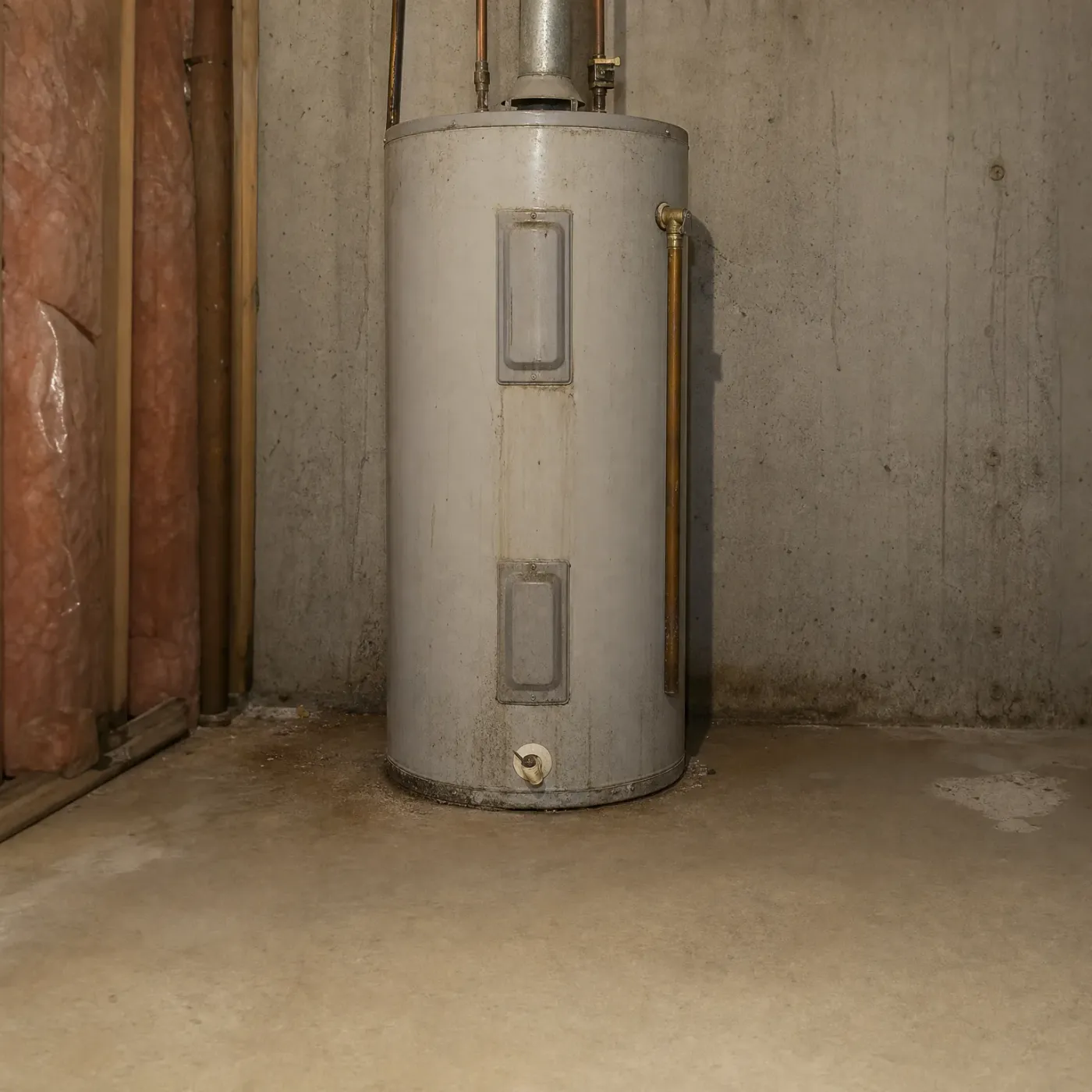
An old white gas water heater with rust stains, copper pipes and a flue stands in the corner of a concrete-walled room with a bare concrete floor and a wooden door frame at left.

Sized wrong

An undersized tank runs flat out trying to keep pace with a house that outgrew it. That strain shows up as rust along the seams, a flue pipe that's corroded at the top, paint worn off the jacket. The tank you see here is working harder than it should, and it's a few years from needing to be replaced again.

A gray-haired, bearded man in a dark coat dusted with snow stands smiling in a dimly lit room with a lamp, mirror, framed art, and a sofa in the background.
An older man with white hair and a beard, wearing a dark snow-dusted coat and scarf, stands in a warmly lit interior hallway with a framed landscape picture, a table lamp and a potted plant behind him, and a snowy view through a window at left.
An older man in a dark snow-flecked overcoat and scarf stands smiling in a warmly lit home entryway, with a glass-paned door showing darkness outside and a lamp-lit room visible through a doorway behind him.
An older man with gray hair and a beard, wearing a dark snow-dusted jacket and scarf, stands smiling in a warmly lit interior hallway with a lit table lamp, a vase of dried branches, and a framed picture in the background.
A tall gray cylindrical water heater stands in a basement corner against concrete block walls, with copper and metal pipes running along the wall and a vent pipe at its top.

A pro who works on water heaters

Describe your water heater job once, to one pro.

Get in touch with a local installer about a new water heater.

Skip calling around

It costs nothing to send, and you don't have to hire anyone.

Tank or Tankless: Sizing Either Way

Tank

  • A gas tank model keeps a reserve of hot water ready, so two showers and a dishwasher running together don't run you out.
  • Recovery depends on the burner, so a 50 gallon gas tank refills faster than an electric tank of the same size.
  • If your gas line and vent are already set up for a tank, replacing it with the same type is the simpler path.
  • A larger household with several bathrooms often does better with a tank sized to cover peak draw instead of pushing a smaller unit to its limit.
  • Standing pilot tanks relight on their own and don't depend on power the way some other setups do.
  • A tank takes up closet or basement space you won't get back for anything else.

Tankless

  • A tankless unit heats water as it's drawn, so there's no tank to run out mid-shower if it's sized for your home's peak flow rate.
  • Sizing a tankless unit means matching gallons per minute to your fixtures, not matching gallons of storage to your household size.
  • Gas tankless units need their own venting, and retrofitting that into a house built around a tank can mean real changes to the gas and vent lines.
  • Running two showers and a washing machine at once can still outpace an undersized tankless unit, even though it never runs dry the way a tank does.
  • A tankless unit frees up the floor or closet space a tank would otherwise take.
  • Cheap power here doesn't change much for gas tankless, since the unit's sizing comes down to burner output and flow rate, not electricity cost.
  1. A plumber counts your bathrooms, bedrooms, and peak fixture use

  2. They match that demand to a tank size or gas flow rate

  3. For gas tanks, they check your flue and gas line can support it

  4. The new unit goes in sized to your household, not your old tank

What's telling you your tank is the wrong size

You notice it in the small moments. The shower goes lukewarm before you're done, especially if someone ran the dishwasher first or there's a load of laundry going. Water takes longer to heat back up between uses. Maybe you've started staggering showers in the morning so nobody gets the cold tail end. On a gas tank, you might hear the burner kicking on more than you'd expect, working to keep up. None of this breaks anything right away, but a tank that's been undersized for your household runs harder than it should, and that catches up with it. A unit that's constantly straining to recover tends not to last as long as one sized for what your house actually asks of it.

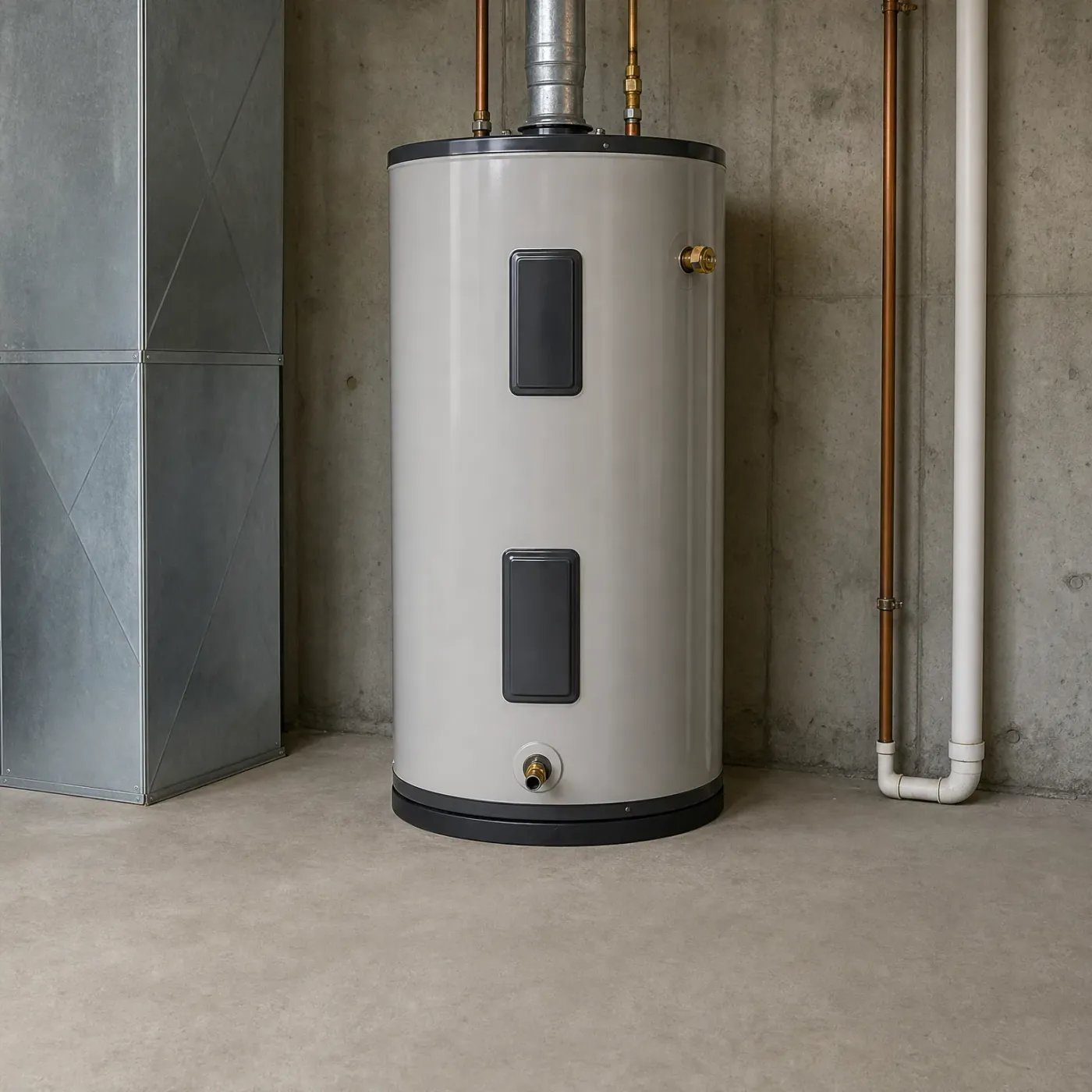
A cylindrical beige water heater with two dark access panels stands on a concrete floor against a concrete wall, with copper and white pipes to the right and sheet-metal ductwork to the left.

Working the way it should

This tank is doing its job without drama: thermostats set, pipes tight, drain valve ready for when it needs flushing. A unit like this holds its rated capacity and recovers it on schedule, so the household never has to think about it.

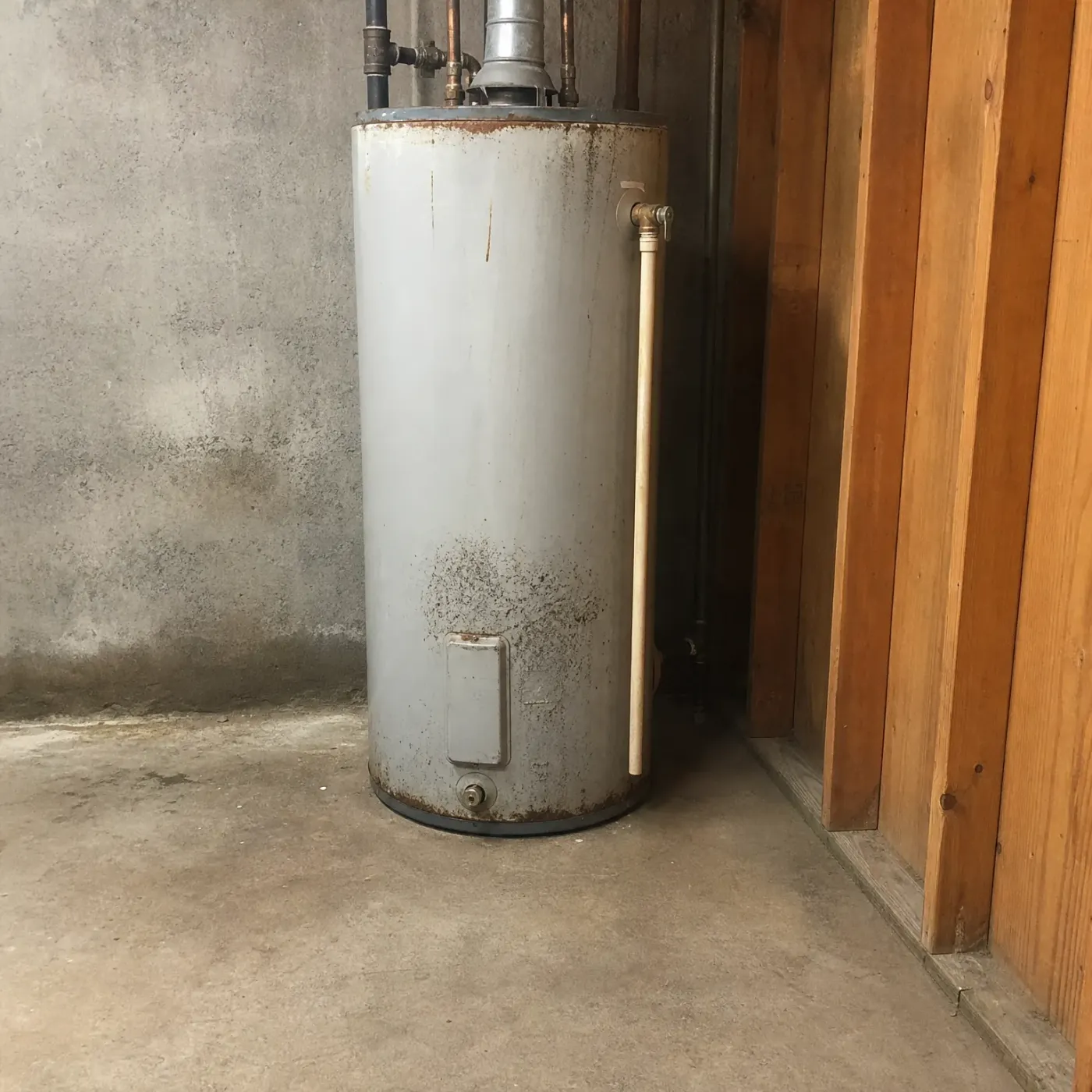
A rusting gray cylindrical water heater with copper pipes and a drain tube stands on a concrete floor against a concrete wall beside vertical wood paneling.

Rust, soot, and a tank running on borrowed time

Corrosion like this on the tank wall means it's failing, not just aging. Soot near the bottom points to a burner not venting clean. A tank in this shape won't hold or recover the capacity it was built for, no matter what size it started as.

A woman wrapped in a cream textured blanket sits in an armchair beside a lit lamp and a dark window, with an open book in the foreground.
A smiling older woman with gray hair in a cream knit sweater stands in a dimly lit kitchen beside a window showing snow outside, with a round loaf of bread on the counter in the foreground.
A large gray cylindrical gas water heater stands in a concrete-walled basement corner, connected to copper and black pipes and a metal flue, with ductwork at left.
Fittings tight, flue clear, thermostat doing its job. A tank like this still holds its rated gallons and recovers on schedule.
A gray cylindrical water heater with two access panels and copper piping stands in the corner of a concrete-walled basement next to exposed pink insulation.
Rust staining on the tank and corrosion at the fittings. A unit this worn is losing capacity even if it hasn't failed yet.

59.2% of homes statewide heat with gas

Most houses in Nebraska run on gas, and a gas tank's size depends on the burner as much as the gallons. When a plumber sizes your replacement, they're matching the tank and the burner together, not just picking a number off a chart.

ACS 2020-2024 5-year B25040

The right size comes down to your household, not a formula you can do in your head: bathrooms, bedrooms, how many fixtures run hot water at once, and for a gas tank, whether the flue and gas line can support the burner that size needs. Get that match wrong and you feel it at the worst times, a shower going cold with the dishwasher running. Get it right and nobody in the house thinks about it again. Working out gallons and flow rate on your own, then calling around to find a plumber who'll actually check your flue and gas line instead of guessing off a chart, is its own job on top of the one you started with. You'd still have to explain your setup to each one, compare what they quote, and sort out who actually knows gas tanks from who's just selling the biggest unit they carry. A plumber matched to your situation skips that part. You describe your house once, to someone who already does this sizing for Nebraska homes, and they take it from there.

A wooden front door with six small glass panes and a narrow sidelight, set in a shingled house entry with white trim, reached by stone steps flanked by a planted urn with purple flowers and leafy branches in the foreground.
Exterior corner of a house with beige horizontal lap siding and a black-framed window, with white hydrangeas, ornamental grasses and low plantings along a flagstone patio.
Corner of a house with tan lap siding and a window, a brick step edge, flowering white hydrangeas and green shrubs beside a flagstone walkway leading to a white picket fence and a tree in backlit sunlight.
House exterior with cream horizontal lap siding, a dark-framed window, a black wall lantern beside a wood door, potted shrubs on stone steps, and white and pink hydrangeas in the foreground garden.
Corner of a cream lap-sided house with a white-framed window and dark shingled roof, beside a white-flowering hydrangea shrub, a clipped hedge, mulched bed and lawn.

Get your water heater to the right pro

Skip collecting and comparing quotes for the new water heater.

Fill out one form

No charge to send it. You decide if you hire them.