Tell us about the job
Takes about a minute. No obligation.
Gas-fired water heaters run every day of the year, not just through a heating season, so the burner orifice, thermocouple, and ignition system accumulate wear without any idle period to slow it down. Utility gas heats more occupied homes in Saline County, Nebraska than any other fuel, at 46.9% (2020-2024 ACS 5-year). A contractor diagnosing a failed unit in this county is working on equipment that has fired repeatedly across years of continuous demand, and the components most likely to fail first are the ones that cycle with every heating call. Sediment buildup in the tank accelerates that load on the lower element or burner, and a repair quote that skips a flush and inspection misses what shortened the part's life in the first place.
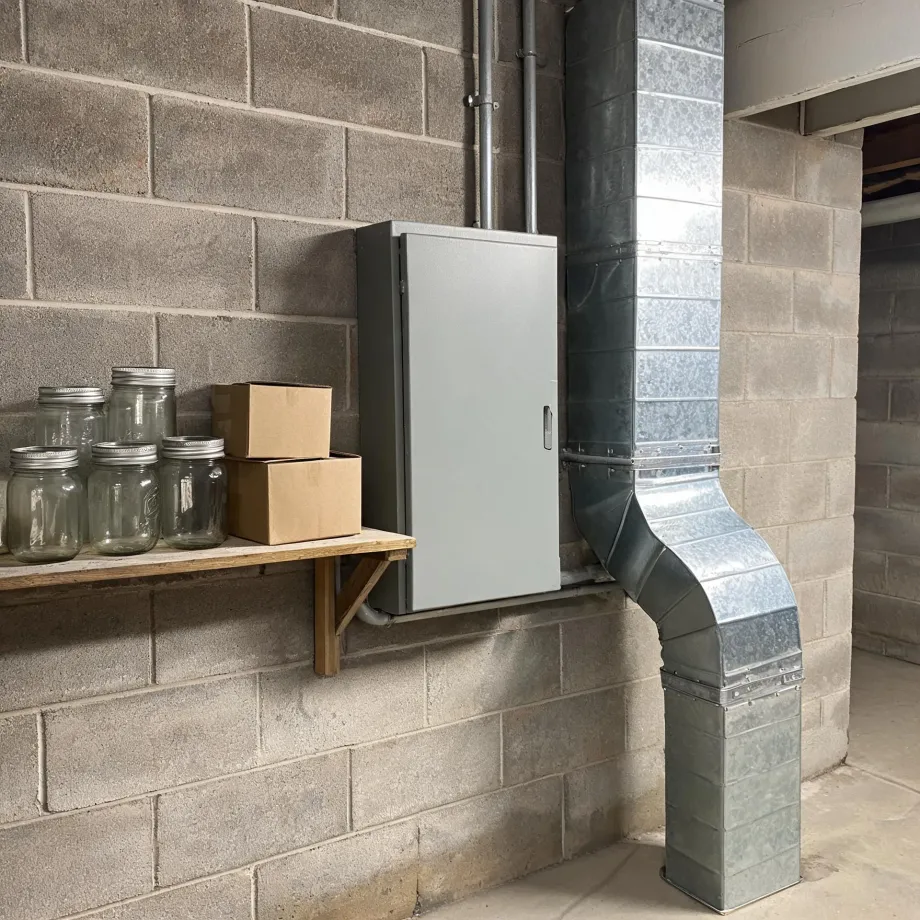
Water heaters in this county sit inside houses whose plumbing was designed around expectations that predate the equipment now running in them. Half the homes in Saline County, Nebraska were built in 1964 or earlier (2020-2024 ACS 5-year). That means a contractor opening a water heater repair call in a house from that era of the stock is working around original supply lines, aging shutoff valves, and venting arrangements that were not built for modern units. What those components turn out to be, once the contractor is on site, is what determines whether the repair is straightforward or whether the surrounding infrastructure changes the scope.
The Parts of a Water Heater a Contractor Checks First
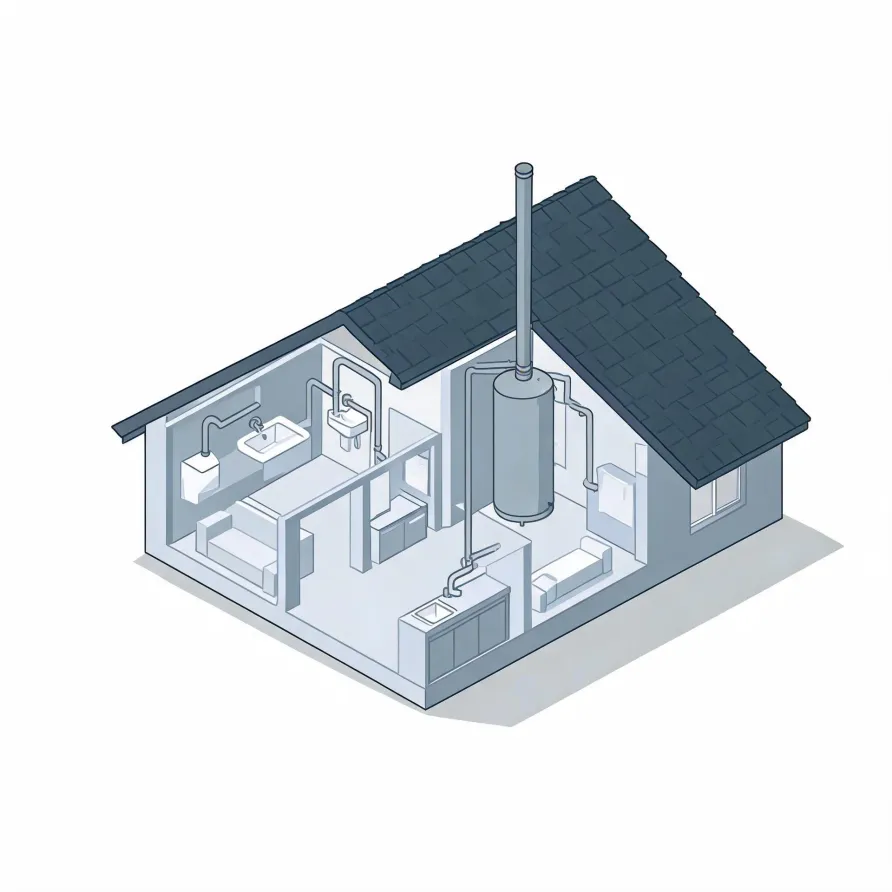
The tank itself is the most visible piece, standing upright in a utility room, basement, or closet, and its job is to hold and heat a supply of water. When something goes wrong with the tank or its lining, the signs are hard to miss: rust-colored water, pooling on the floor, or a unit that simply stops producing hot water.
The burner or heating element sits inside or beneath the tank and is the part a contractor reaches for early when output drops or disappears. The thermostat, pressure relief valve, and inlet and outlet connections each have a specific role, and any one of them can be the source of inconsistent temperatures, strange noises, or pressure problems.
The drawing shows a general layout of these components, and a licensed contractor determines what applies to the specific unit and setup in your home.
Get matched in Saline CountySaline County by the Numbers
110 severe weather events were recorded in Saline County, Nebraska between 2015 and 2024.
NOAA National Centers for Environmental Information, Storm Events Database, bulk CSV export, events 2015-01-01 through 2024-12-31.Half the homes in Saline County, Nebraska were built in 1964 or earlier (2020-2024 ACS 5-year).
U.S. Census Bureau, 2020-2024 American Community Survey 5-Year EstimatesSaline County, Nebraska holds 5,799 housing units (2020-2024 ACS 5-year).
U.S. Census Bureau, 2020-2024 American Community Survey 5-Year EstimatesOwners occupy 75.9% of the occupied homes in Saline County, Nebraska (2020-2024 ACS 5-year).
U.S. Census Bureau, 2020-2024 American Community Survey 5-Year EstimatesCodes & Standards Governing Water Heater Repair in Saline County, Nebraska1 sourced rules and standards
Licensing and Legal Requirements in Saline County, Nebraska
Nebraska requires registration rather than a licence: a contractor must be registered with the Department of Labor before performing any construction work, though anyone earning less than five thousand dollars a year from construction services is not a contractor under the Act at all.
Severe Weather Events in Saline County
Extreme weather puts real strain on water heaters, pushing them through pressure swings, sediment surges, and demand spikes that wear equipment faster than steady conditions do. Saline County's weather record shapes how hard local water heaters work, which makes it relevant to any conversation about repair.
110 severe weather events, 2015–2024. Source: NOAA National Centers for Environmental Information, Storm Events Database.