










Water heater making popping noises in Scottsbluff, NE

Get a water heater pro

That popping or rumbling sound from your water heater usually means sediment has built up on the bottom of the tank, trapping water underneath that turns to steam as it heats. It's common in homes with hard water, and it's worth having someone look at before it gets worse or shortens the life of the tank. A local contractor who works on water heaters all over Scottsbluff and the surrounding area has seen this exact problem plenty of times and knows what it takes to flush a tank properly or tell you if something else is going on. Answer a few questions about your water heater and your situation, and you'll be matched with one licensed local contractor, not a handful of companies competing for your call. They'll reach out to you directly to sort out what's causing the noise and what your options are.

Why is my water heater making popping noises?

You've heard a popping or rumbling sound coming from the water heater, maybe when it's running or just after. It's loud enough that you noticed it and wondered if something's wrong, or if it's about to fail on you. You want to know what's actually happening inside the tank before you decide whether it needs attention now or can wait.

Sediment buildup on the tank bottom is almost always the cause

Water here runs hard enough that minerals settle out and collect on the bottom of the tank over time. Once that layer builds up, water gets trapped underneath it, and when the burner or heating element fires, that trapped water boils before the rest of the tank does. The steam bubbles push up through the sediment, and that's the popping you hear. It's not dangerous in the short term, but the sediment layer sits between the heat source and the water, so the tank works harder to heat the same amount of water. Left alone, that extra strain wears on the tank and the heating element or burner assembly. A contractor who services water heaters in this area can flush the tank and check how much buildup has collected.

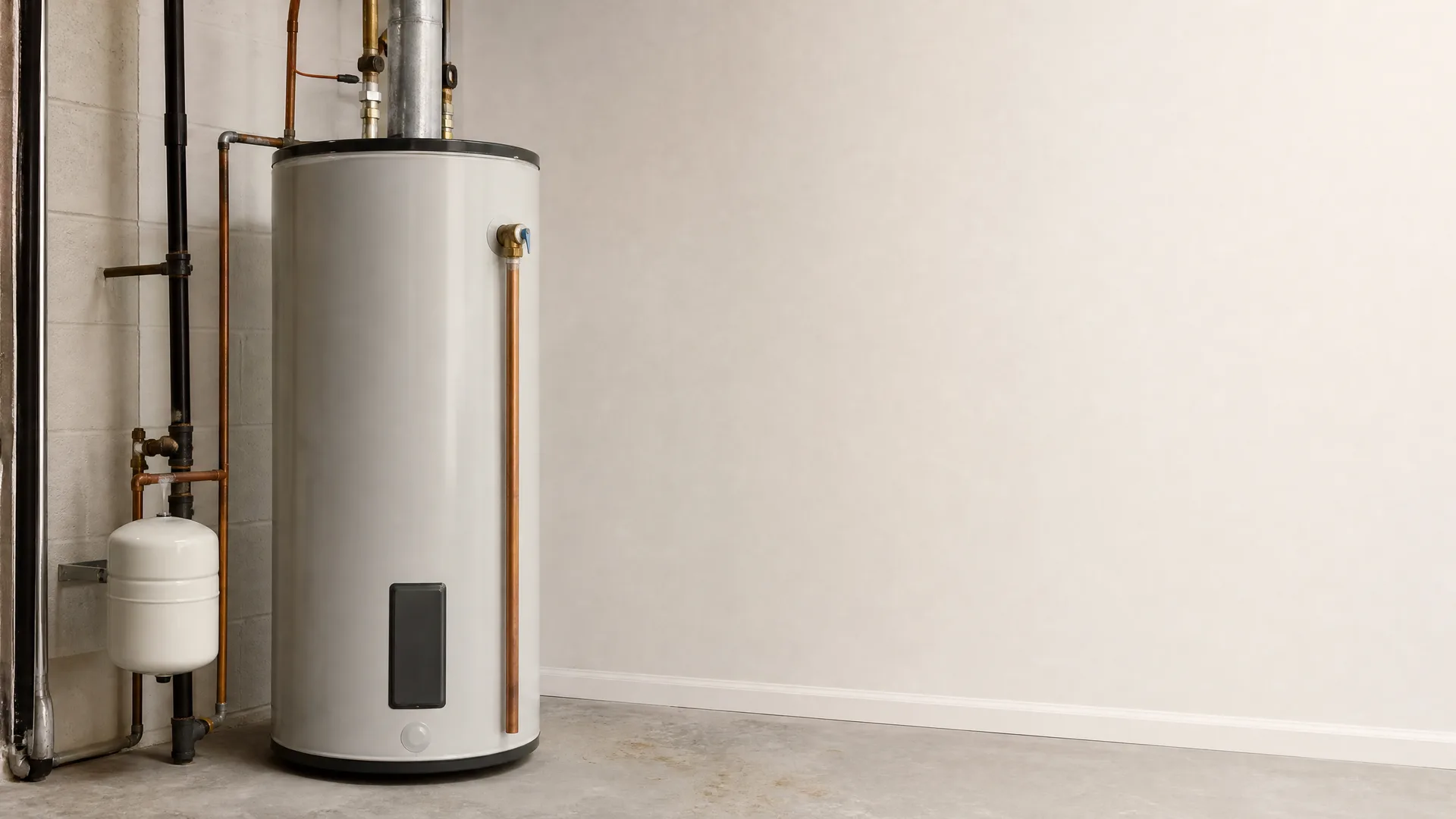
A white cylindrical water heater stands against a plain wall in a room with a concrete floor, connected to copper and metal pipes with a small expansion tank mounted on a block wall at left.

What the sediment does over time

Scotts Bluff County's water runs hard, and that mineral content settles out as a layer on the bottom of the tank. Each time the burner fires, that layer sits between the flame and the water, so the heater has to work through it to do its job. Left alone, that layer thickens year over year. A gas water heater heats the tank from below, so the sediment sits right where the heat hits hardest, and that's exactly where the popping starts.

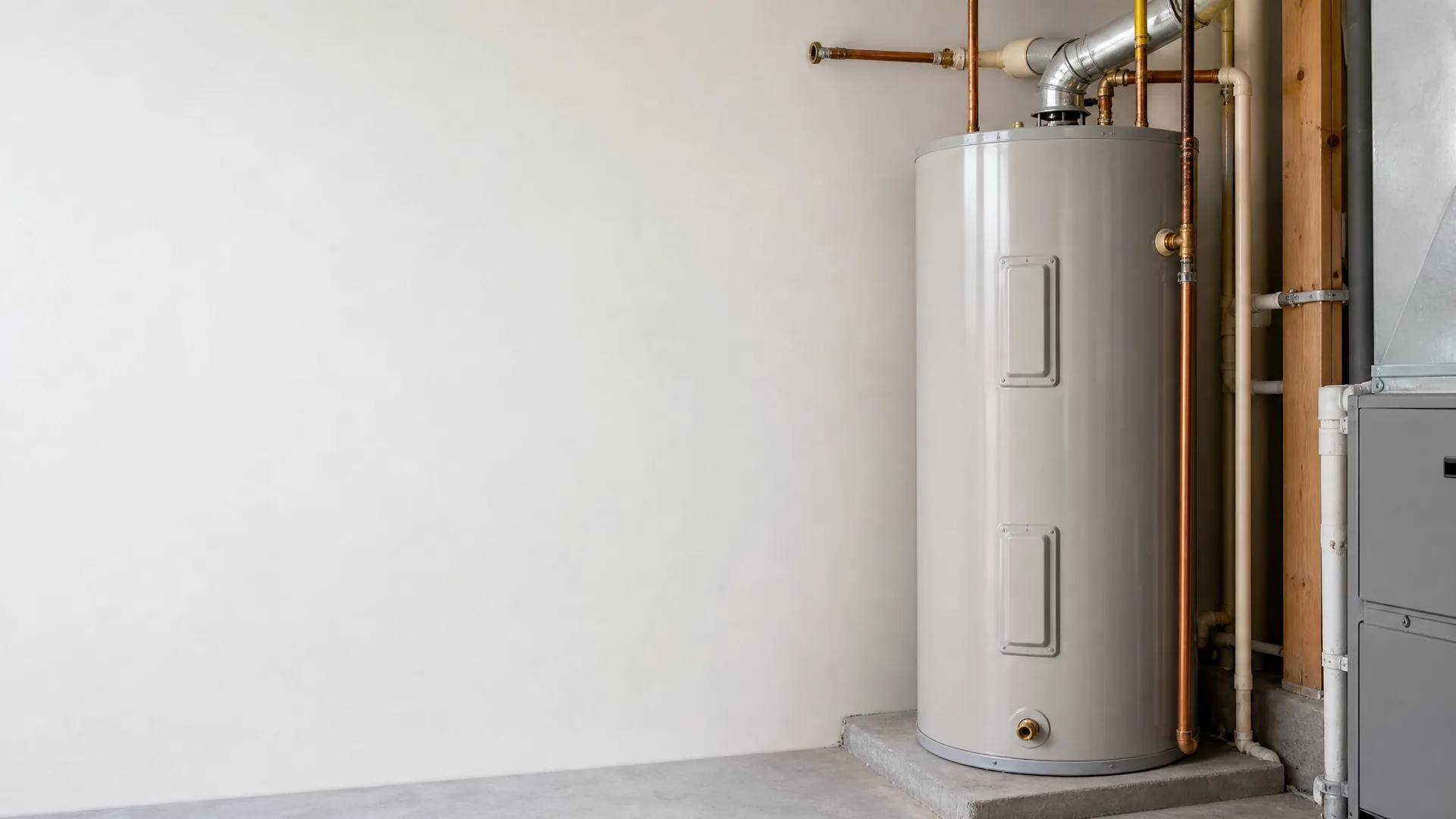
A beige cylindrical water heater on a raised concrete pad in a corner, with copper and metal pipes above it, an exposed wood stud, and a gray metal appliance at right.

Why the noise gets worse

Once steam starts forming under that sediment layer, it has to push through to escape, and that's the popping you hear. It tends to get louder over months, not days, as the layer builds. The tank itself can take the strain for a while, but the metal underneath is working harder than it should, heating through a barrier that was never part of the design. A contractor who flushes tanks regularly in this area can tell you how much has built up and what it's doing to the unit.

A woman stands in the open front doorway of a single-story house with stone and wood siding while a man in a dark polo shirt and cap walks toward it along a concrete path.

What this means for your water heater

That popping gets louder over time, not softer, because the sediment layer keeps building as long as it sits there. You'll likely notice your water takes longer to heat, or the tank runs out of hot water sooner than it used to. The gas burner underneath is working harder to push heat through that layer, and that shows up on your bill before it shows up as a bigger problem. Left alone, the constant heating and cooling of that trapped water can stress the bottom of the tank itself.

A local contractor who works on tanks around Scottsbluff every week has seen what this county's water does to a water heater over the years, and knows whether flushing it out will quiet things down or whether the tank's past that point. Getting matched with one contractor, rather than several companies calling about the same job, means you're dealing with someone local who can look at your actual tank and tell you where it stands.

A large weathered ceramic vase and a shallow wooden bowl sit on a rustic wooden table beside a window with linen curtains, with a blurred sofa with cushions and a hanging fabric panel in the background.

How much sediment noise should your tank really be making?

  • 2.32 people per household on average

    Census figures put the average Scotts Bluff County household at 2.32 people, so most tanks here run a steady daily cycle, not an occasional one. That's a lot of heating cycles for sediment to pack down on.

  • Half the homes here were built by 1969

    Half the homes in the county were built in 1969 or earlier. If yours is one of them, nobody can tell you from that alone how old your water heater is, but an older house is reason enough to have the tank itself checked.

  • 60.9% of homes heat with gas

    Gas heats 60.9% of homes in the county, more than any other fuel. A gas burner sits right under the tank, so sediment collecting there sits between the flame and the water with nowhere else to go.

ACS 2020-2024

A gray-haired bearded man in a dark knit sweater sits on a light gray sofa in a sunlit living room, looking to his left, with a framed artwork, a potted palm, and a curtained glass door behind him.
A middle-aged man in a dark green sweater sits on a light grey sofa looking toward a sunlit window, with a wooden shelving unit, lamp and potted plants in the background.
A man in a dark green sweater sits on a light grey sofa in a sunlit living room, looking to his left, with a shelving unit, houseplants, framed art and a large window behind him.
A gray-haired bearded man in a dark green sweater sits on a light gray sofa in a sunlit living room with a potted plant, framed picture, and dark shelving in the background.

The right pro for this job

The pro who gets in touch is licensed in Nebraska and works in Scotts Bluff County.

It costs nothing to send, and you don't have to hire anyone.

Living with the noise for now

You can keep using the water heater with the popping still happening. It won't scald you or cut your hot water off overnight. Some homeowners run it like this for months, topping off hot water a little sooner than they used to and tuning out the noise at the start of each cycle. The tank is heating through a layer of sediment instead of just water, so it's working harder than it should, and the burner or element underneath is sitting right against that layer every time it fires. Nothing about the sound tells you how close the tank is to a real problem, a crack in the glass lining or a failed element, versus just being loud. If you're the kind of homeowner who can live with uncertainty about a major appliance in your basement or utility closet, this is a real option. It just doesn't resolve anything.

Having it looked at now

A plumber who works on water heaters around Scottsbluff every week can tell you in minutes whether that popping is sediment doing what sediment does, or something closer to failure. They know what a tank this age, running on this county's water, usually sounds like at this stage, and what's past normal. If it's sediment, a flush can quiet it down and take some of the strain off the burner or element. If it's something else, like a failing element or a weak spot in the tank, you'll know now instead of guessing while it gets louder. Getting matched with a local, licensed plumber for this means one contractor looking at your actual tank, not several companies calling about it. You get an answer instead of a sound you keep listening to.

A woman with shoulder-length dark brown hair in a cream knit cardigan sits in an upholstered armchair beside a window, looking off to the side, with a white bookshelf and potted plant blurred behind her.
A woman with her hair in a bun holds a sleeping boy against her shoulder, both wrapped in a thick cream knit blanket on a couch in a dim room with a lit lamp, potted plants and a shelf behind them.

The burner sits under the tank and a tube runs the heat up through the middle to the flue. Sediment settles on the steel floor right above that burner, and it acts like a blanket. Heat can't move through it the way it moves through water, so the steel under the sediment gets hotter than the water sitting on top of it. Whatever water is trapped between the steel and that layer turns to steam before the rest of the tank even gets warm. That steam has nowhere to go but up, through the sediment, and it breaks free as a bubble. That's the pop. It happens on the burner's schedule, not when you turn on a faucet, because it's tied to when the flame is lit, not to how much hot water you're using. A glass-lined tank takes this harder than bare steel, since the repeated heat in one spot can crack the lining there. Draining a few gallons from the valve won't touch sediment that's packed down this way. It mostly clears what's loose near the valve itself.

What's actually happening inside the tank

  • Gas water heaters have a burner tube and a flame baffle that runs up through the center of the tank to the flue.
  • Sediment on the tank bottom insulates the steel from the burner, so that spot runs hotter than the water around it.
  • Water trapped under the sediment layer flashes to steam, and the steam bubble has to push up through the sediment to escape.
  • Each pop is that bubble breaking free, which is why the sound tracks with the burner cycle, not with faucet use.
  • A glass-lined tank takes this kind of localized heat worse than a bare steel one, since the lining can crack where it's stressed repeatedly.
  • Draining a few gallons from the tank won't clear sediment that's packed down and hardened, it mostly moves loose material near the drain valve.
A rusting gas water heater with copper and steel pipes stands against a concrete block wall on a bare concrete floor.
Before you get your water heater repair
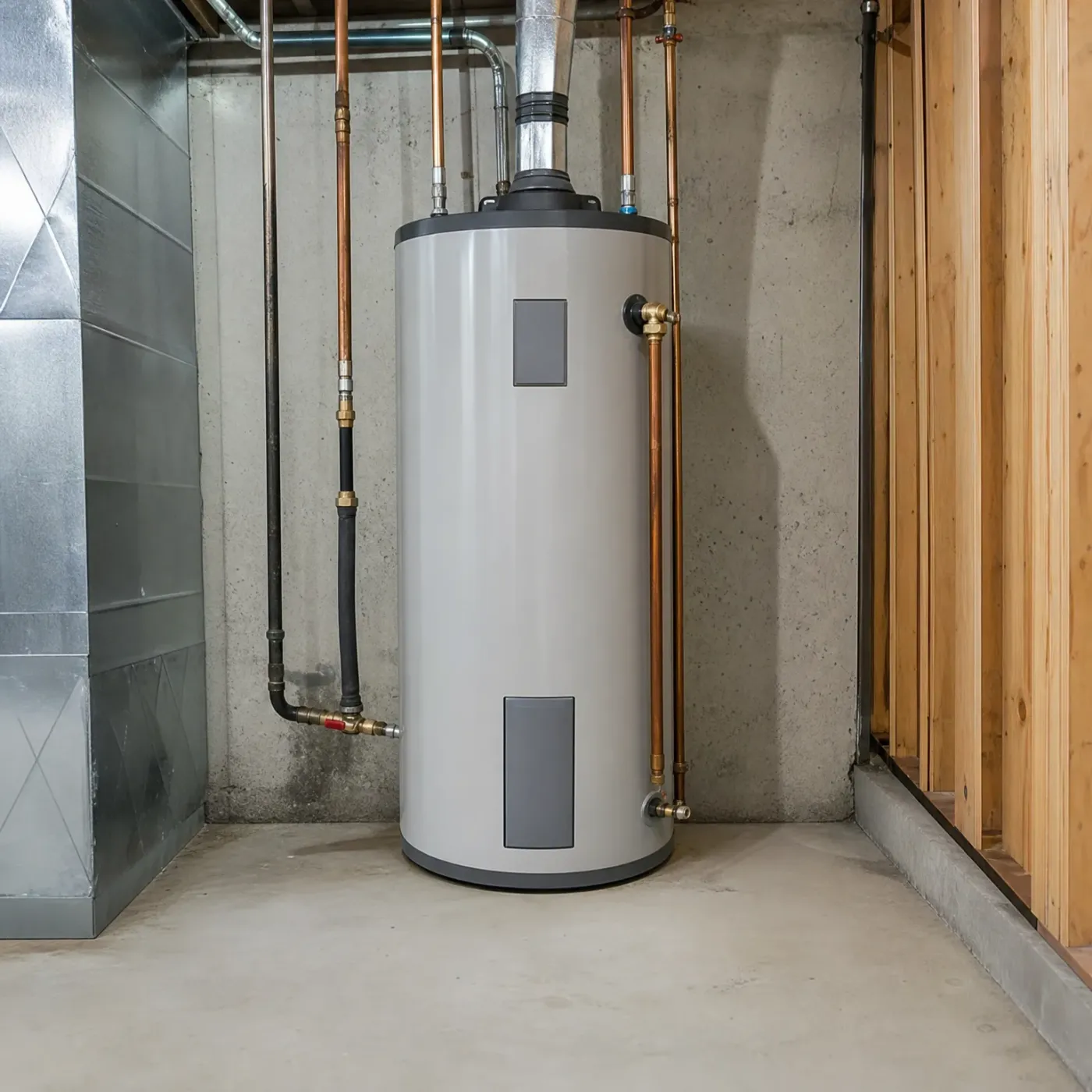
A gray cylindrical water heater stands in a basement corner against a concrete wall, with copper pipes, insulated flex lines, a metal flue, and insulated wall framing with ductwork to the right.
After you get your water heater repair

Having the tank flushed

A contractor can drain the tank and flush the sediment out through the drain valve. If the buildup is light, this clears the popping and the tank goes back to heating the way it did before. It's less work than a replacement, and if your water heater is a few years old, it can be worth doing before deciding anything else. The catch is that sediment baked hard against the steel for a long time doesn't always break loose, and a valve that's been sitting unused can be the first thing that gives you trouble when it's opened.
Replacing the water heater

If the sediment layer is thick, a flush may not do much, and the popping can come back within weeks. A contractor who's looked at the tank can tell you whether it's worth flushing or whether the damage from the heat is already done. Replacing it means a new tank with no sediment and no popping, and it resets the clock on how long you'll get before it builds up again. It's the bigger job of the two, but it's also the one that settles the question instead of putting it off.

Power here costs 14.20 cents per kilowatt-hour

At 14.20 cents per kilowatt-hour, running a gas water heater harder than it needs to still shows up on your bill, mostly in what it does to your electric ignition and any blower or controls drawing power through every extra cycle the sediment forces. Clearing that layer out gets the tank back to heating water instead of fighting through buildup first.

EIA-861 2025

A gray cylindrical water heater standing in a basement corner against a concrete wall, with copper and black pipes, a metal flue, and ductwork nearby, next to wood framing on the right.

Working the way it should

A gas water heater like this one heats quietly when the tank is clean. The burner fires under a flat layer of water and shuts off again, with no sound from the tank itself beyond the usual flue draft.

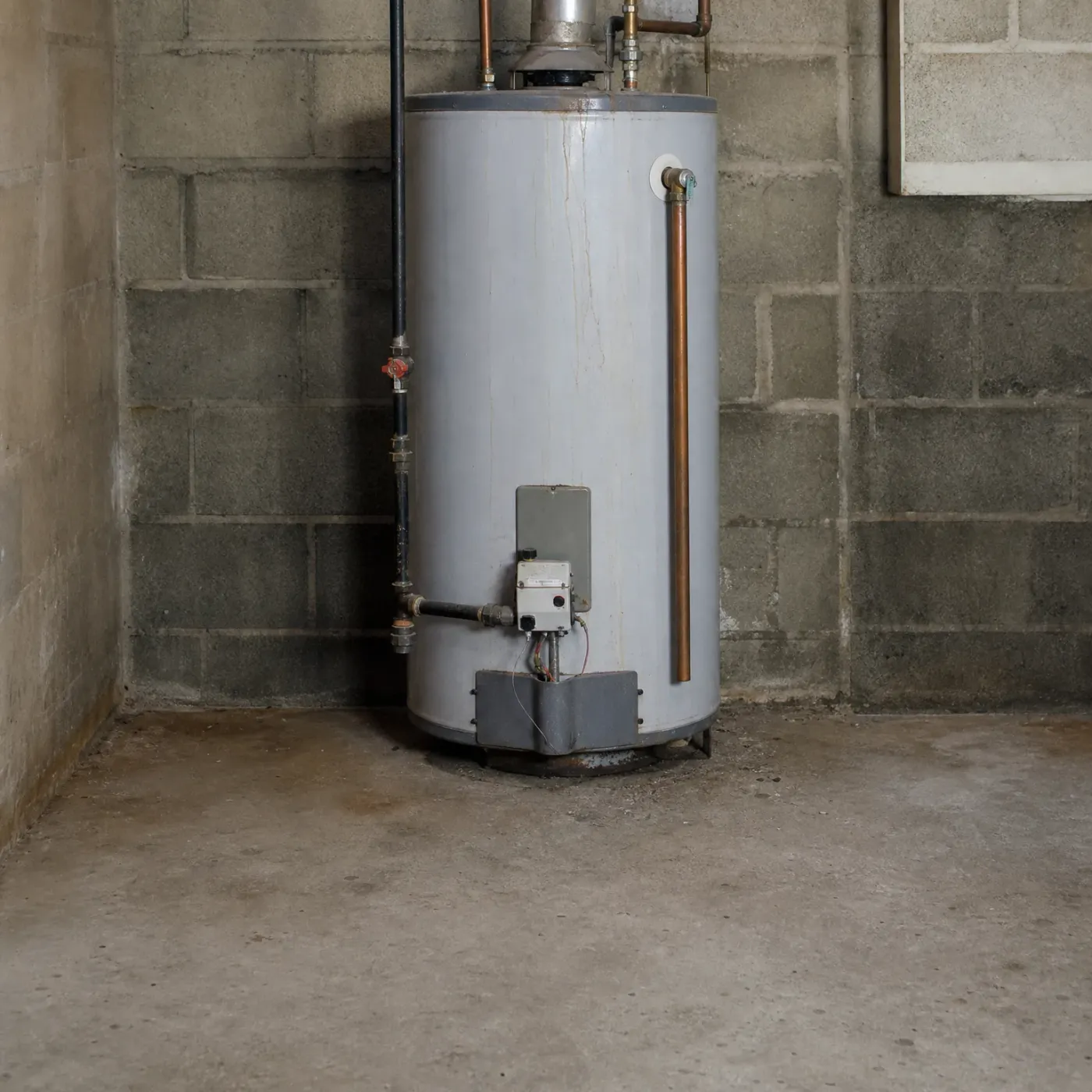
A gray cylindrical gas water heater with copper and black pipes stands in the corner of a basement with concrete block walls and a bare concrete floor.

Sediment working against it

Here the burner sits below a tank with sediment packed on the bottom, right where the gas valve and control unit mount. Water trapped under that layer turns to steam and pushes up through it, and that's the popping you hear.

The popping comes from sediment on the bottom of the tank, and it doesn't go away on its own. A contractor can flush it out, and if the tank's been noisy for a while, they can tell you honestly whether a flush still does the job or whether the buildup and the wear on the tank are past that point. That's worth having someone qualified look at rather than guess at. When you put in a request through this page, it goes to one licensed contractor working in Scottsbluff and the rest of Scotts Bluff County, someone who deals with this hard water and what it does to tanks all year, not a handful of companies competing for the job. You'll hear from them directly about what they find and what it takes to fix it. The noise itself won't tell you how far along it is. Someone who opens the tank up will.

A white and gray water heater with copper piping and a black vent pipe stands against a dark concrete basement wall on a bare concrete floor.

Matched to your water heater job

A licensed pro who works in Scotts Bluff County gets your request.

Step 1 of 3: Equipment