Water heater leaking in Omaha, NE

Once you send the form, finding a pro is off your list.

Hand off my repair

A leaking water heater almost always means a tank that has rusted through inside or a fitting that has worked loose. Once the tank itself is leaking, there is no patch for it. Steel tanks corrode from the inside over the years, and once rust eats through the lining, water finds a way out through the bottom or the seams. If the leak is coming from a pipe fitting, a valve, or the connection at the top, that can sometimes be tightened or replaced without touching the tank. Either way, standing water around the base is not something to wait out. A gas water heater sitting in water can have problems with the burner and controls underneath it, and a leak that is left alone tends to get worse, not better. Shut off the water supply to the tank and the power or gas to it if you can do so safely, and have someone look at it before it leaks further.

What does your water heater have to deal with here?

  • 2.43 people per household on average

    Douglas County households average 2.43 people, census figures show, so most water heaters here are keeping up with daily showers and laundry for a family, not just one or two people.

  • Half the homes here were built by 1977

    Half the homes in Douglas County were built in 1977 or earlier, per the census. If yours is one of them, the water heater has likely been swapped out at least once already, maybe more.

  • 72% of homes heat with gas

    72% of homes in Douglas County heat with gas, census data shows, so a leak here is more often a gas water heater than electric, and the fix depends on which one you have.

ACS 2020-2024

Water pooling under the tank

If water is coming from underneath the tank itself, not a fitting above it, that is the tank wall. Steel corrodes from the inside once the glass lining wears through, and it shows up first as a damp spot on the floor or a trail toward the drain. This kind of leak does not stop or seal itself. It gets worse as the rust works through more of the tank, and the fix is replacement, not repair. If you catch it early, you have time to shut off the water and the gas or power before it spreads to the subfloor underneath.


Water from a pipe or valve

If the leak is coming from a fitting, a union, or the pressure relief valve near the top of the tank, the tank itself may be fine. Fittings loosen over time from the house settling or from vibration, and a valve can fail on its own without the tank behind it being bad at all. This kind of leak is often a repair, not a replacement. A contractor can tighten a connection, replace a valve, or swap a section of pipe without touching the tank, which costs you a lot less than starting over with a new unit.

A smiling bearded man in a dark blue henley shirt sits leaning back on a light grey sofa in a living room, with a bowl of popcorn on a wooden coffee table and a large window behind him.
A bearded man in a dark quarter-zip sweater sits smiling on a brown sofa in a dimly lit living room, with a bowl of popcorn and a mug on a table in the foreground and a potted plant near a window behind him.
A smiling man with graying dark hair and a beard, wearing an olive sweater, sits on a sofa in a living room beside a bowl of popcorn on a wooden table.
A smiling man in a dark green henley shirt sits on a gray sofa in a living room with a lit table lamp, wooden shelving unit, and a bowl of popcorn in the foreground.

2.43 people per household

That is the Douglas County average. A tank sized for one or two people can fall behind when a family is running showers and laundry the same evening.

Send it today

No patch for a rusted tank

Once rust eats through the steel, the leak only gets worse. A fitting can be tightened or replaced. The tank itself cannot.

Send it today

Why is there water around my water heater?

Look at the floor around the tank first. A damp ring, a puddle that comes back after you mop it, or rust streaks running down the side of the tank all point to the same place: the tank itself. You might also notice a popping or rumbling sound when it runs, which is sediment shifting on a liner that has worn through. If the leak has been going a while, check the drywall or baseboard nearby for soft spots or a musty smell. Left alone, that water finds its way into the subfloor or the wall behind it, and a slow drip becomes a bigger repair than the tank ever was.

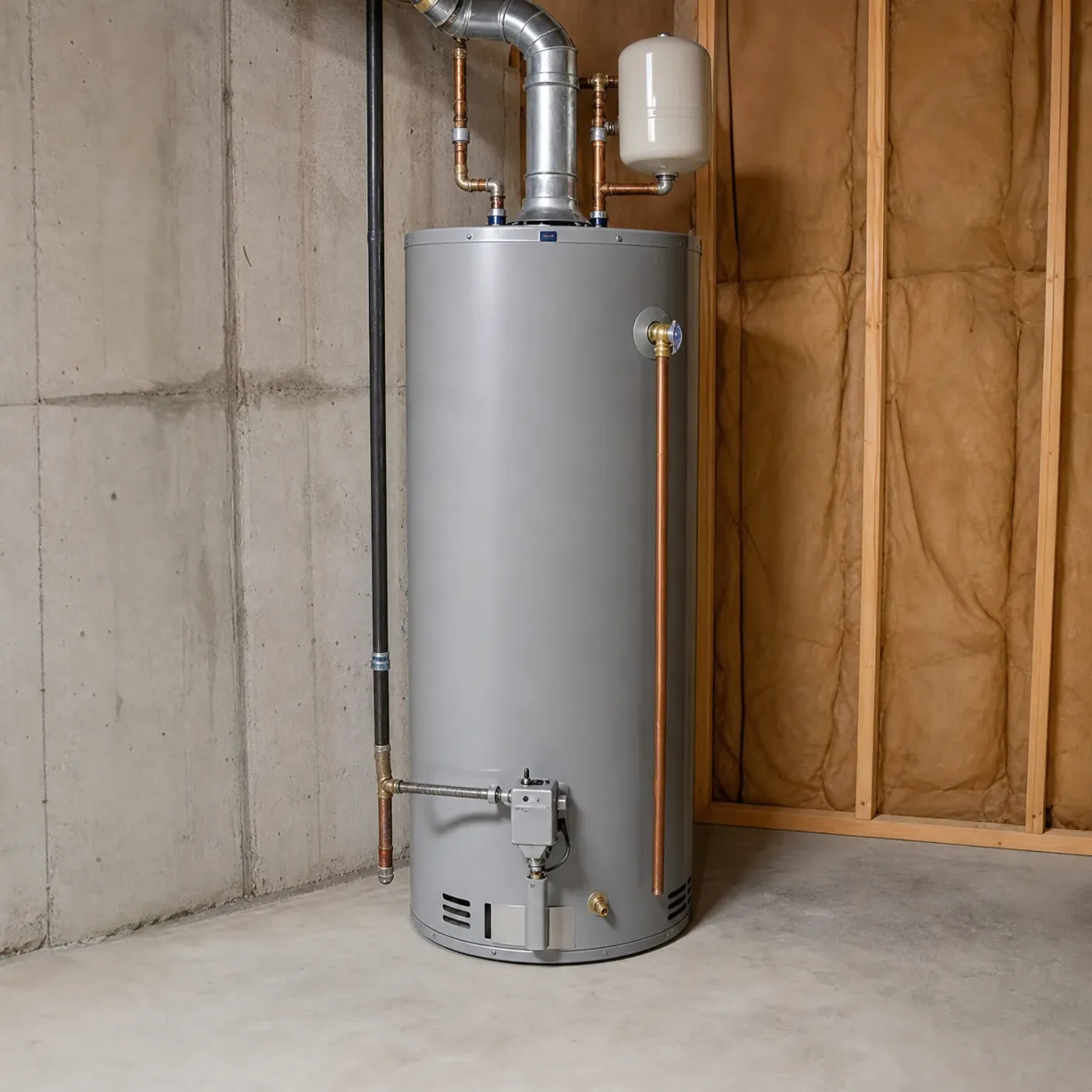
A gray cylindrical gas water heater with copper piping, flue vent, and a small expansion tank stands in a basement corner between a concrete wall and an insulated stud wall.

Still working right

This is what a water heater looks like with no leak. The floor underneath is dry, the fittings are tight, and the expansion tank above is doing its job absorbing pressure. Copper and black iron pipes run clean into the top, with no rust streaks anywhere on the tank.

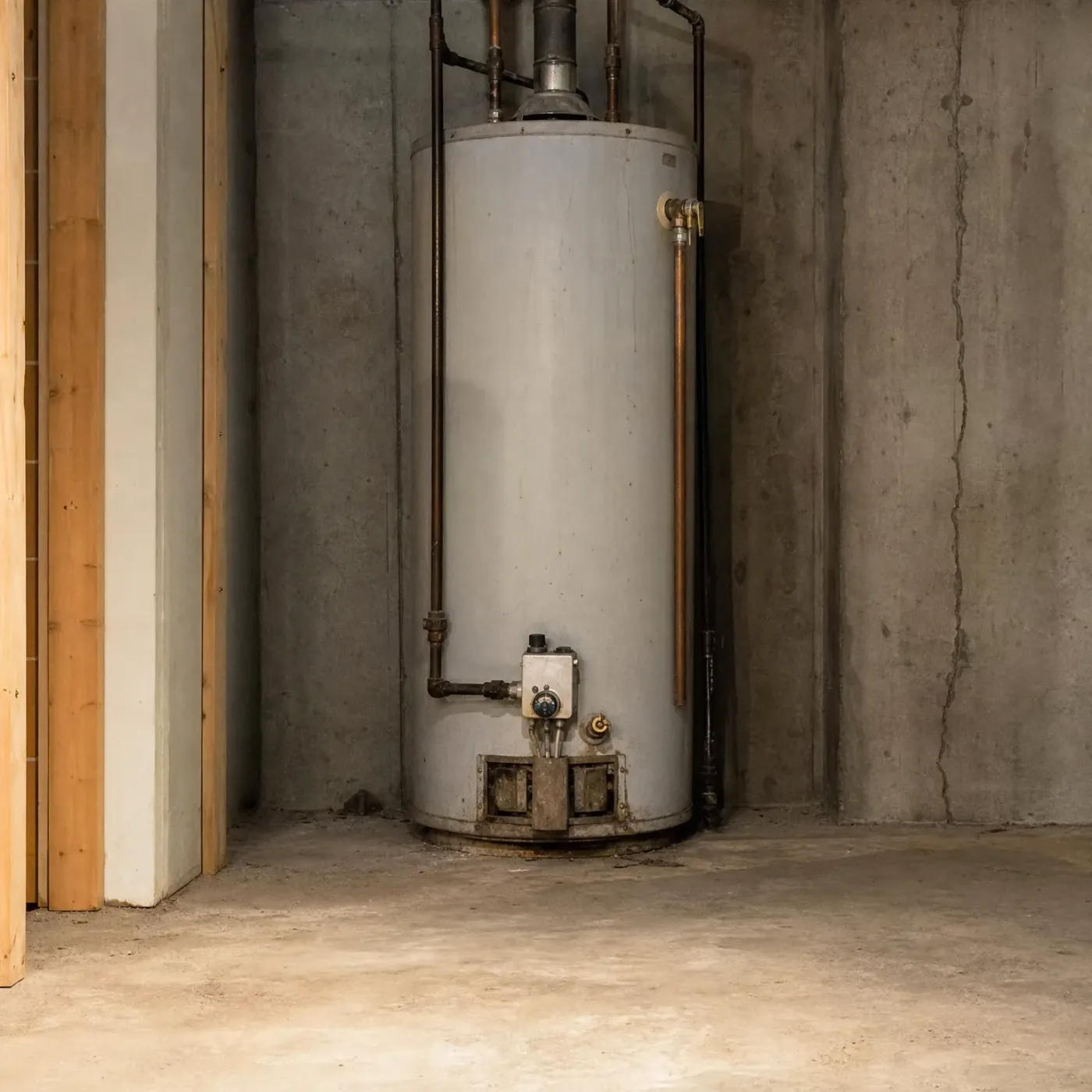
An older gas water heater with copper and black pipes stands in the corner of a bare concrete basement next to a wood-framed partition wall.

Tank in trouble

This one is old enough that the corner concrete around it shows wear, and that matters. Steel tanks corrode from the inside with age, and once the lining fails, rust works through the wall. A gas control valve like this one can also leak at the fitting, so check both before assuming the worst.

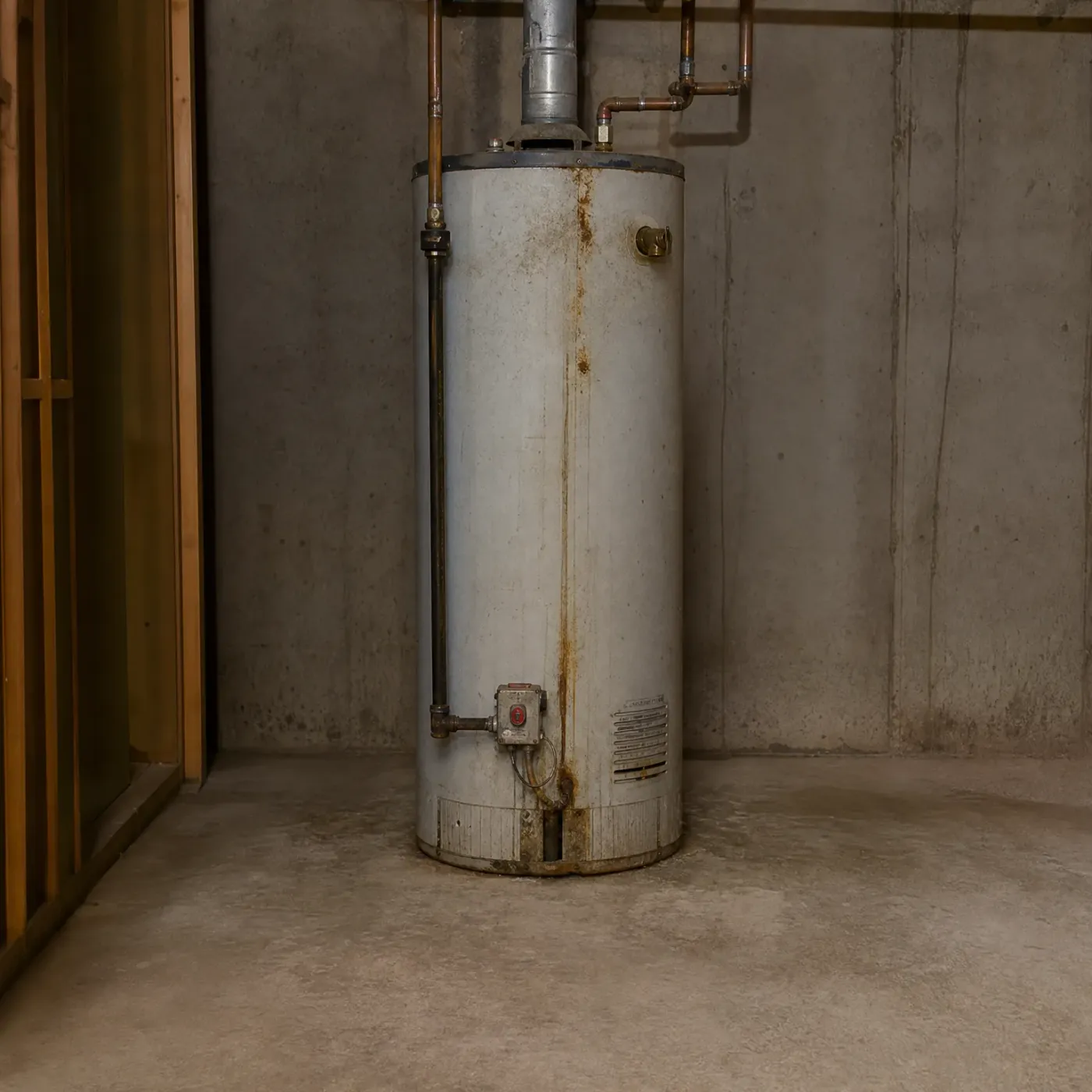
An aging rust-streaked gas water heater with copper and galvanized pipes stands against a bare concrete basement wall beside wooden stud framing.
Before you get your water heater repair
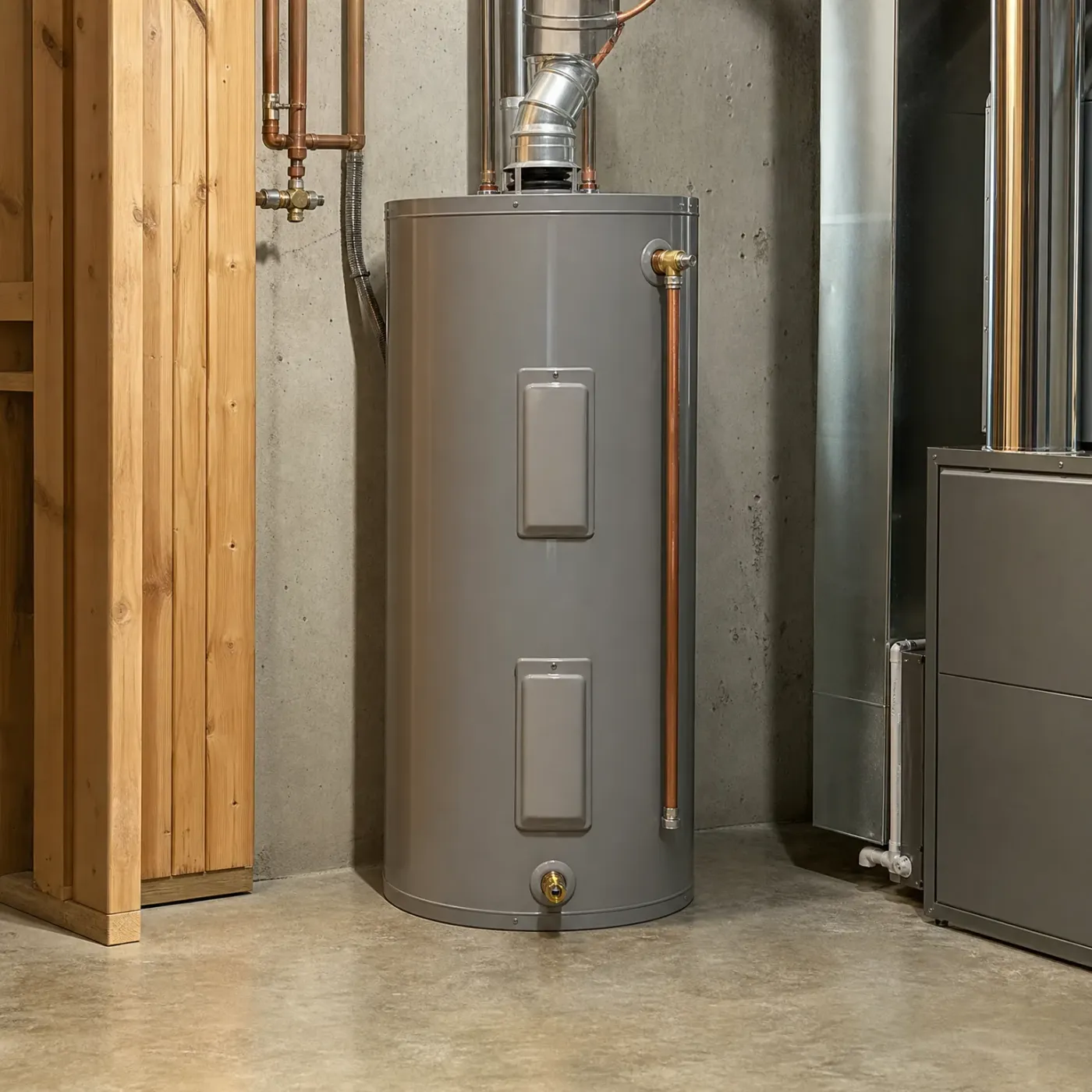
A gray cylindrical water heater with two access panels and copper piping stands against a concrete wall in a basement, beside wood framing and metal ductwork.
After you get your water heater repair

Not every leak means a new tank. The relief valve near the top is designed to open when pressure inside builds past a safe point, so water at that discharge pipe is often the valve doing its job, not failing. The drain valve at the bottom is usually plastic, and years of use can wear it out long before the tank itself gives out. Fittings where the cold and hot lines connect to the top of the tank loosen slowly as the metal heats and cools through every cycle. Inside the tank, an anode rod is built to corrode on purpose, taking the damage so the steel walls don't have to. Once that rod is used up, rust starts working on the tank itself, and sediment sitting at the bottom only speeds that along by holding heat against the steel. A contractor can tell you which of these is happening by where the water actually starts.

Where the water is actually coming from

  • A water heater's temperature and pressure relief valve sits near the top and opens on its own if pressure inside the tank climbs too high.
  • If that valve is dripping from the discharge pipe, the cause is usually pressure buildup, not a crack in the valve itself.
  • A leak at the bottom near the drain valve often means the plastic valve has worn out and needs replacing, not the tank.
  • Fittings where the cold water inlet and hot water outlet connect to the tank can loosen over years of expansion and contraction from heating cycles.
  • Sediment that settles at the bottom of the tank can trap heat against the steel and speed up the corrosion that eventually causes a leak.
  • An anode rod inside the tank is meant to corrode first and protect the steel, and once it's used up the tank itself starts rusting.
A woman with dark hair in a bun reclines on a gray sofa with her eyes closed and a slight smile, wrapped in a cream knit sweater and blanket, with an open book resting in the foreground and a lit lamp in the dim room behind.
A smiling bearded man in a dark crewneck sweater sits at a dinner table with a lit candle, glasses of wine and water, and plates of food in the foreground, with a lamp, framed art and a potted plant behind him.

It's off your list after this

A leak doesn't fix itself, and water sitting against drywall or subfloor only gets worse the longer it runs. You could spend the next hour calling plumbers around Omaha, explaining the same thing to each one, waiting for callbacks, then comparing who can actually come look at a tank that's already wet underneath. Or you can send this request once and let a licensed contractor who works on water heaters around Douglas County take it from here. That's the part that stops being your job. Whether this turns out to be a fitting you can live with for a day or a tank that needs replacing outright, someone who knows the difference should be the one looking at it, not you standing over a puddle deciding how worried to be. Send the request and get back to your evening.

A bathroom with dark blue-gray walls, a towel hanging on a wall-mounted bar, and a glass-enclosed tiled shower with a showerhead, recessed niche holding bottles, and a window at right.

Monday morning, upstairs bathroom. You reach in to start the shower and nothing but cold water comes out, no steam rising, the towel still folded on the rail where you left it last night. Down in the basement or the utility closet, the tank is sitting in a puddle that's crept out past the drain pan toward the wall. Outside it's already cold, one of those Omaha mornings where a cold shower isn't something you can just push through. You turn the water off at the valve, blot up what you can with an old towel, and head downstairs to find your phone, because the kids still need to get ready and someone has to deal with this before work.

Power here costs 13.13 cents per kilowatt-hour

At 13.13 cents per kilowatt-hour, running an electric water heater here doesn't cost much day to day. That makes it tempting to let a slow drip or a fitting leak go a while longer since the bill isn't the problem. The leak doesn't care about the rate. It just keeps finding wood and drywall to sit against.

EIA-861 2025

  1. Rust or sediment wears a pinhole through the steel tank wall

  2. Water seeps out and collects at the base of the tank

  3. The puddle spreads or drips until someone finds it

  4. Left alone, the small leak turns into a steady one

Why is the drain valve at the bottom leaking?

The drain valve sits at the bottom of the tank, low to the floor, so a leak there is easy to mistake for the tank itself weeping from underneath. It is usually a smaller, slower drip than a split tank, and it comes from one specific spot instead of spreading out under the whole base. You want to know if this is the valve or something worse before you decide what to do about it.

The valve is loose, worn, or was left cracked open

Drain valves are plastic or brass, and either kind can start leaking around the handle or where it threads into the tank. Years of mineral buildup from the water here can keep the valve from seating fully shut, so it weeps instead of sealing. Sometimes it is simpler than that: the valve got bumped or turned slightly during a flush and was never closed all the way. A plastic valve is also just more likely to crack over time than a brass one. The good news is a drain valve can be replaced on its own without touching the tank, as long as the tank itself is sound. If the leak is coming from the valve and not from a seam or the tank wall above it, this is usually the cheaper problem to have.

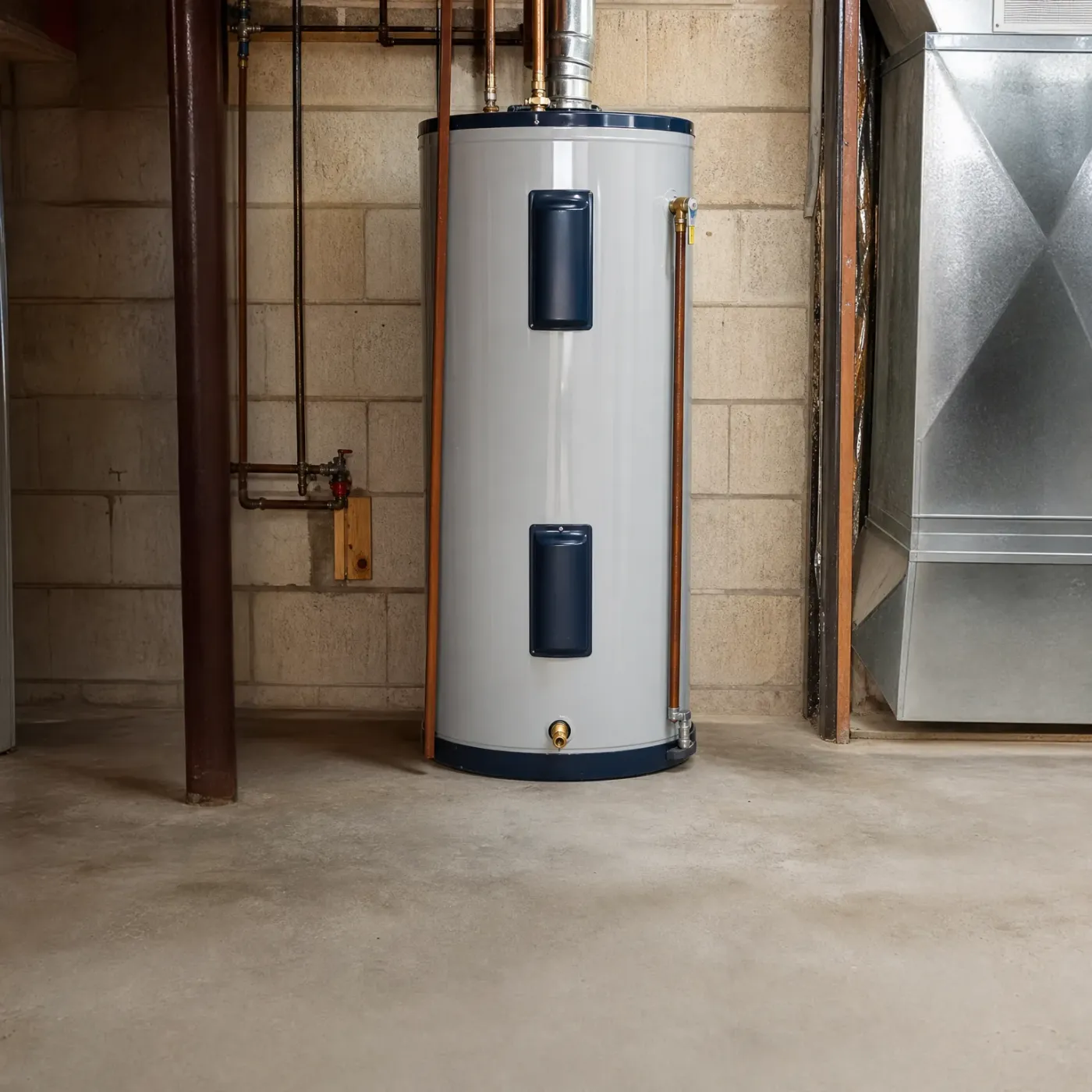
A white cylindrical water heater with two dark access panels stands on a concrete basement floor against a concrete block wall, with copper pipes, a flue duct above, and sheet metal ductwork at right.

Working the way it should

A water heater like this one is doing its job. Copper lines run clean into the top, the exhaust duct is seated tight, and there's no rust creeping down the tank or wet concrete underneath it.

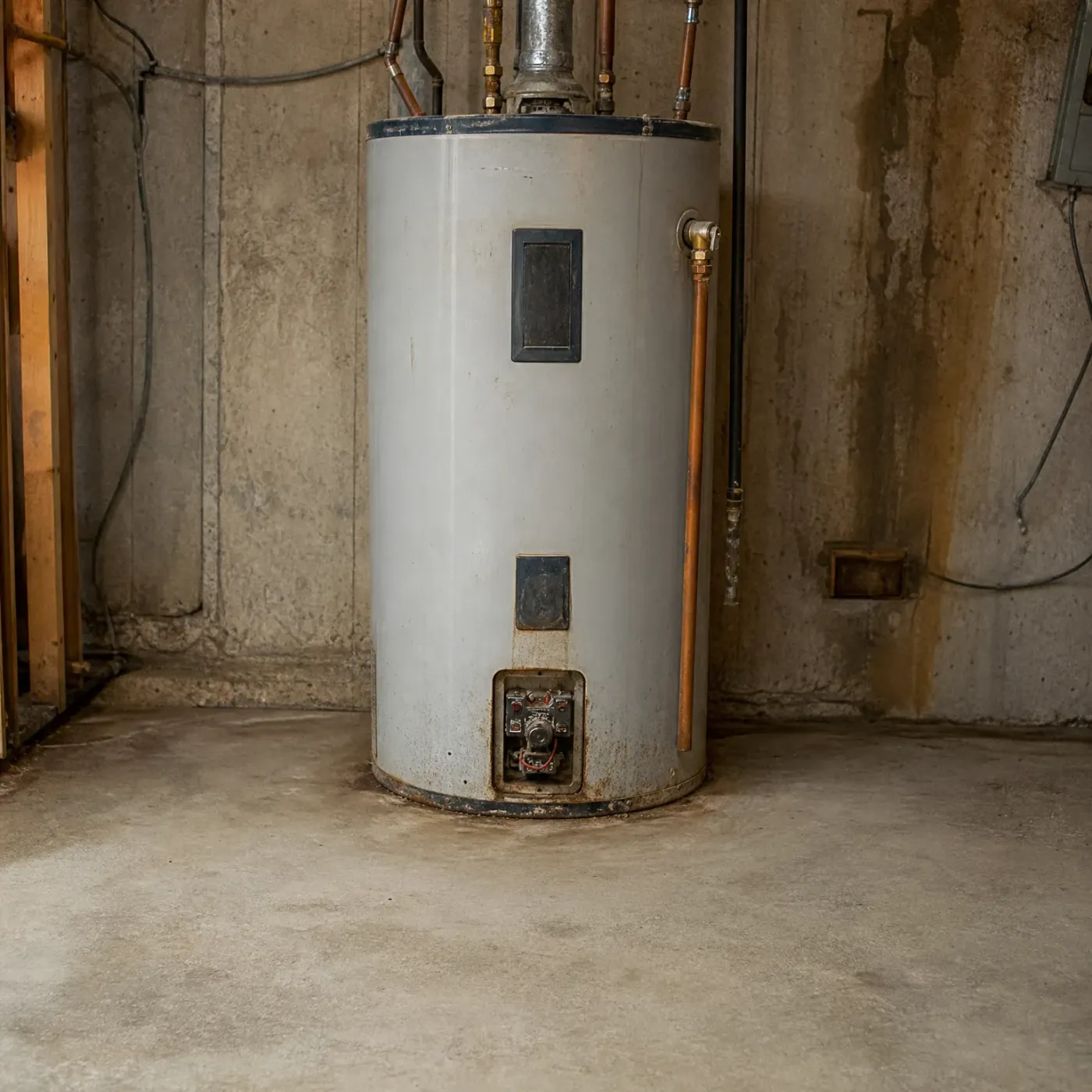
A white cylindrical water heater with copper piping and a gas control valve stands against a stained concrete basement wall on a bare concrete floor.

Old, rusted, and starting to go

Rust on the panels and streaking down the side of an old tank like this usually means the steel is giving out from the inside. Once it's gone this far, the leak only gets worse from here.

A closed laptop and a ceramic mug of dark coffee sit on a wooden table, with a blurred kitchen counter, potted plant, wooden utensils and cutting boards, and a large window in the background.

A leak like this comes down to one of two things

Either the tank itself has rusted through, or a fitting, valve, or connection has worked loose. The floor underneath tells you which. Water under the tank means the steel. Water tracing down from a pipe or valve above it means something that can be tightened or swapped out. Either way, the puddle isn't going to stop on its own, and the longer it sits against your floor the more it spreads.

You don't have to spend your evening on the phone finding out who can come look at it. No calling around to half a dozen plumbers in Omaha, repeating the same description of the leak to each one, then sitting on hold waiting for someone to call you back with an opening. Send the form once and that search becomes someone else's job instead of yours.

Interior corner with sheer white curtains at a window, a brown upholstered sofa in the foreground, and a wooden multi-drawer cabinet holding a round ceramic vase with leafy branches.
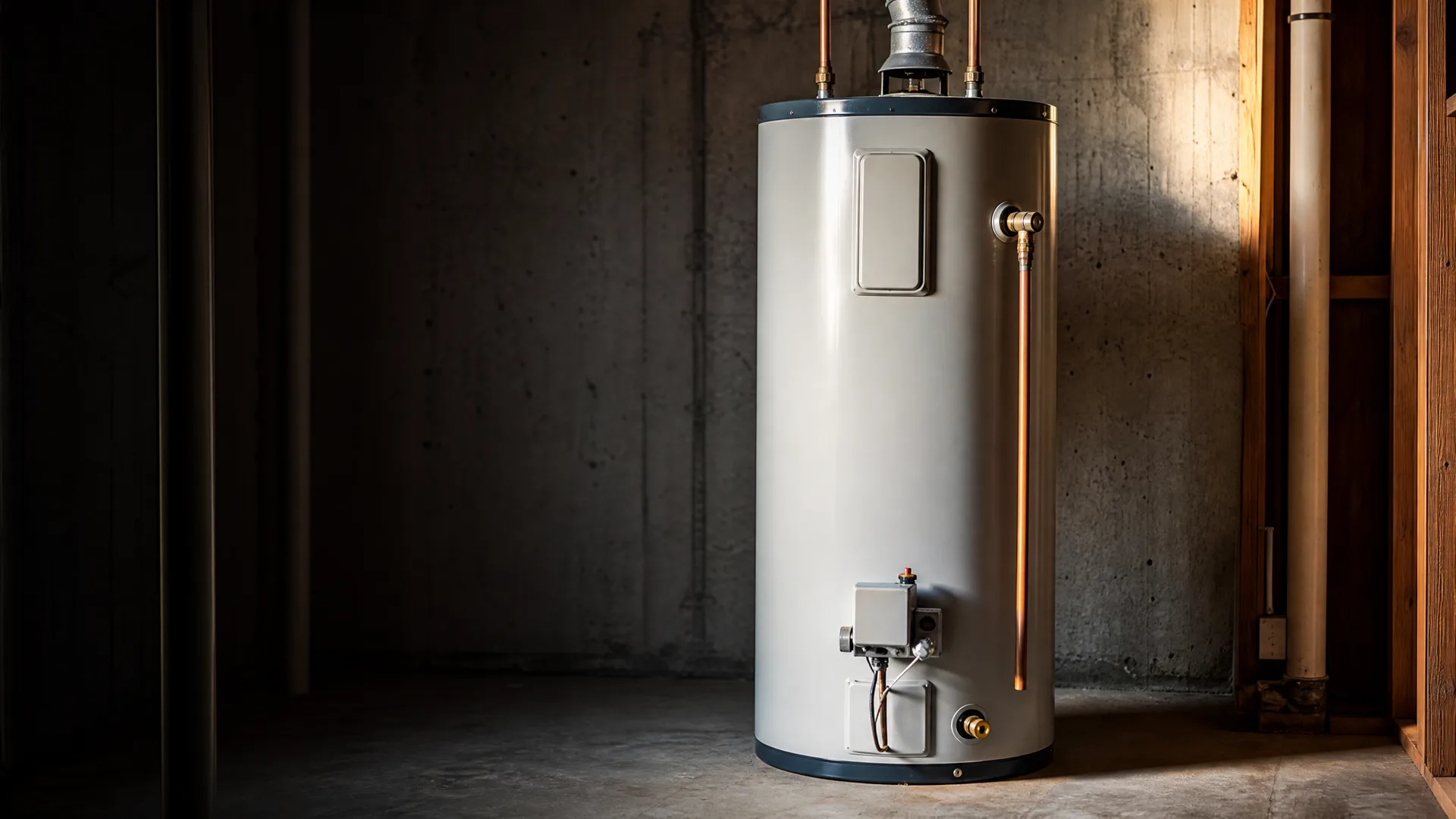
A cylindrical gas water heater with copper pipes, a flue connection on top, and a control box near the base, standing on a concrete floor against a concrete wall.

Hand off the search today

Step 1 of 3: Equipment