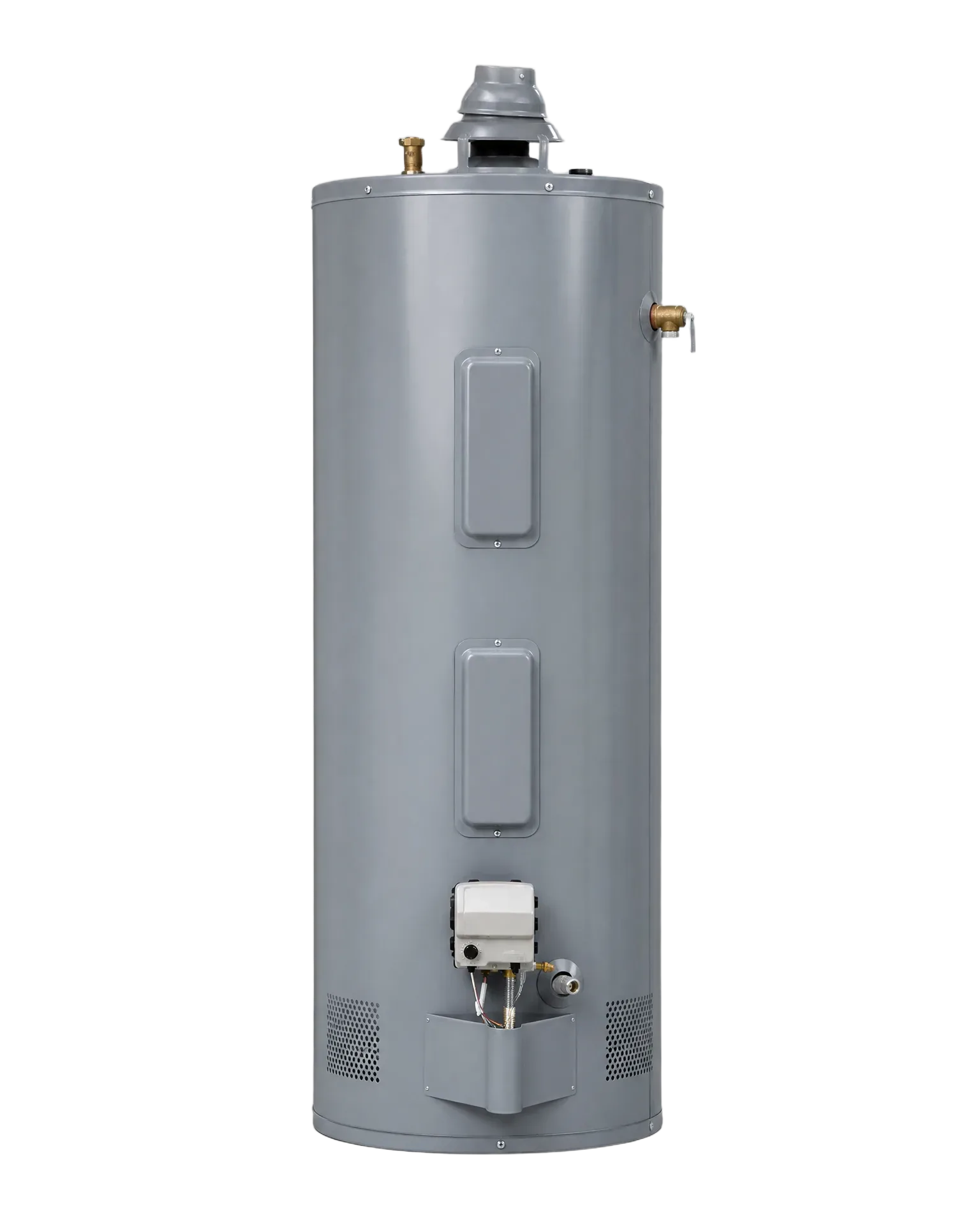

A tank doing its job
This is what a working tank looks like: the vent pipe tight, the copper lines clean, no drips at the drain valve. Set it and it quietly keeps up with the house, gas burner cycling as the tank calls for heat.
Most Nebraska homes do fine with a tank water heater, and most homes here heat water with gas, which a tank is built around anyway. A gas tank recovers fast, so a houseful of people doing showers and laundry back to back doesn't run it cold. Tankless makes more sense if the home is short on space or if hot water never seems to stop being needed, since it heats water on demand instead of storing it. The tradeoff is upfront cost and installation. A tankless unit often needs different gas line sizing and venting than what a tank used, which can mean more work going in. If your current setup already handles the gas line and vent a tankless unit needs, switching is simpler. If it doesn't, a tank replacement is usually the straightforward path. Either way, the right call depends on how your house is set up now, not just which unit sounds newer or more efficient.


Cold water enters the tank and a thermostat checks the temperature
The gas burner or heating element fires until the set temperature is reached
Hot water rises and sits ready at the top of the tank
Water leaves the tank the moment you open a hot tap

With gas running the burner, a tank keeps up when the showers start back to back and the washer's going at the same time. You notice it the other way around: when the water turns lukewarm halfway through, or the tank's making noise it didn't used to make. That's usually the tank telling you it's near the end, not something to wait out.
Picking the right size and setup for your household isn't a guess you should make alone, and it's not something to sort out by calling around to five different places and repeating the same details each time. Getting matched with a contractor who installs water heaters in your area means you explain your situation once, to someone who already knows what Nebraska homes need.





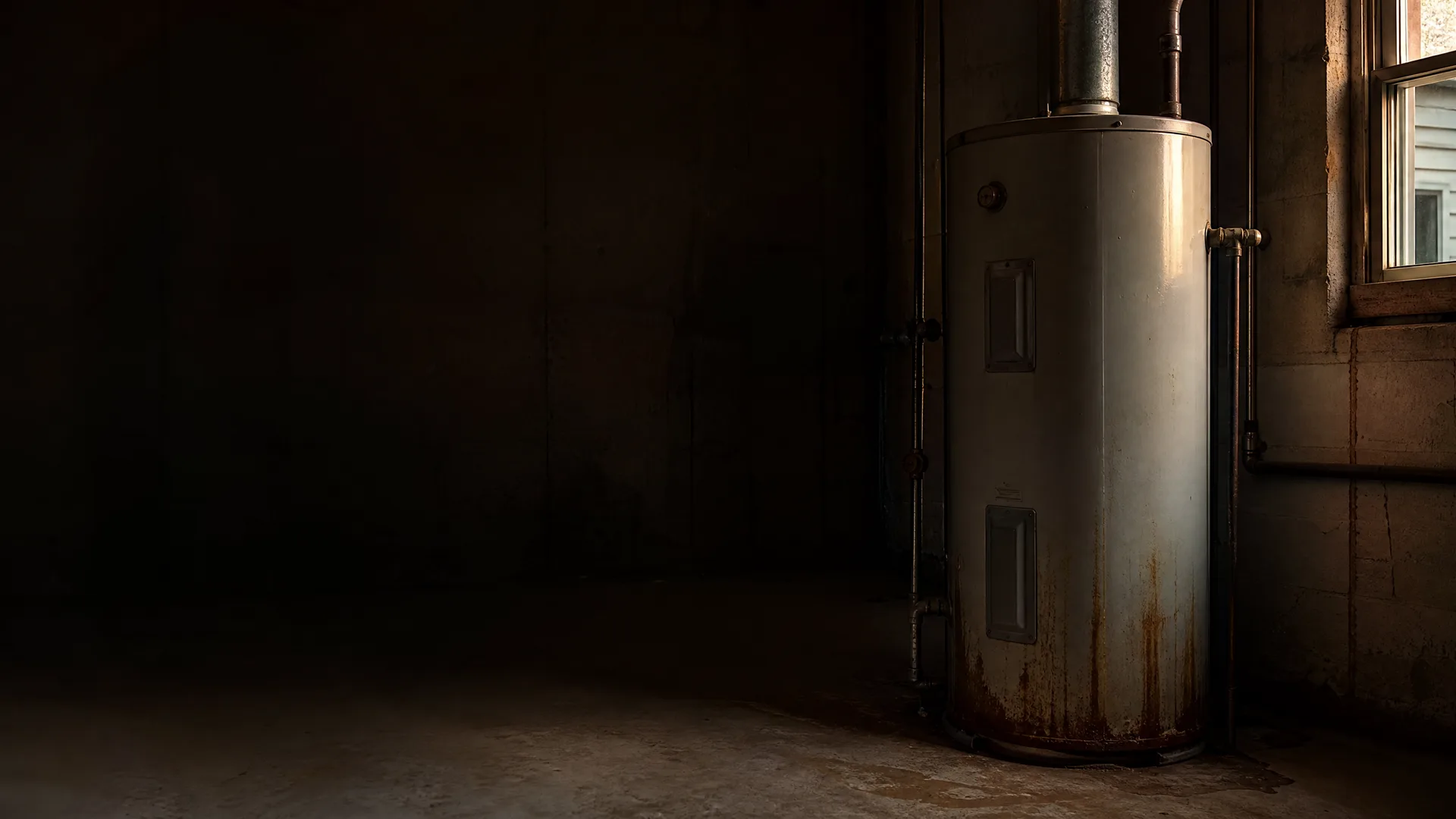
You go down to the utility room after the dishes are done, just to grab a load out of the dryer. The light's dim down there and you see it before you think about it, the streaks running down the side of the tank, rust-colored, pooling a little at the base where it meets the concrete. The house is quiet, everybody's settled in for the night upstairs. You crouch down and touch the floor near it. Damp. Not a flood, just damp. You've known this tank a long time and you stand there a minute working out what you're going to do about it tomorrow, and who you're going to call.
You've already got a feel for whether your household needs a tank or tankless setup, and either way the next step is the same: someone has to size the unit to your house, check your gas line and venting against what a tankless would need, or confirm your tank's spot in the corner still makes sense. That's a handful of calls most people put off for weeks, explaining the same rust streaks or lukewarm showers to each contractor who picks up, then trying to compare quotes that aren't quite for the same job. Handing that off means you describe it once and a contractor who installs water heaters in Nebraska homes gets in touch about yours. Whether you're replacing a tank that's finally failing or weighing a switch to tankless before it does, the sizing and the gas line questions don't answer themselves, and the sooner someone's looked at your setup, the sooner you're not thinking about that utility room every time you go down for laundry.
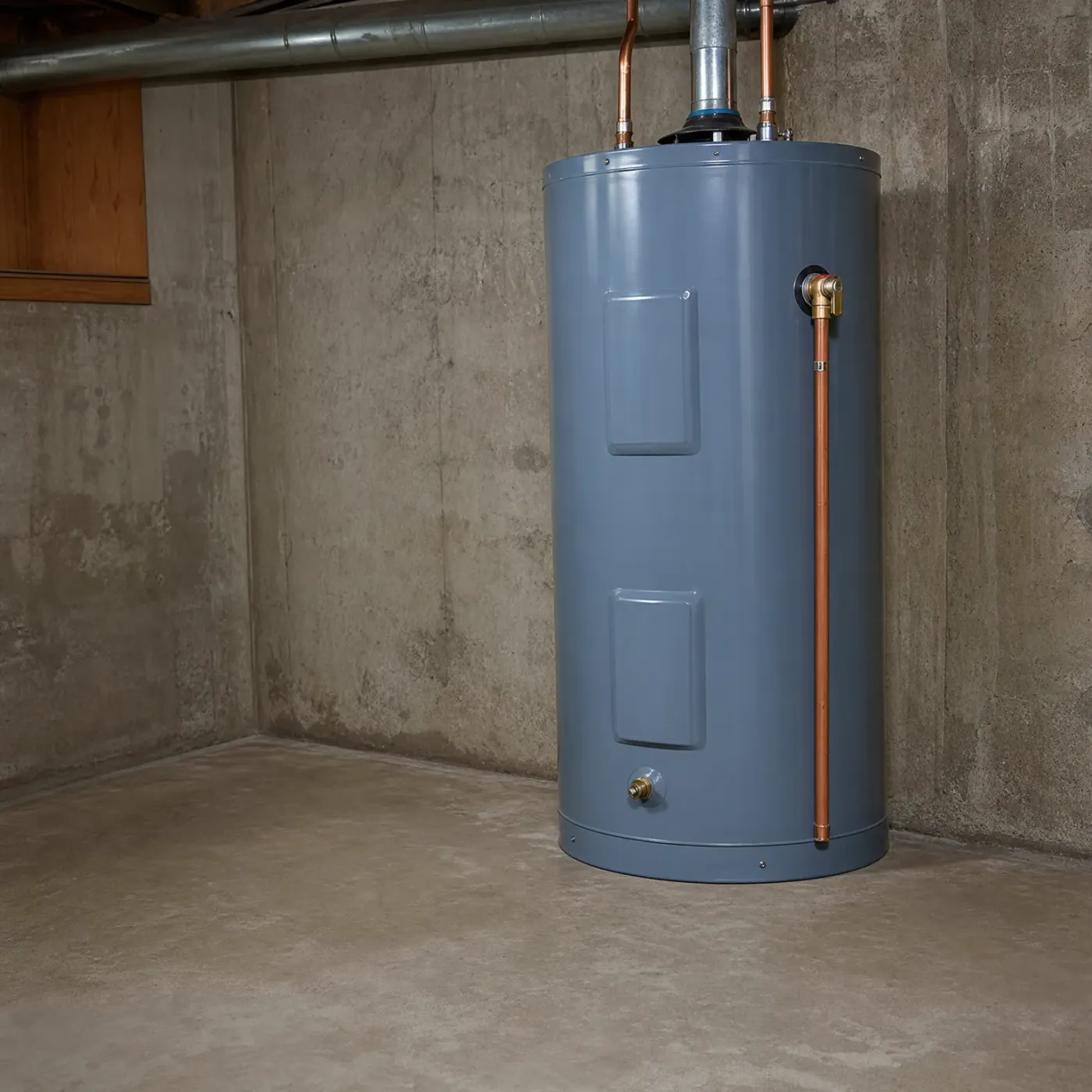
This is what a working tank looks like: the vent pipe tight, the copper lines clean, no drips at the drain valve. Set it and it quietly keeps up with the house, gas burner cycling as the tank calls for heat.
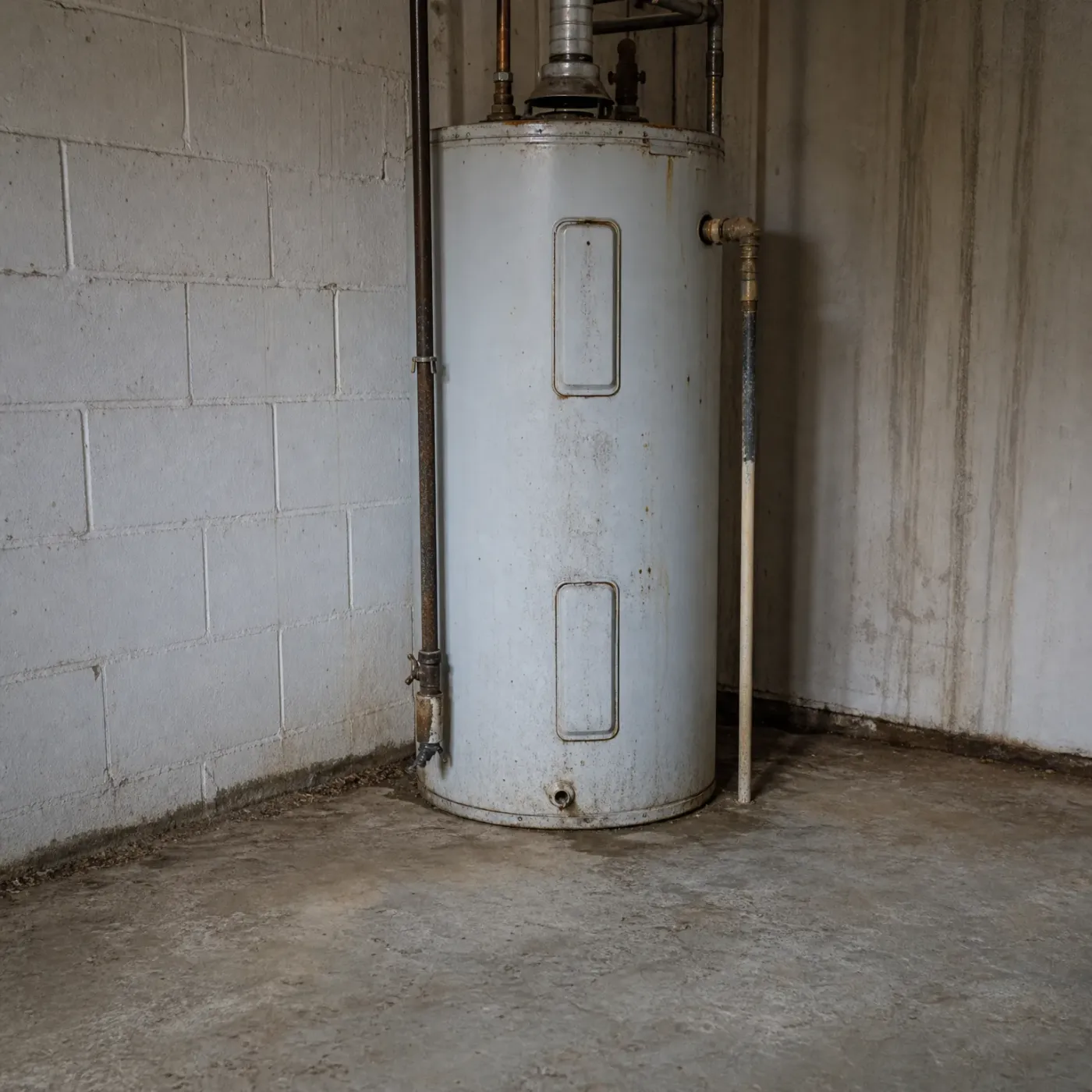
Rust like this on the jacket and fittings means the tank is on borrowed time, not just the finish. Once corrosion shows on the outside, the inside has usually been losing ground longer, and a leak at the base is a matter of when.
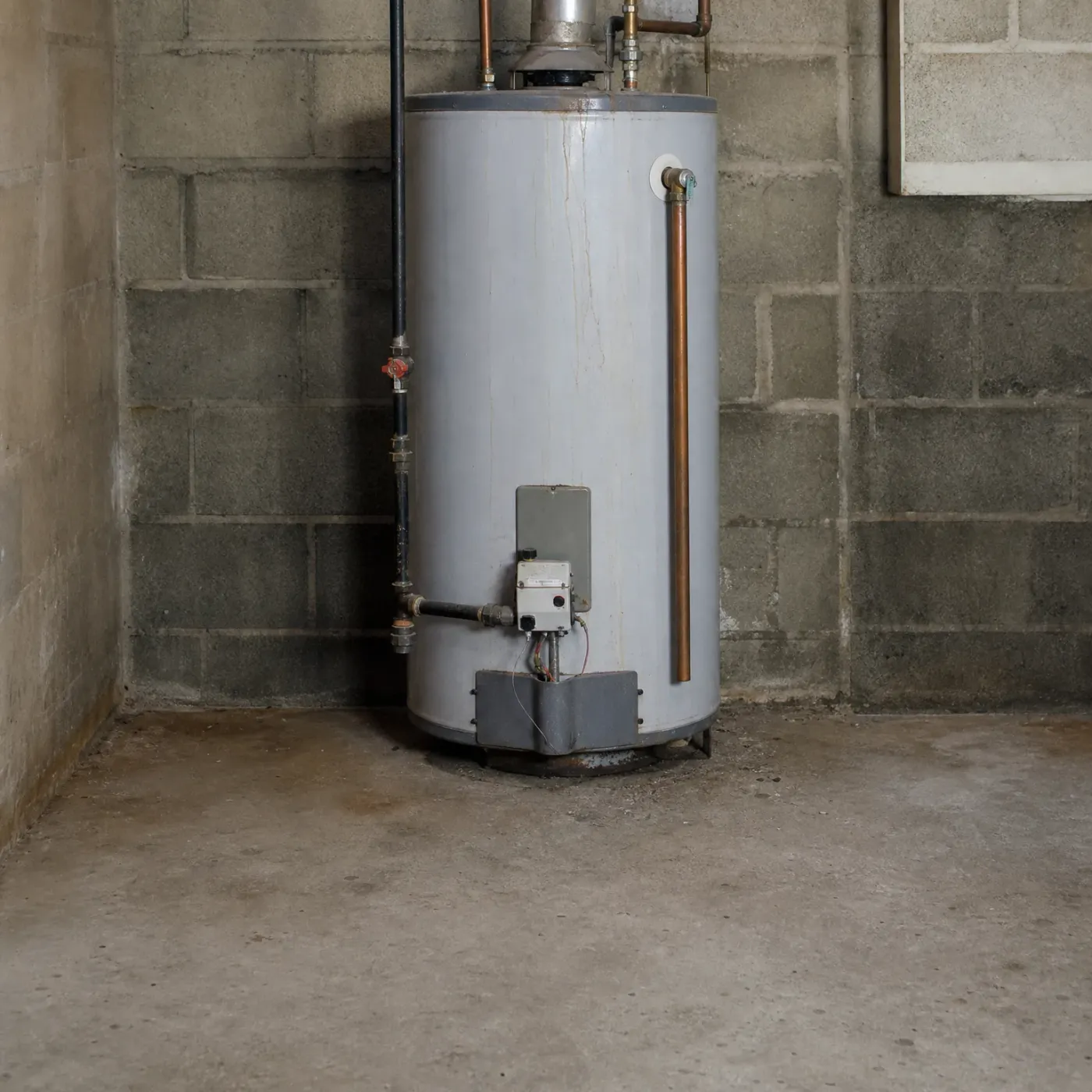
Think about how the house actually runs hot water. If someone's in the shower while the dishwasher's going and the washer's mid-cycle, does it hold up, or does the water go lukewarm partway through? Listen for a low rumble from the tank, that's sediment settled on the bottom, making the burner work harder to heat the same amount of water. Check the floor around the base for any dampness or rust streaks down the side. A tank leaking at the bottom usually means it's failing, not a fitting you can tighten, and left alone it can soak the floor around it or worse.
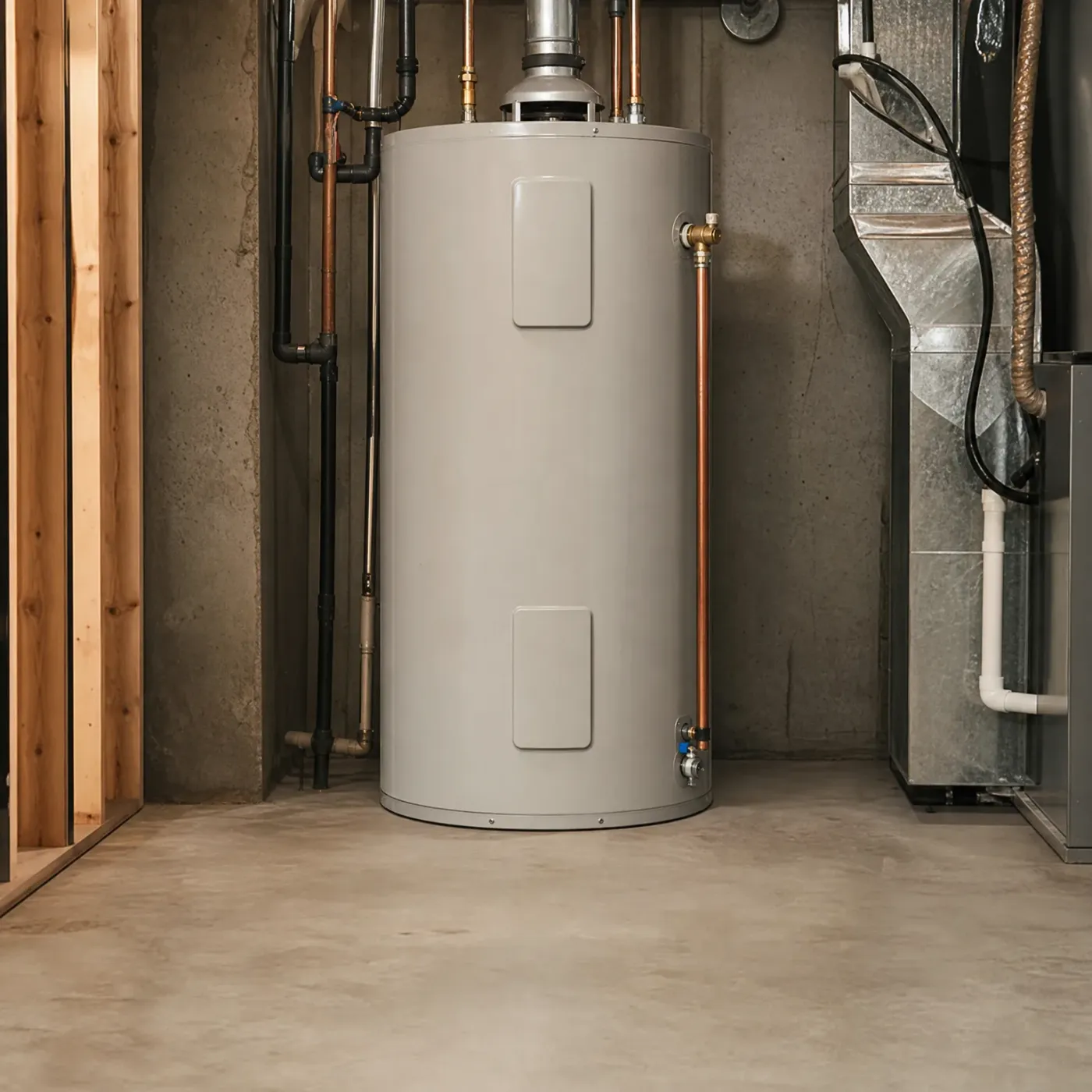
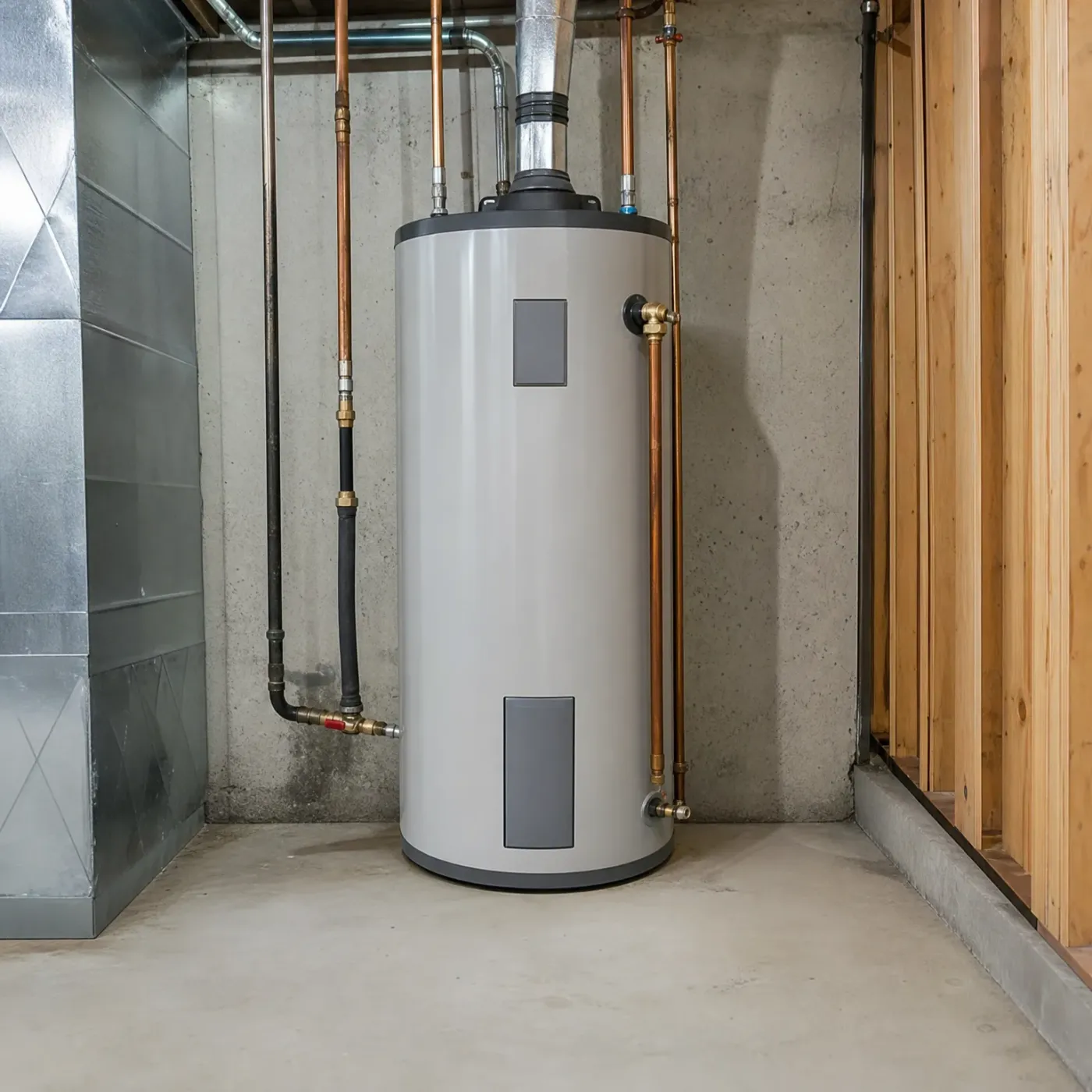
This is what a normal setup looks like: tank, copper and black pipe, brass fittings, the pressure-relief valve where it should be. The furnace sits right next to it, which is how a lot of Nebraska basements are laid out. Nothing here needs attention yet.
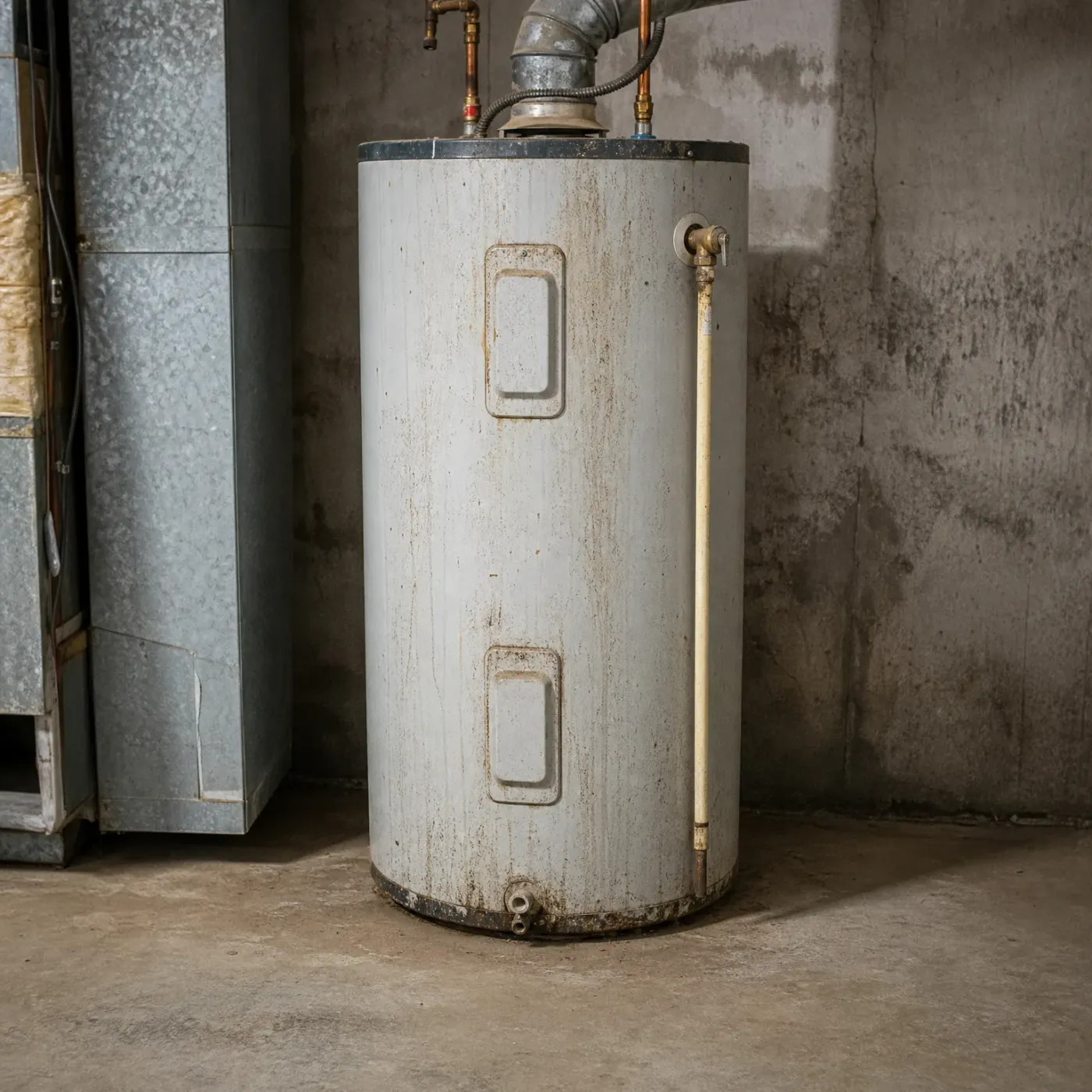
Rust like this on the tank means it's failing from the inside, not just getting old to look at. The relief valve and discharge pipe still sit there doing their job, but the tank itself won't hold much longer. This is the point where you're choosing a replacement, not deciding if you need one.
Almost 6 in 10 Nebraska homes heat with gas, and yours is probably one of them. That's the setup a gas tank is made for, so swapping to tankless usually means more than a new unit. It can mean new gas lines and venting too.
ACS 2020-2024 5-year B25040
For most houses in Nebraska, the answer is the tank you probably already have. Gas is already run to it, and gas is what makes a tank recover fast between a shower, a load of laundry and a sink full of dishes. Tankless isn't a bad unit. It's a different setup, and getting there usually means new gas line sized for the higher draw and venting that meets what a tankless needs, not just swapping the box in the corner. That changes the job from a straight installation into something closer to a small remodel of the utility room. Cheap electricity here doesn't move the needle much either way, since it's the gas burner doing the work of heating water fast, not the power behind it. What should decide it is what's already in your house and how your house actually uses hot water. If the tank is old enough to show rust at the base or water pooling underneath, or if the shower runs lukewarm before everyone's had a turn, that's your current setup telling you where it stands, tank or no tank. If none of that is happening, there's no reason to go looking for a different system. Either way, someone still has to look at the gas line, the vent, and the tank itself before any install makes sense, and that's the same step whether you stay with gas or move to tankless.


Get the right pro for your water heater
Fill out one short form instead of calling around.
