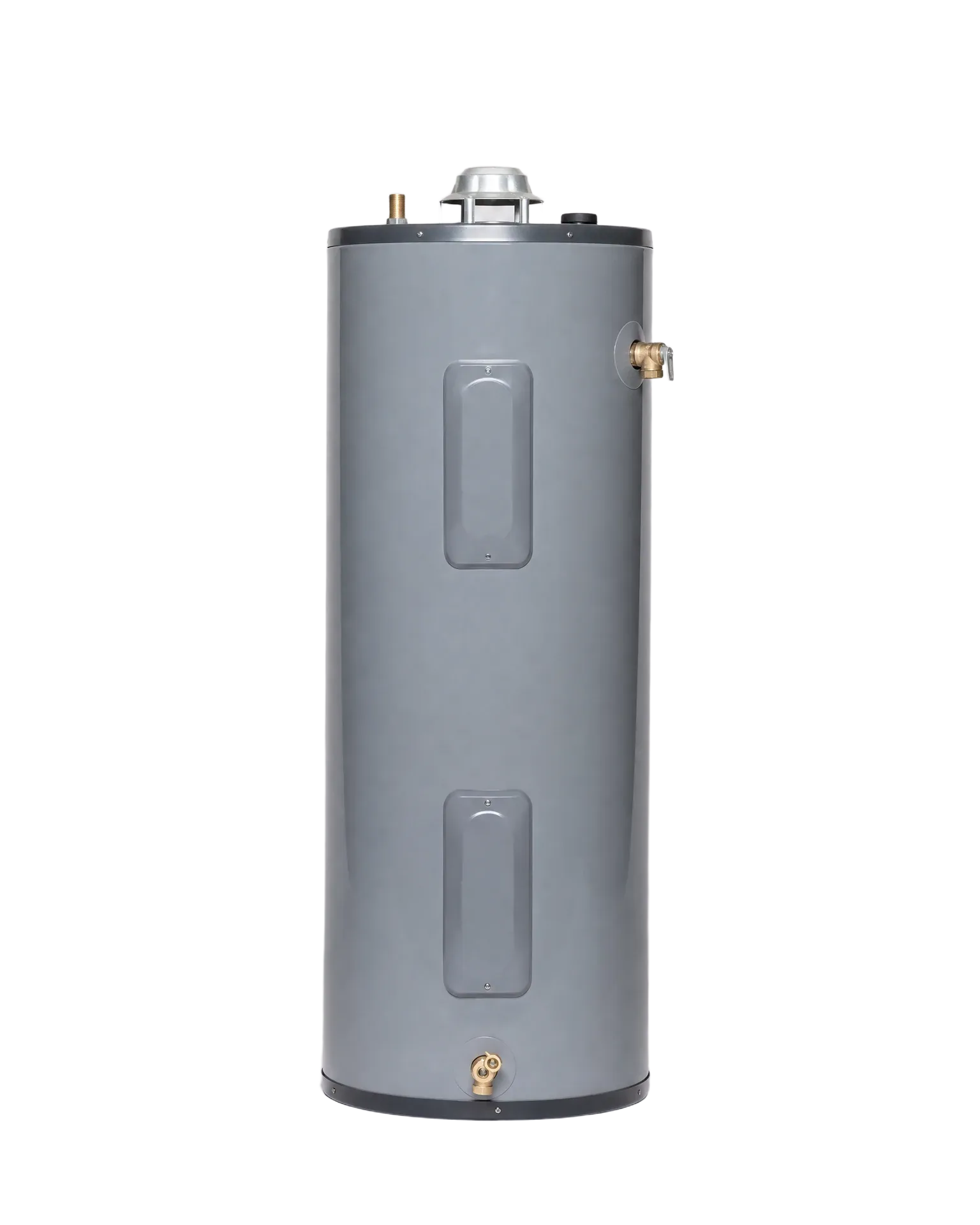

Working the way it should
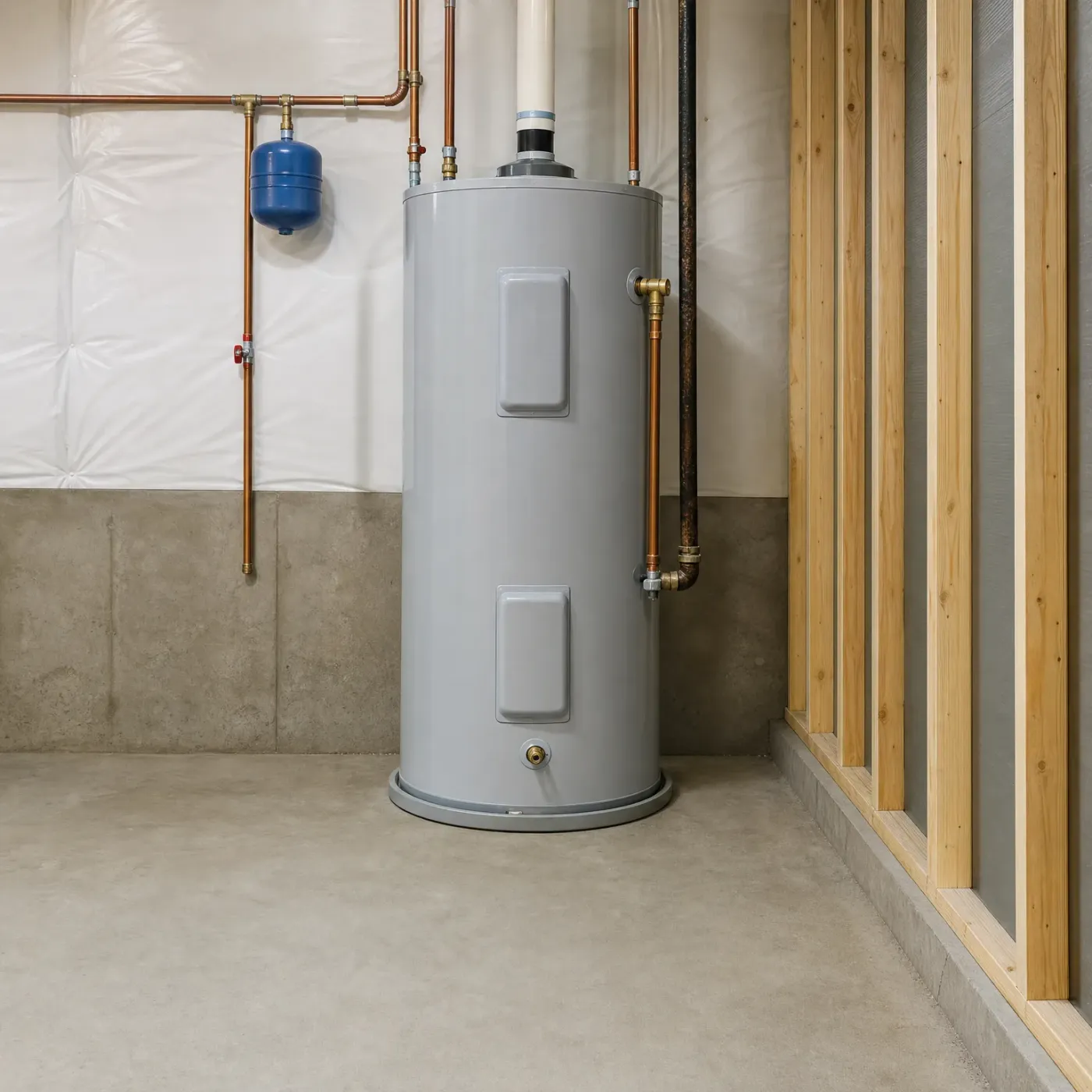
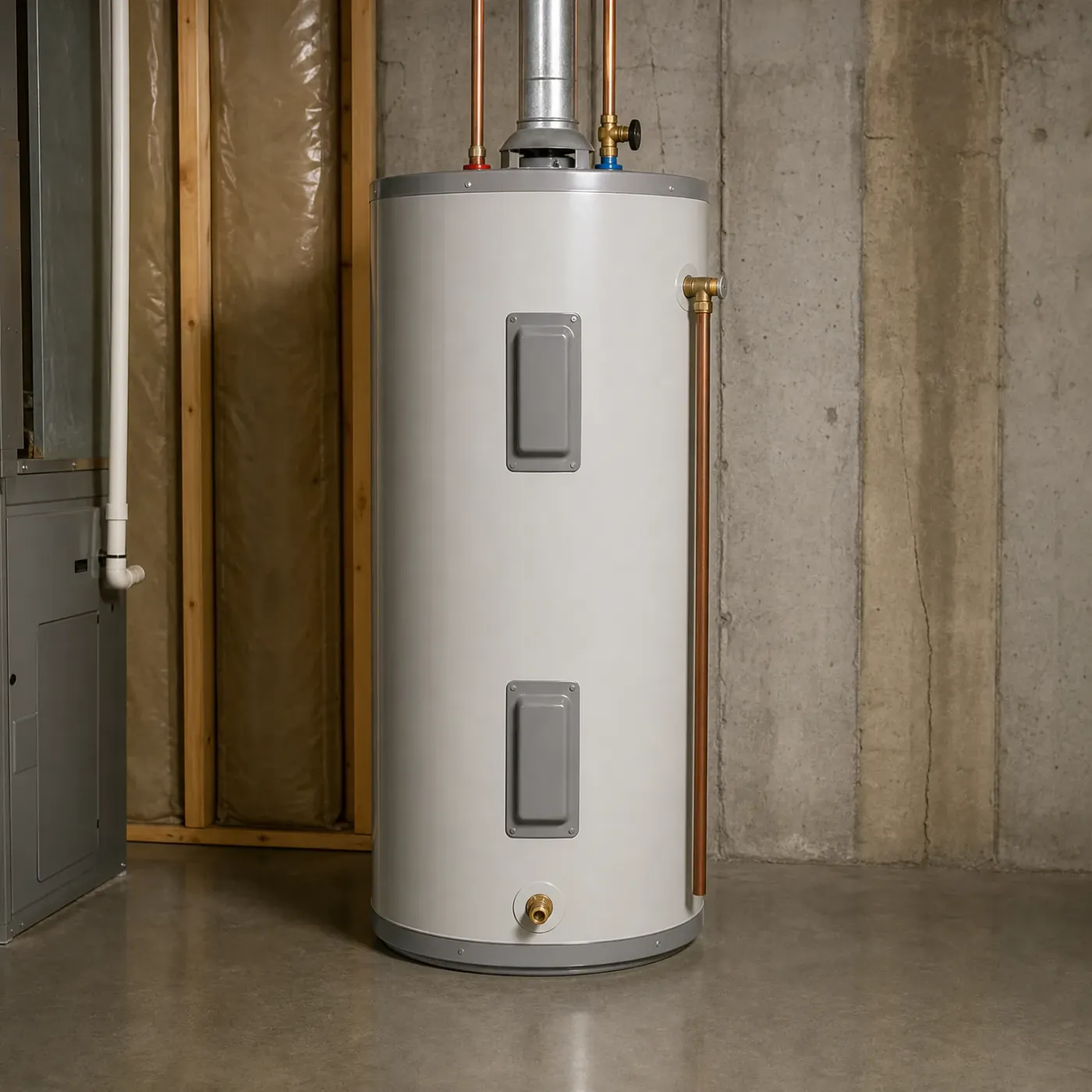
This one heats quietly and the fittings stay dry. No rust at the base, no water pooling on the concrete. If yours looks like this, a yearly flush is about all it needs to keep running.
A water heater rarely quits without warning. Most give you a stretch of weeks or months where something is off before they fail outright, and if you catch it early you get to pick the timing instead of dealing with a flood or a cold shower on a January morning. The signs are usually simple to spot once you know what to look for.
Rusty water from the hot tap, especially if it doesn't clear after running it a minute, usually means the tank is corroding from the inside. Popping or rumbling sounds come from sediment that's built up and hardened at the bottom, which makes the tank work harder and wears it out faster. Any water around the base, even a small puddle, can mean the tank itself has a crack, and that doesn't get better on its own. If your water heater is also struggling to keep up with hot water through a Nebraska winter when the incoming water is colder to begin with, that's another sign it's losing capacity. Catching any of these before the tank fails outright means you get to choose a new one on your own schedule.




Water on the floor around the tank is the one to take seriously. It means the tank itself is failing, not a fitting you can tighten. Rusty or metallic-tasting water from the hot tap points the same way. So does a tank that's noisy, popping or rumbling as it heats, from sediment that's built up on the bottom over the years. You might also notice the water isn't as hot as it used to be, or it runs out faster than it did a year ago. Check the age on the tank if you can find the label. A gas water heater that's struggling at ten or twelve years old is worth replacing before it fails. If it fails while you're away, or in winter, you're looking at water damage on top of no hot water.
Sediment settles to the bottom of the tank and hardens into a layer.
That layer sits between the burner and the water, so heat has to push through it.
The steel underneath the sediment corrodes faster, since it can't cool evenly.
Small holes open in the tank wall once corrosion eats through the steel.
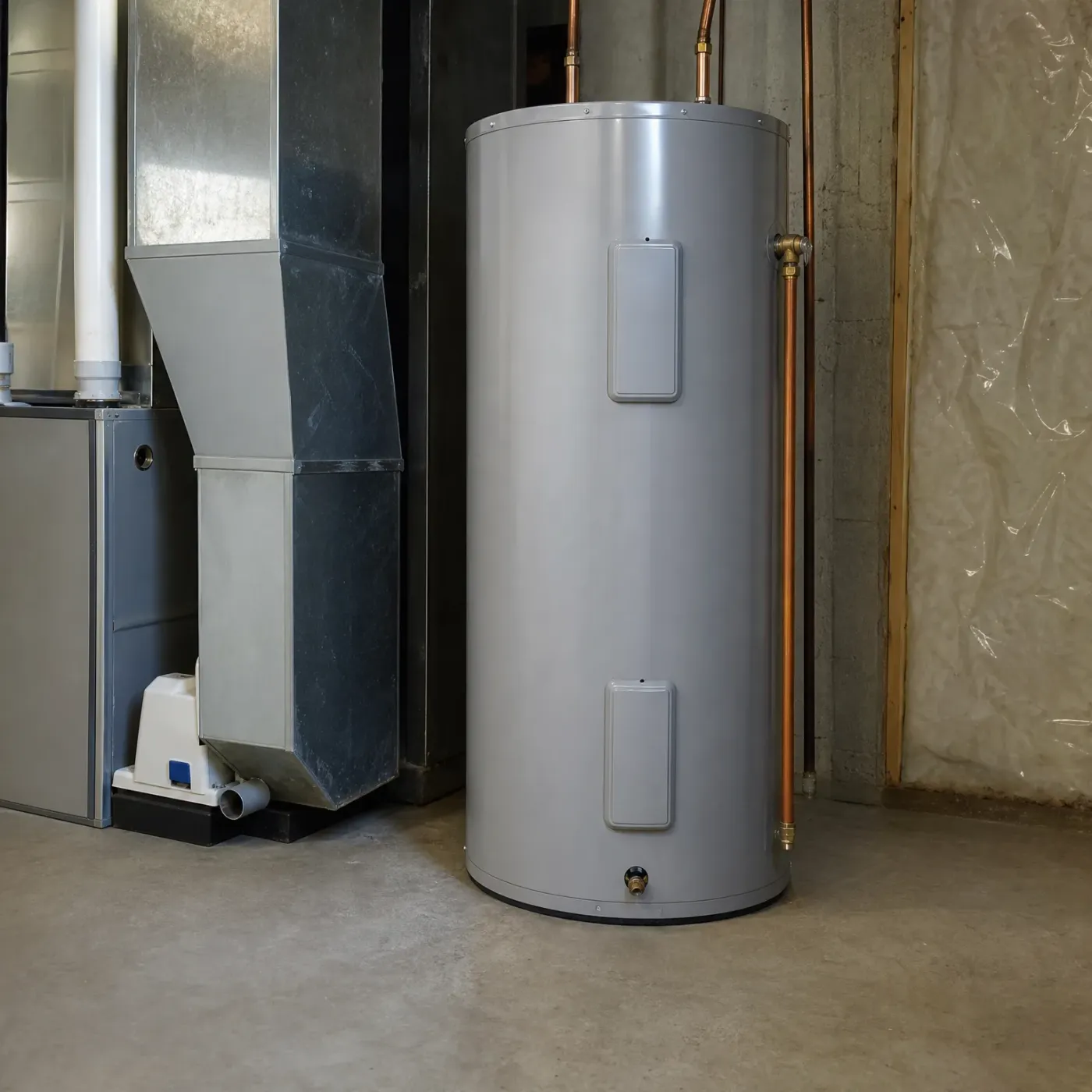
This one heats quietly and the fittings stay dry. No rust at the base, no water pooling on the concrete. If yours looks like this, a yearly flush is about all it needs to keep running.
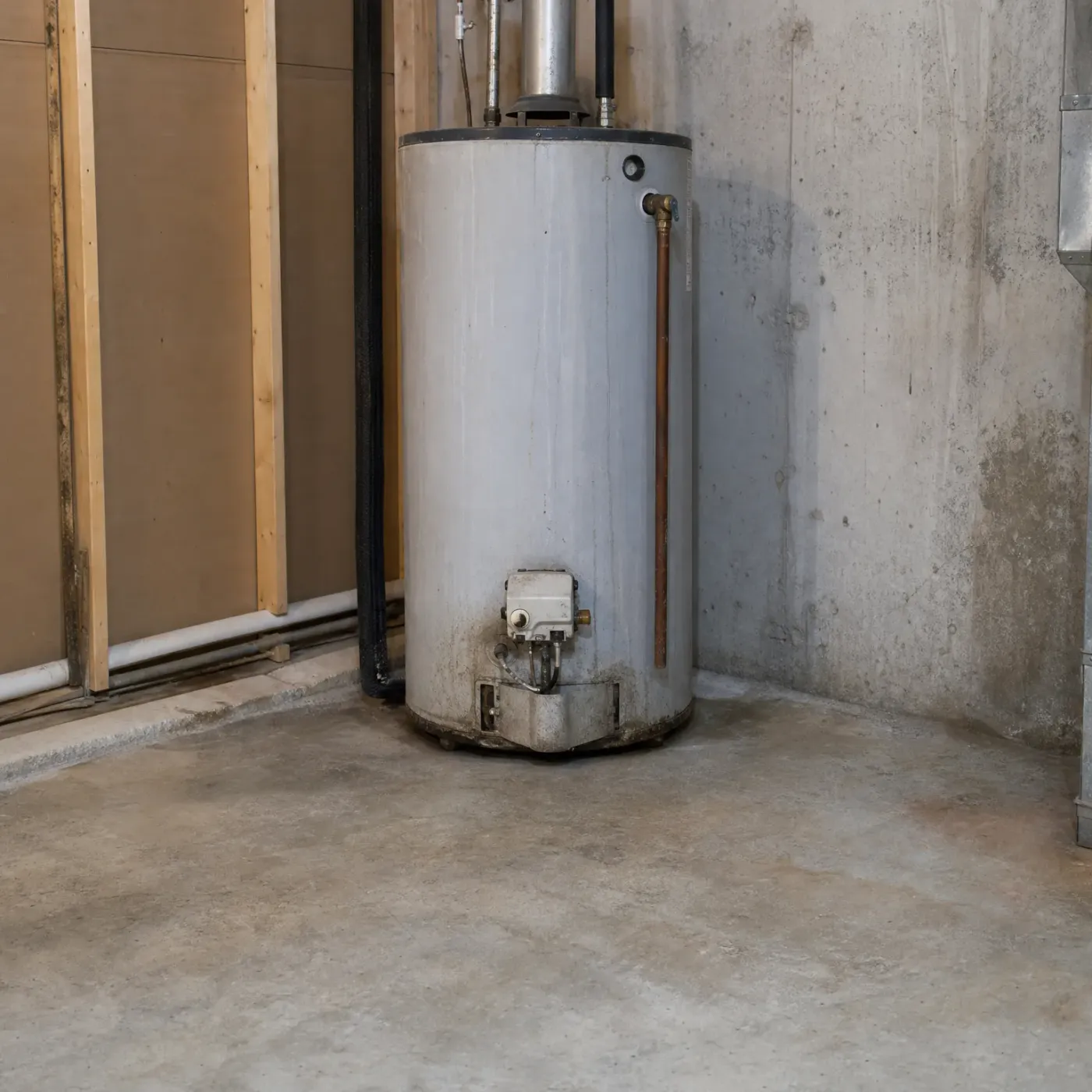
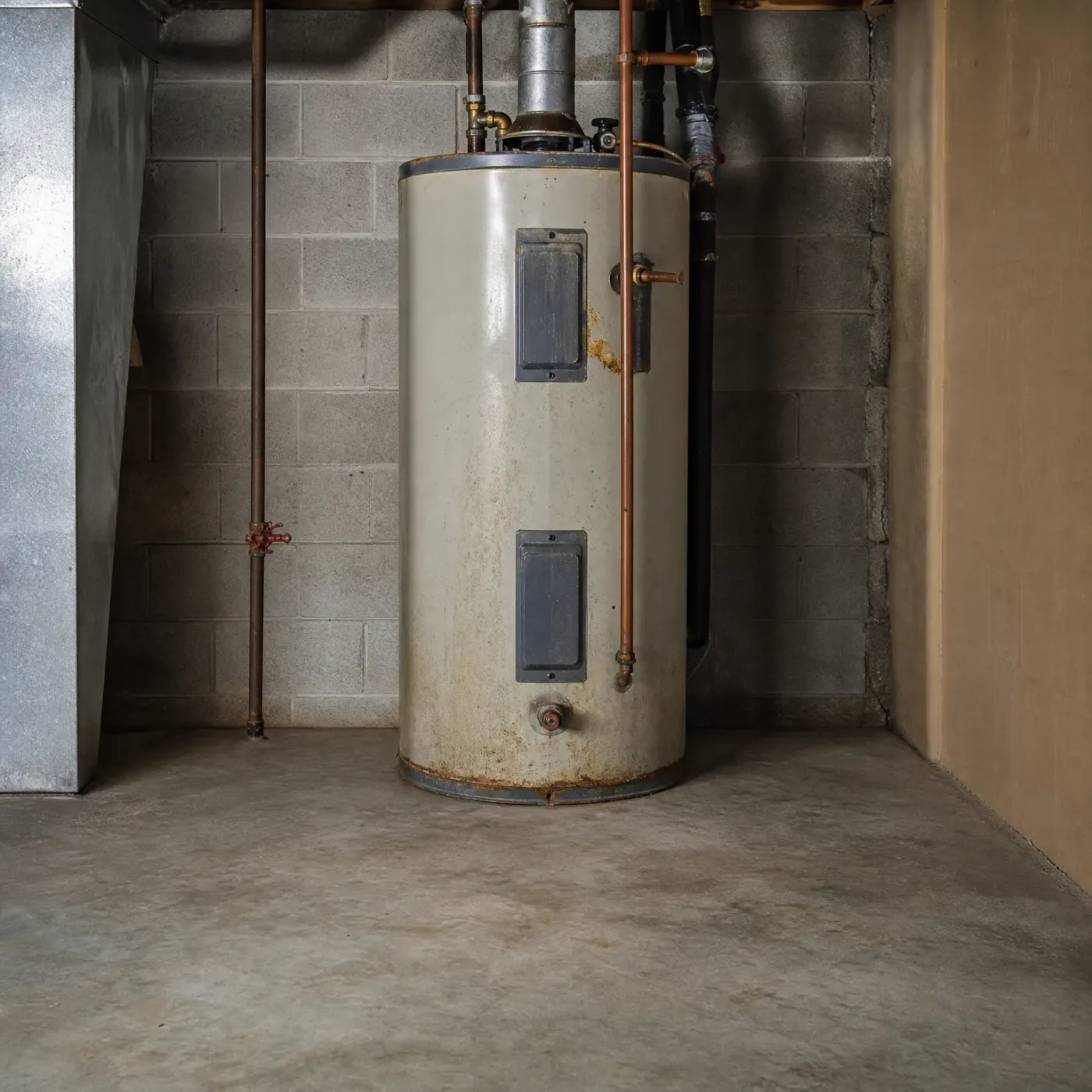
Rust around the base and burner means the tank is corroding from the inside out, not just dirty on the outside. Once you see that at the bottom of an older unit, replacement is the honest answer, not another repair.
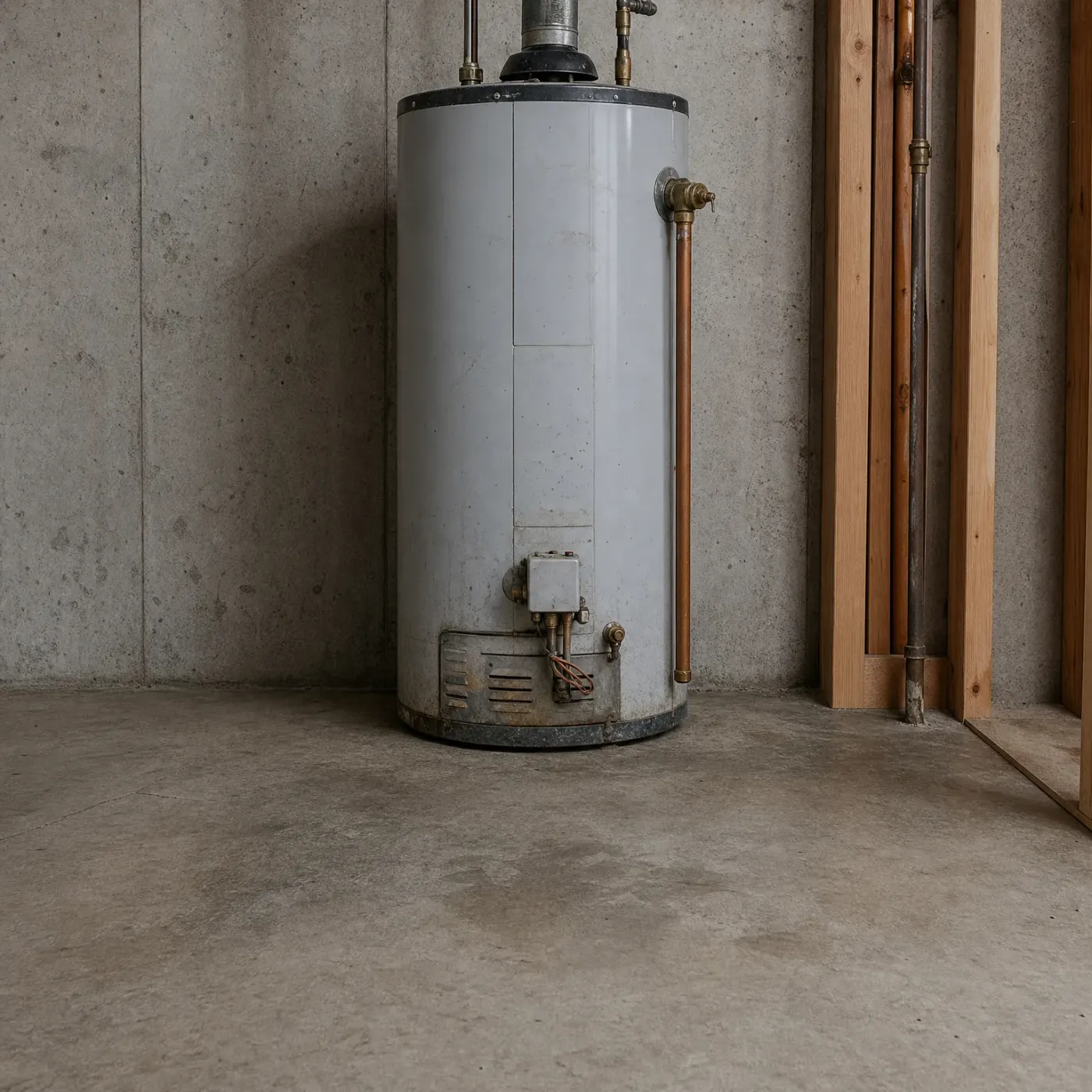
A water heater that's already showing rust at the base or water on the floor isn't going to improve with another winter. Nebraska winters push these units harder, and a tank that's struggling now will struggle more once the ground water coming in gets colder. Most homes here run on gas, and a gas water heater nearing the end of its life tends to go out on its own schedule, usually a cold morning when it matters most. Waiting to see if it holds on another season means betting against a tank that's already told you what it's doing. If what you read above matches what's happening at your place, the smarter move is lining up a replacement before you're doing it without hot water. Send the request now, and the work of finding someone who can take this on is off your plate.
Most tanks run 40 to 50 gallons, and what keeps the steel from rusting through is a rod bolted inside the top, usually magnesium or aluminum wrapped around a steel core. That rod is built to corrode first. It gives itself up so the tank doesn't have to, and for years that's exactly what happens. Once the rod is spent, there's nothing left standing between the water and the steel, and rust starts working from the inside where you can't see it until it shows up as rust at a fitting or water on the floor. Gas units add a second part worth knowing: the dip tube, which feeds incoming cold water down to the bottom so the burner heats it there instead of mixing it in at the top. A cracked dip tube lets cold water mix in high, and you'll notice it as hot water that doesn't last like it used to. The thermocouple is the other common failure. It's a small sensor that tells the gas valve whether the pilot is actually lit, and shuts off gas flow if it isn't. A pilot that won't stay lit is usually that part wearing out, not the valve itself. In a Nebraska winter, groundwater coming into the house runs colder, so the burner has to run longer to reach the same temperature. That's more hours of work on a tank that's already lost its rod or cracked its dip tube, and it's why problems that sit quiet in summer tend to show themselves once the cold sets in.


Most houses in Nebraska run a gas water heater, the same as the furnace. A gas tank still depends on that anode rod and still rusts out the same way, but check the gas line and venting along with the tank itself when you're weighing a replacement.
ACS 2020-2024 5-year B25040
Rust at the base, water on the floor, a tank past its years, or hot water that's run cold more than once, these are the signs that add up to one answer. A water heater does not get better on its own, and waiting usually trades a planned replacement for an emergency one on the coldest morning of the year. You do not have to figure out whether what you are seeing is serious enough on your own. Send the form and the work of finding someone who installs these in Nebraska is off your plate. A contractor who knows gas tanks and what Nebraska winters do to them will reach out, and from there the decision is a conversation, not a guessing game in your basement. You already know what you saw at the tank. That is enough to start.
One request ends the search for a water heater installer.