
How long a water heater lasts in Kearney, NE

Your new water heater project goes to an installer who works in Buffalo County.

Get matched

How long does a water heater last in Kearney, NE?

Your water heater might be ten years old and still running fine, or it might be eight and already showing rust in the water or a pilot light that won't hold. You want to know what to actually expect before it fails on you, maybe in the middle of a hard Kearney winter with a house full of family and cold water the only thing coming out of the tap.

Most water heaters last 8 to 12 years in Kearney

A tank water heater in Buffalo County typically runs 8 to 12 years before it needs replacing. Hard water speeds that up, since mineral buildup in the tank makes the burner or element work harder to heat the same amount of water. Most homes here run on gas, and a gas water heater's tank and burner assembly wear at roughly that same pace whether the water running through it is soft or not. Cheap power locally means an electric water heater costs less to run here than in places with higher rates, but it won't last any longer just because of that. Once a unit passes the 10 year mark, a rising energy bill or water that takes longer to heat back up is worth paying attention to.

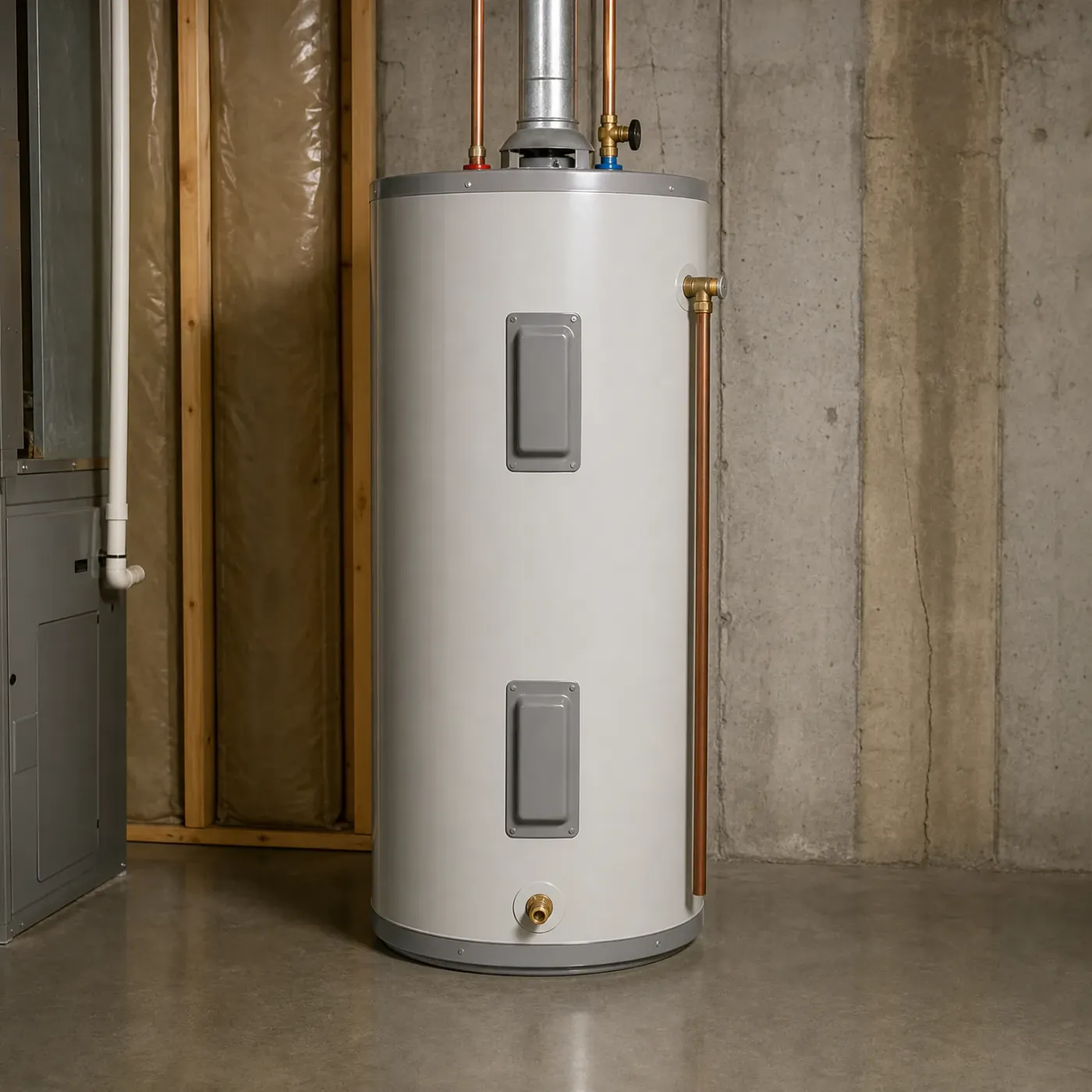
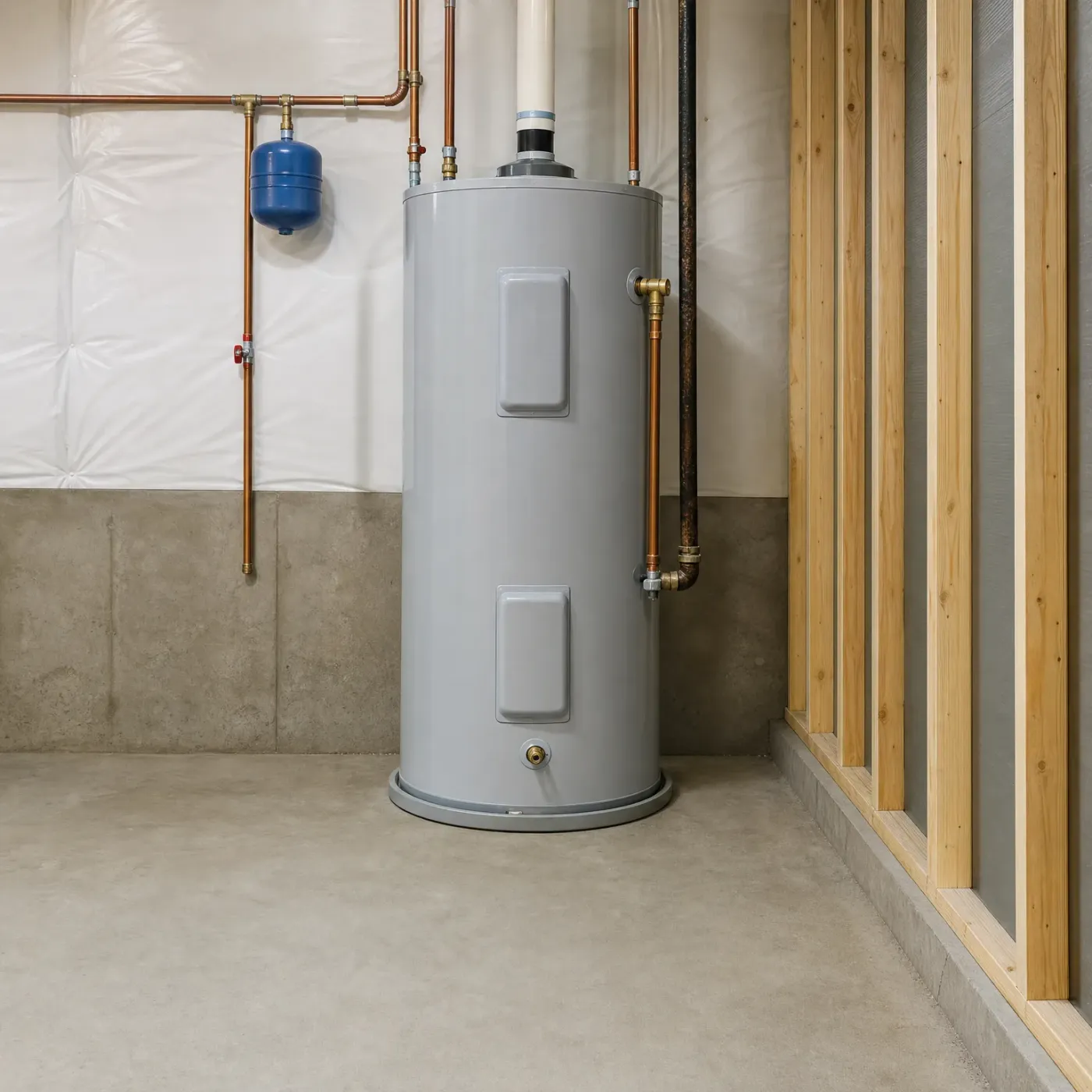
A gray cylindrical water heater stands on a concrete basement floor against a plastic-sheeted insulated wall, with copper supply pipes, a blue expansion tank, a black vertical pipe, and exposed wood wall framing at right.

Running as it should

Hot water comes up fast and stays clear. The tank holds its temperature without the burner or element cycling constantly, and there's no rust showing in the water or around the base. Gas water heaters here often hold up well through hard Nebraska winters when the venting and burner are in good shape.
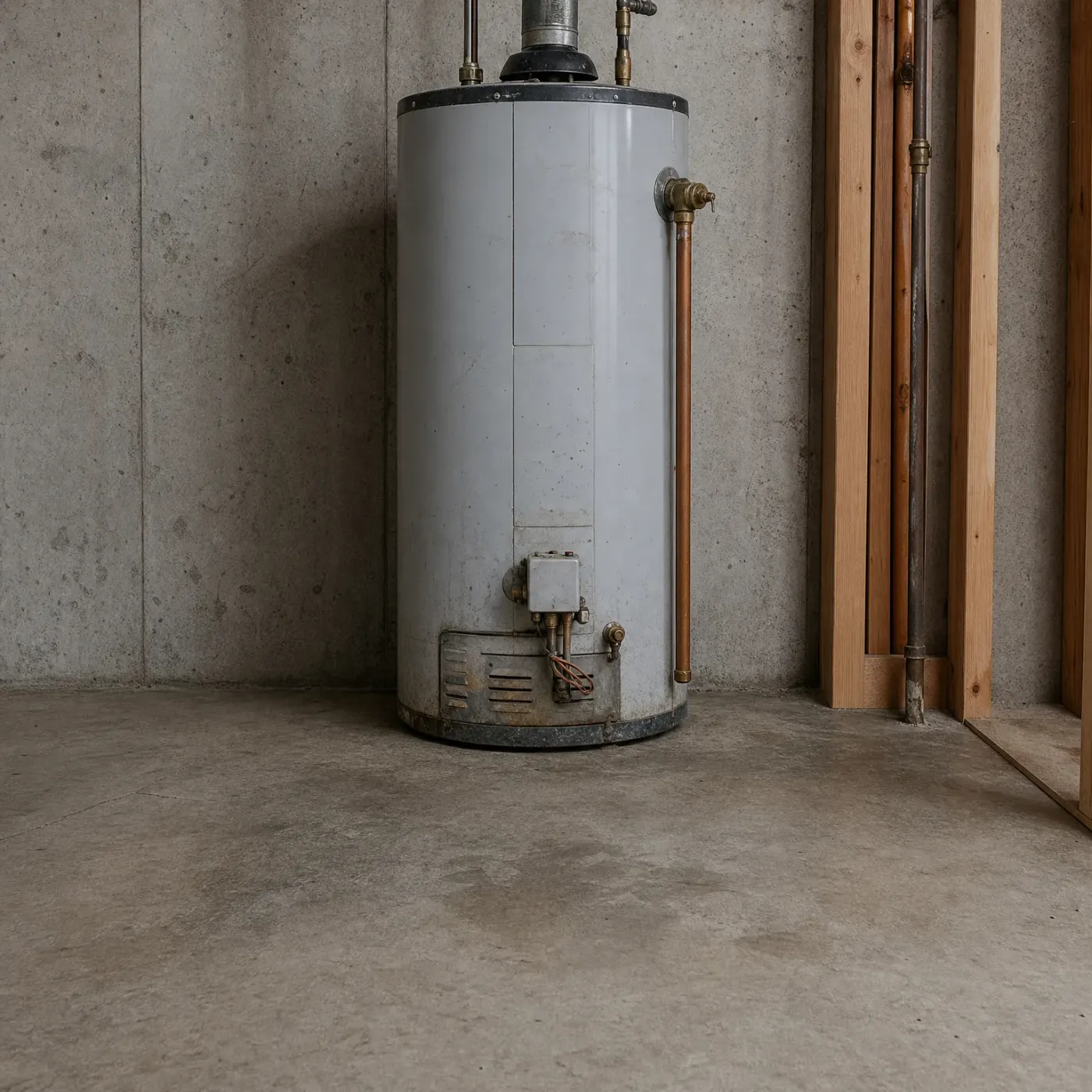
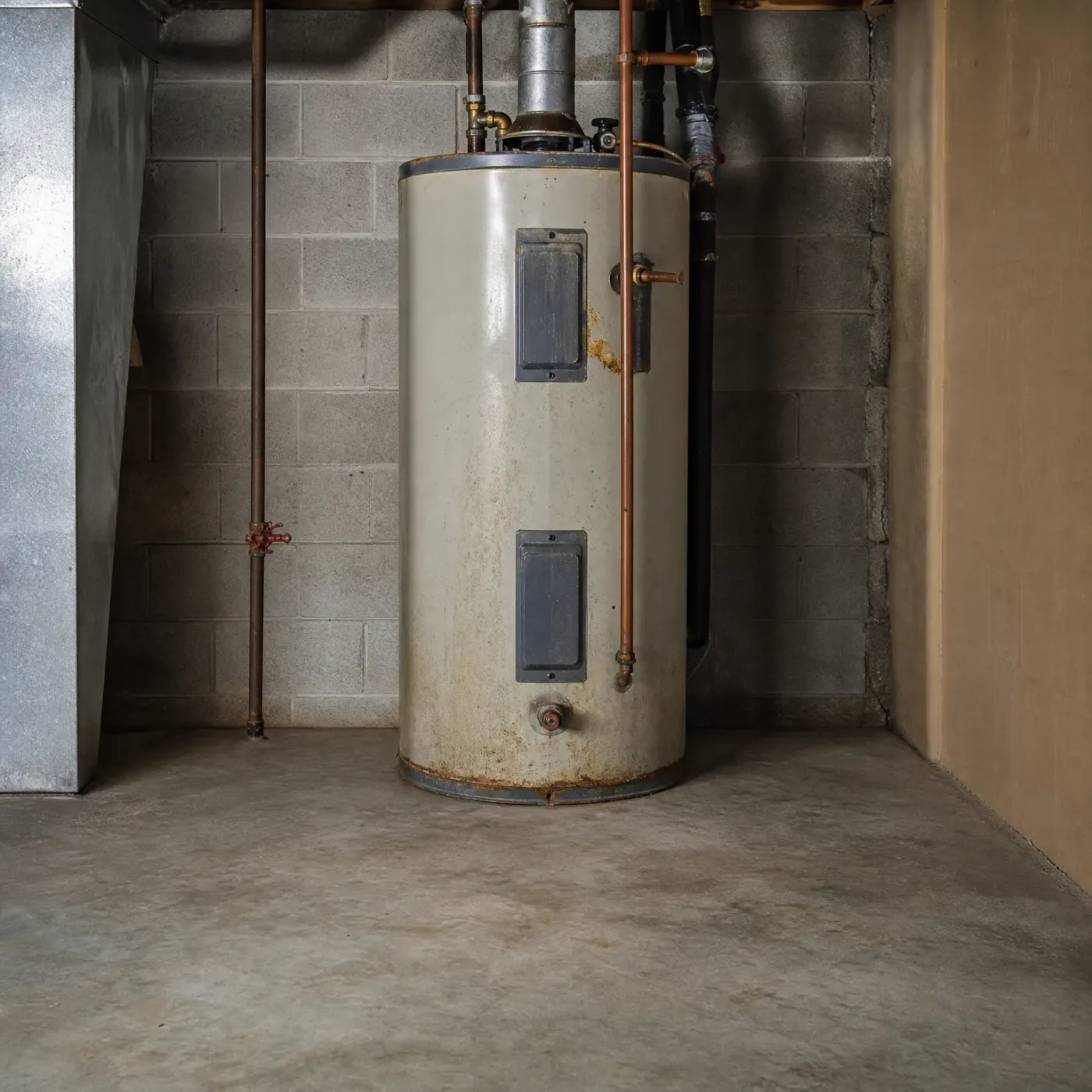
An older gray gas water heater with copper and brass piping stands on a concrete floor against a concrete wall, beside exposed wooden wall framing and vertical pipes.

Signs it's near the end

Rust around the burner assembly or in the water, grime building up on the tank, or a pilot that won't hold are signs the tank is failing, not just aging. Once rust shows on the outside like this, the inside is usually further along. Waiting it out risks a leak instead of a planned replacement.

What does a typical Buffalo County household need from a water heater?

  • 2.42 people per household on average

    With 2.42 people in the average household here, most tanks in Buffalo County are sized for a family of two or three, not a houseful.

  • Half the homes here were built by 1980

    Half the homes in Buffalo County went up in 1980 or earlier, so plenty of water heaters are sitting on plumbing and venting that old to match.

  • 52.5% of homes heat with gas

    Gas heats 52.5% of homes here, more than any other fuel, so most readers are watching a pilot light and a burner, not an electric element.

ACS 2020-2024

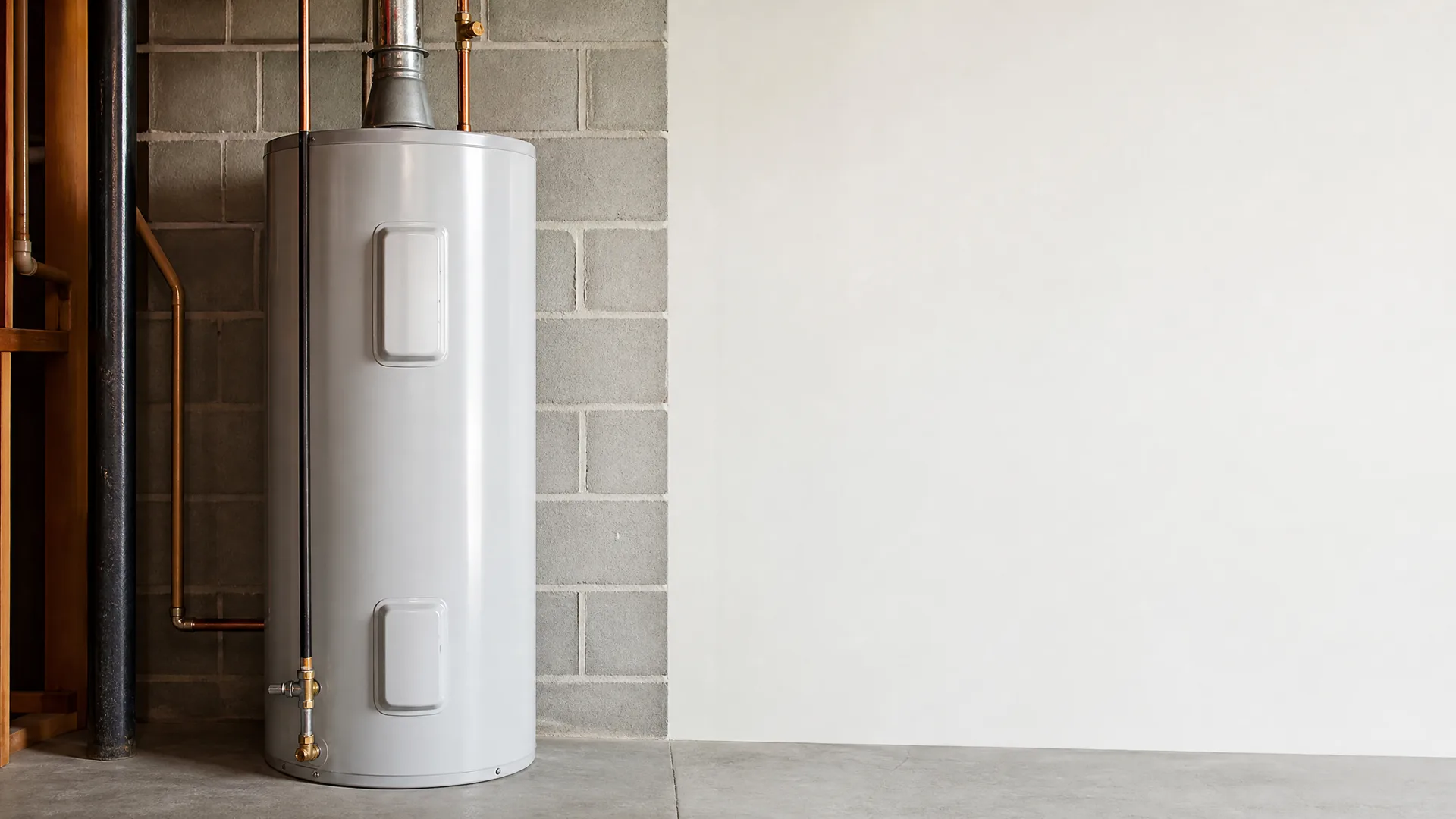
A white cylindrical water heater with two access panels stands against a concrete block wall with copper pipes and a vent, next to a plain light wall and concrete floor.

Hard water wears a tank down faster

Buffalo County water runs hard, and the minerals in it settle to the bottom of the tank as sediment. That layer sits between the burner and the water, so the heater works harder to get the same result. Over years it can crack a glass lining or burn out an element. Draining the tank now and then clears some of it out, but it builds up again, and nobody can tell you exactly how fast for your water.

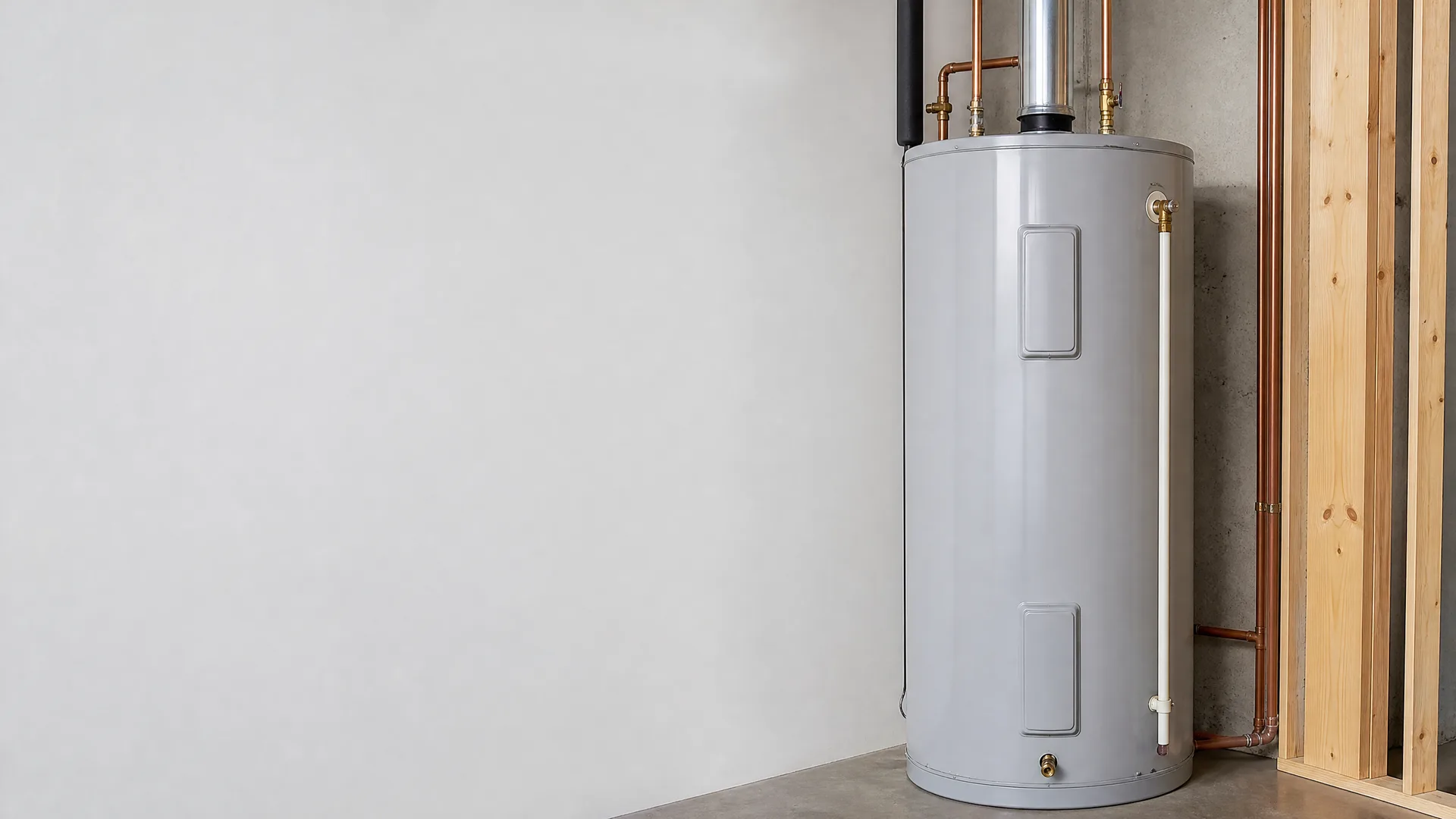
A gray cylindrical water heater stands in a corner against a plain light wall, with copper and black pipes above it and exposed wood framing to the right.

The anode rod does the real work

Inside the tank is a metal rod that corrodes on purpose, so the steel tank doesn't have to. Once that rod is used up, rust starts eating the tank itself instead, and at that point the tank is on borrowed time. Checking the rod is part of what keeps a gas water heater running the full stretch of years it's capable of here. A tank that never gets that check is working without that protection for however long it's been skipped.

Repair It or Replace It

Keep it going

  • A gas water heater with a thermocouple and burner that still light every time usually has life left worth getting out of it.
  • Flushing the tank once a year clears out the sediment that Buffalo County's hard water leaves behind and slows the wear on the burner.
  • If the anode rod hasn't been checked, replacing it is far cheaper than replacing the tank and it's what keeps the steel from rusting through.
  • A unit still under its original warranty is worth repairing rather than replacing, since parts and labor may already be covered.
  • Cheap power here means an older, less efficient tank still costs less to run than it would somewhere with higher electric rates.

Replace it now

  • Rust in the hot water or around the base means the tank itself is failing, and no amount of flushing fixes that.
  • A pilot light that won't hold or a burner that won't stay lit points to a part failing with age, not a one-time glitch.
  • If the heater is sized for a household larger than yours, replacing it is a chance to match the tank to how much hot water you actually use.
  • Popping or rumbling sounds mean sediment has hardened against the tank wall, and that damage doesn't reverse.
  • A leak at the tank seams or fittings means water is escaping the tank itself, and that only gets worse from there.
An older man with gray hair and a beard, wearing a dark coat dusted with snow, stands smiling in a doorway of a warmly lit home with a sofa, lamp and window visible behind him.
An older man with grey hair and a beard, wearing a dark coat dusted with snow, stands in a dimly lit entryway with a ceiling lamp, a side table with two shaded lamps, and a lit fireplace visible in a room beyond.
A bearded older man in a dark snow-dusted coat and scarf stands just inside a home's front door, with a lamp-lit room and snowy window visible behind him.
An older man with gray hair and a beard stands in a doorway of a home, wearing a dark coat dusted with snow, with a lit fireplace and lamp visible in the blurred room behind him.

Get your water heater to the right pro

A water heater doesn't fail on a convenient day. It's usually a Saturday morning, or the week you've got family staying, and suddenly there's no hot water or there's water pooling under the tank. If yours is already showing rust or struggling to hold its temperature, figuring out whether it needs a new thermocouple or a full replacement means getting someone out to actually look at it. That's normally a string of phone calls, some of them going to voicemail, then waiting on quotes and trying to tell if one installer's price makes sense next to another's. Buffalo County's hard water means most tanks here are working harder than they would elsewhere, so getting ahead of a failing unit matters more than it would in a lot of places. Answering a few questions here gets your situation in front of a contractor who installs water heaters in this area, and they'll reach out to you directly. You skip the search and the comparing, and get straight to someone who can tell you what your tank actually needs.

A tank in its eighth or ninth year doesn't need to look like anything is wrong. It can heat on schedule every morning and still fail before the next one.

When it goes, it's not a slow fade. A seam gives out or a valve stops sealing, and you've got a wet floor and no hot water until a new one is in.

An aging cream-colored water heater with rust streaks and two access panels stands on a concrete floor against a concrete block basement wall, with copper and black pipes running up to the ceiling and a metal duct at left.
Before you get your water heater installation
A white cylindrical water heater with two access panels, copper supply pipes and a metal flue, standing on a concrete floor against a concrete wall beside insulated wood framing and a gray electrical panel.
After you get your water heater installation

A gas water heater works by burning fuel under the tank to heat the water, and the burner is lit by a thermocouple, a small sensor that proves the pilot flame is actually there before it lets gas flow. When that sensor reads cold or dirty, the burner won't fire even though everything else looks fine. Above the burner, an anode rod runs down through the tank, a length of magnesium or aluminum wired to steel that corrodes first so the tank itself doesn't. That rod has a lifespan of its own, separate from the tank's, and once it's used up, the steel is next in line. Sediment from hard water settles at the bottom, between the burner and the water above it, so the flame has to push heat through a layer that didn't used to be there. That's part of why a tank can take longer to recover after a full load of dishes or a long shower than it used to, even with the same burner setting it's always had.

Power here costs 10.72 cents per kilowatt-hour

Most homes in Buffalo County heat water with gas, so this rate mainly shows up if yours is electric, or if you're weighing a switch. At 10.72 cents a kilowatt-hour, an electric water heater is cheap to run here compared to much of the country.

EIA-861 2025

A woman in a gray sweater and jeans stands in an open wood front door of a white stucco house while a man in a dark jacket walks toward her on the entry path.

What this comes down to

A gas water heater in Kearney usually lasts eight to twelve years, and hard water combined with how well it's been flushed decides where in that range yours falls. Once you're past year eight, it's less about if it fails and more about when, and a tank that still lights and holds temperature today can still be worth watching closely rather than waiting on.

If yours is getting close to that range, or it's already showing rust or trouble holding a pilot, the next step is getting someone who knows these tanks and this water to look at it and tell you straight whether it's worth repairing or time to replace. A local contractor can look at the actual unit, the actual age, and give you a real answer instead of a range. That's a different conversation than calling around to a handful of plumbers and explaining the same rust spot and pilot light problem four times over.

A shallow dark wooden bowl and a stack of books rest on a wooden table in front of a beige sofa with linen and green cushions, with a tall ceramic vase of thin branches beside a window in the background.
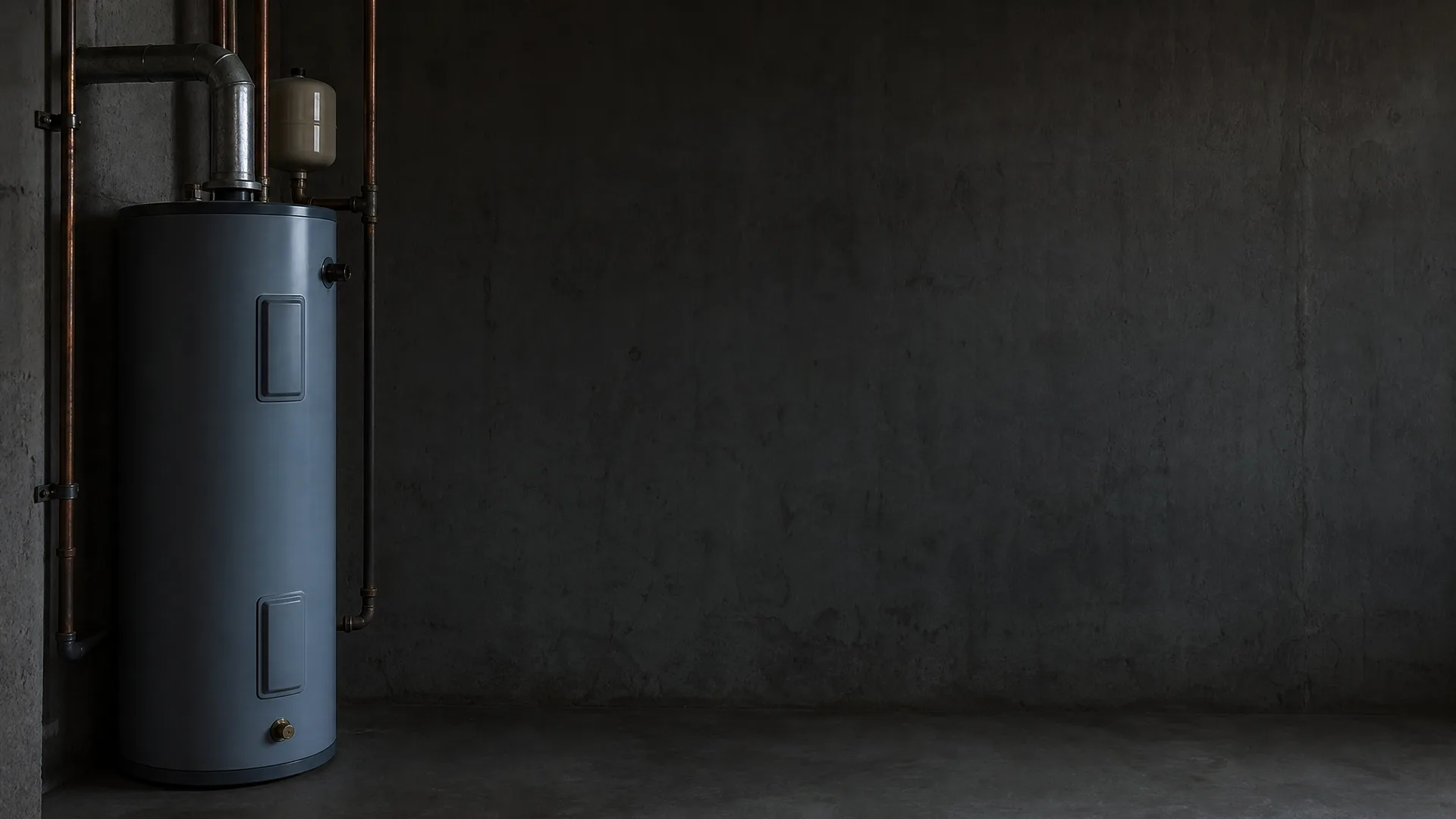
A gray cylindrical water heater with copper pipes and a small expansion tank stands against a dark concrete wall in a dimly lit room.

Find a water heater installation pro in Buffalo County

Skip collecting and comparing quotes for the new water heater.

Step 1 of 3: Equipment