Hot water runs out fast in Lincoln, NE

Get matched with a pro who works on water heaters in Lancaster County.

Get a water heater pro

Hot water running out fast usually means sediment has built up in the bottom of the tank, leaving less room for hot water and less heat getting through to what's left. A failing heating element or a thermostat set lower than you think will do the same thing. In a gas water heater, a dip tube that's cracked or worn can let cold water mix straight into the hot, so you get less usable hot water even though the tank reads full. If your water heater is undersized for how many people are drawing from it at once, showers back to back will always run it dry faster than one at a time. Any of these gets worse over time, not better, and a tank that's quietly losing capacity now is one that's more likely to fail outright later. Worth checking before it's just a cold shower problem.

Why does your family run out of hot water so fast?

  • 2.34 people per household on average

    Households here average 2.34 people, and a tank sized for fewer showers and loads runs out before everyone's done.

  • Half the homes here were built by 1983

    Half the homes in Lancaster County went up in 1983 or earlier, old enough that the original tank has likely been swapped at least once.

  • 60.5% of homes heat with gas

    60.5% of homes here heat with gas, so a bad gas valve or pilot assembly is the more likely reason recovery has slowed down.

ACS 2020-2024

Sediment is the fix you can check

Drain a few gallons from the tank's bottom valve. If what comes out is gray and gritty instead of clear, sediment is sitting under the burner or the lower element, and that layer is why hot water runs out faster than it used to. A contractor can flush the tank fully and test the element or burner underneath once that buildup is cleared. This is usually the quicker repair, and if the tank itself is sound, clearing the sediment can bring back most of the capacity you lost without replacing anything.


The tank itself may be the limit

If the tank has never been flushed, or if a flush only buys back a day or two before hot water runs short again, the tank itself may be undersized or wearing out. A unit that was fine for one or two people runs out fast once more showers and laundry loads are asked of it. A contractor can check the tank's capacity against your household and tell you whether a repair will hold or whether replacing it with a larger unit is the more lasting answer.

A woman with long blonde hair in a light blue shirt leans back on a beige sofa with her eyes closed, in a softly lit living room with cushions and a blurred plant and shelf in the background.
A woman with long dark hair in a gray knit sweater sits on a gray sofa with a cushion, looking toward a window in a living room with framed pictures and a lamp in the background.
A woman with long dark hair in a light grey knit sweater sits on a sofa indoors, looking to her right, with a framed landscape picture, a potted plant and a curtained window behind her.
A woman with long dark hair leans back against a gray sofa with her eyes closed, in a living room with a curtained window, a potted plant, and a dark screen in the background.

40 to 50 gallons

That is the typical size for a household tank here. If yours runs dry partway through back to back showers, sediment or a failing element is cutting into that capacity.

Connect with a pro

Gas recovers faster

Most homes in Lancaster County run gas water heaters, which reheat a tank quicker than electric. If recovery still feels slow, something in the tank needs a look.

Connect with a pro

Why does hot water run out faster than it used to?

Why does hot water run out faster than it used to?

Sediment is eating into your tank's capacity

A gas water heater fires from the bottom, and that's exactly where sediment settles. Once it builds up past an inch or two, it sits between the burner and the water, so less heat actually makes it into the tank and more of what's stored stays lukewarm instead of hot. An electric tank has the same problem in a different spot: sediment buries the lower heating element, and that element does most of the work of heating the incoming cold water. Either way, the tank still holds the same 40 to 50 gallons, but less of it is usable hot water than when the tank was new.

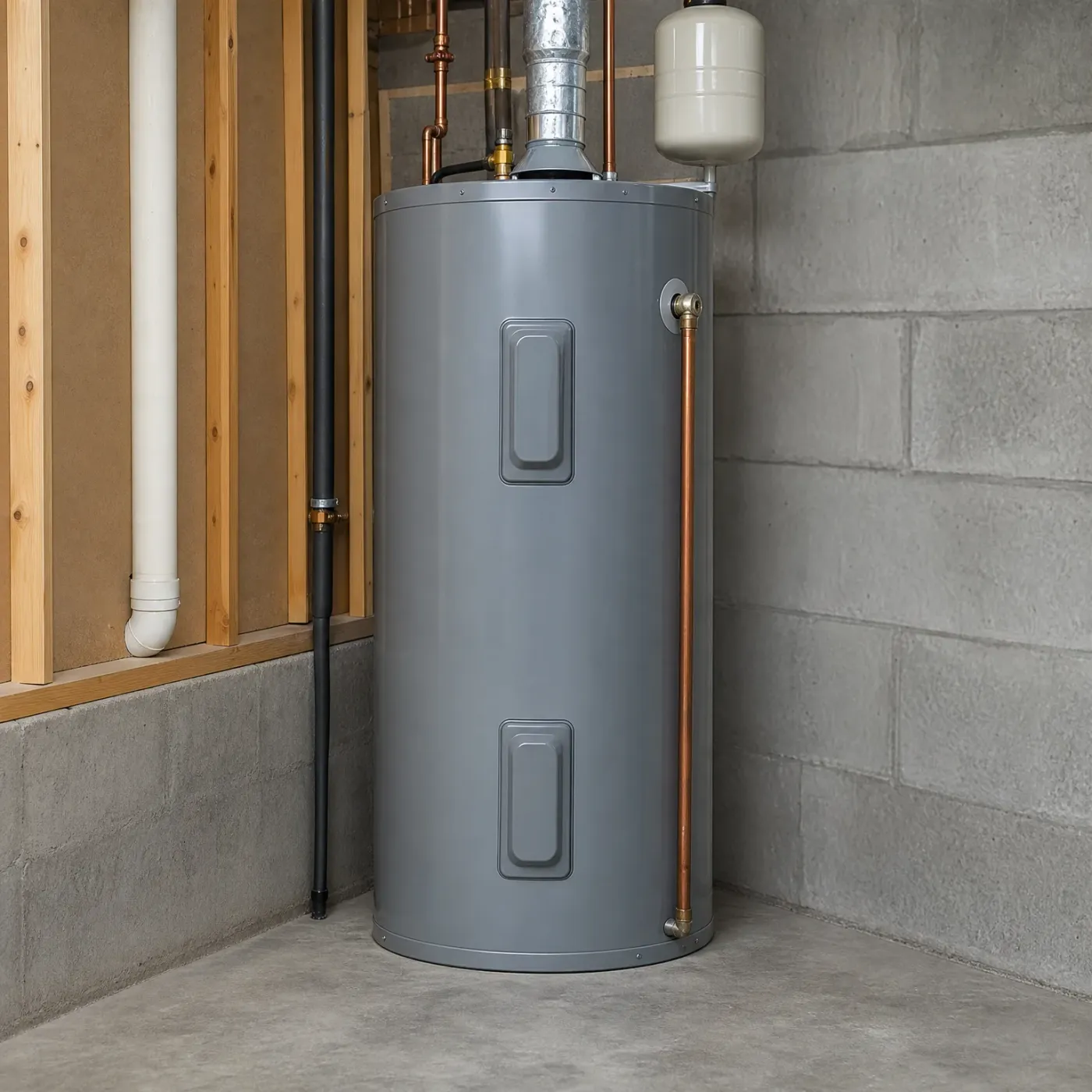
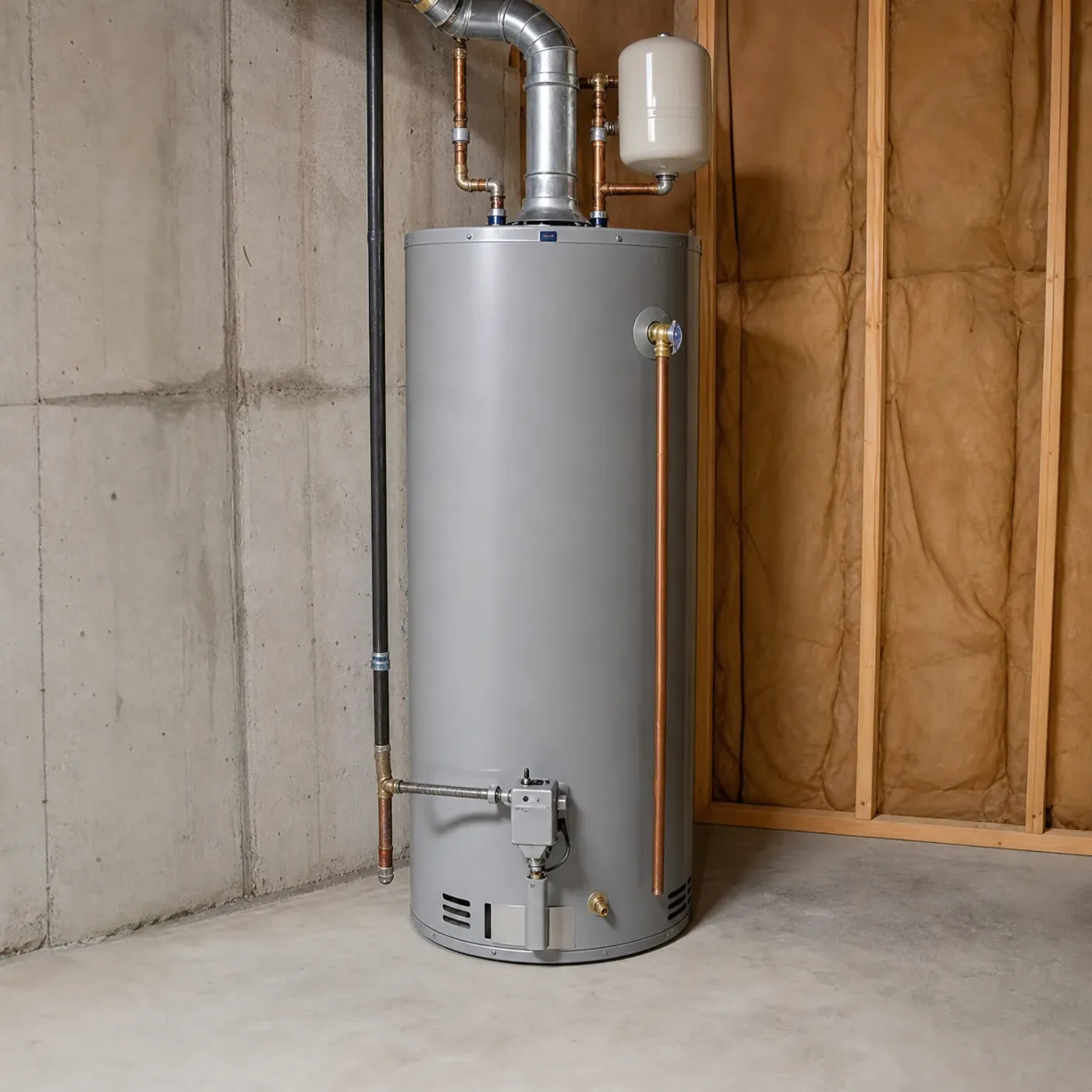
A gray cylindrical water heater with copper piping and an expansion tank stands in a basement corner beside a concrete block wall and exposed wood framing.

Working the way it should

This tank is doing its job. Clean connections, a clear drain line, nothing leaking at the fittings. Water heats fully and holds, so the shower at the end of the line runs as hot as the first one.

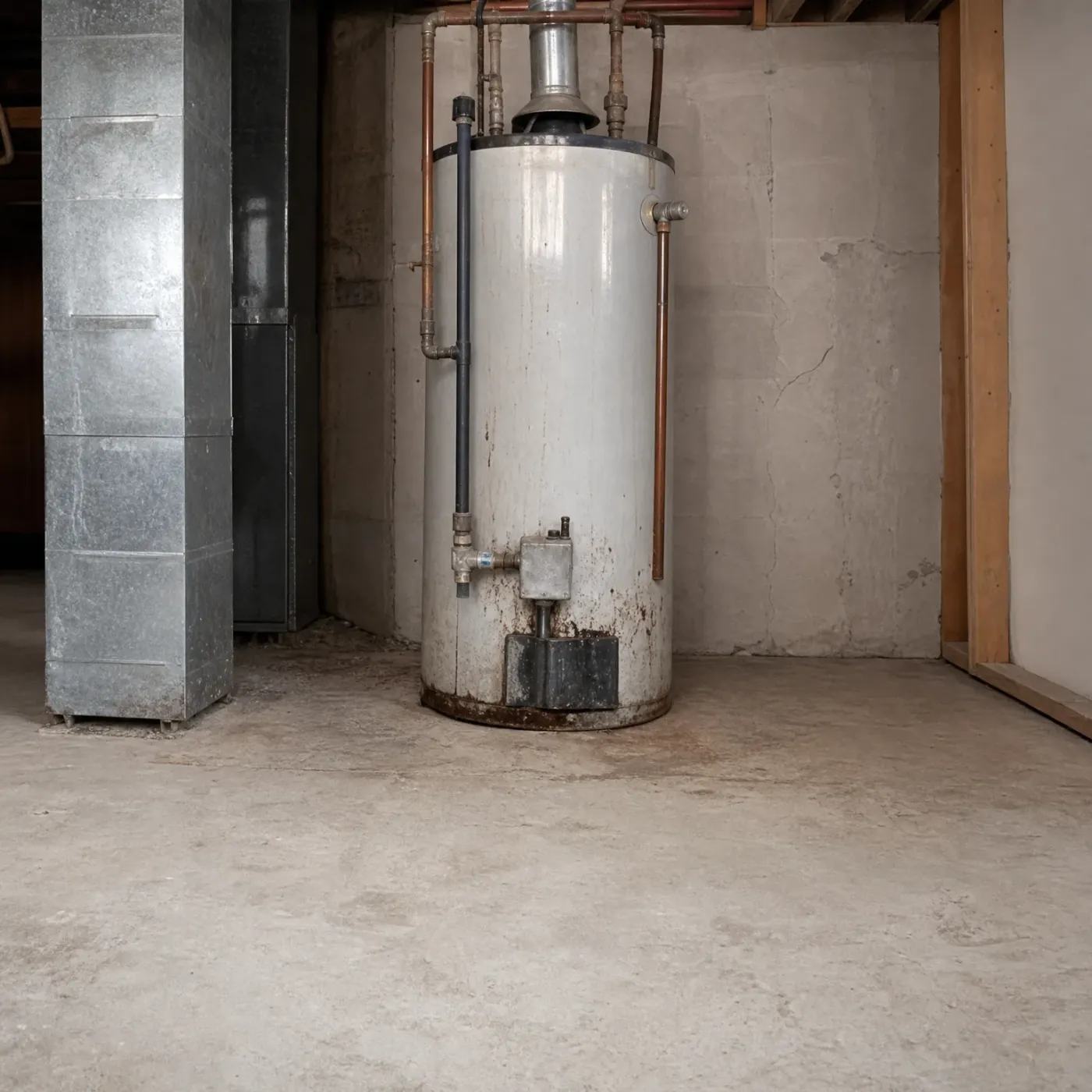
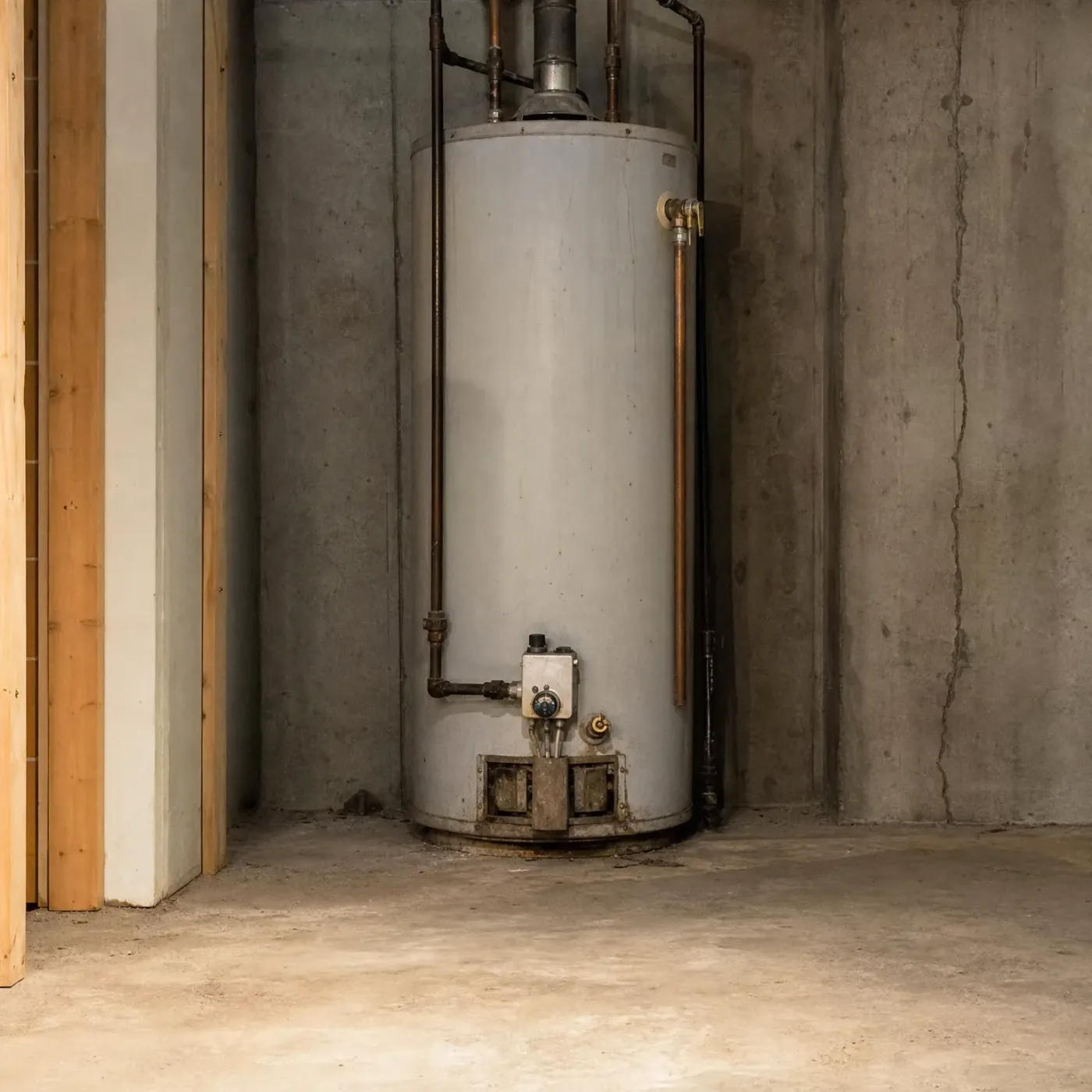
An old rusting cylindrical gas water heater with copper and steel pipes and a flue stands against a concrete basement wall beside metal ductwork on a bare concrete floor.

Rust and scale win in the end

Corrosion like this doesn't stay on the outside. Inside the tank, the same buildup coats the burner and eats at the steel, and a unit in this shape can't hold heat the way it did when it was new.

Fix the Tank or Replace It

Repair

  • A tank can often be brought back by replacing the part that failed, like a heating element or thermostat, instead of the whole unit.
  • Flushing sediment out of the bottom of the tank can restore capacity that build-up had been eating into.
  • If the tank itself is sound and only a part failed, repair usually costs less than putting in a new unit.
  • Repair keeps you on the same tank you already have, so there's no change in fuel type or size to plan around.
  • A repair can be scheduled and done faster than ordering and installing a new water heater.
  • If the tank is old enough that the original lining and anode rod have worn down, a repair may only hold for a while.

Replace

  • A new tank comes with a fresh lining and anode rod, so sediment and rust start from zero instead of picking up where the old tank left off.
  • If your household has grown past what a 40 to 50 gallon tank was sized for, replacing it lets you size up to match how many people are actually showering and running loads.
  • Gas units recover faster between uses, so if you're replacing anyway, matching the fuel most homes here already run keeps that advantage.
  • A new unit avoids the pattern of one part failing after another as a tank gets older.
  • Replacement costs more upfront than fixing a single part.
  • If the tank is only a few years old, replacing it means giving up life that a repair could have gotten out of it.
A smiling older woman with gray shoulder-length hair in a cream cable-knit turtleneck sweater stands behind a wooden board holding a round loaf of bread, in a warmly lit kitchen with a dark window and shelves behind her.
A woman with dark hair in a bun sits wrapped in a chunky knit blanket on a couch with a child resting his head on her shoulder, eyes closed, beside a lit lamp and bookshelf indoors.

Find a water heater repair pro in Lancaster County

You've probably already started rationing showers, telling the last person in line to wait an hour. That shouldn't be how your mornings go. A tank that once covered the whole house shouldn't be running cold by the third shower, and when it does, something specific is wrong with it, not just old age catching up. It could be sediment choking off capacity, a heating element that quit working, or a thermostat that's drifted low. Figuring out which one takes someone looking at the actual tank, not another guess from a search result. Instead of spending your evening calling around Lincoln for a plumber who answers, explaining the same thing three times, then sitting with quotes that don't match because nobody saw the same tank, you can hand the job off once. A contractor who works on water heaters in Lancaster County gets your situation and reaches out to you directly. Your family keeps running out of hot water every day you wait on this.

A tank that used to cover four showers now taps out after two, and that gap is sediment or a dying element, not a household that suddenly needs more hot water.

Keep running it that way and the water heater is working harder for less, which is how a repair you could have made turns into a tank that fails outright.

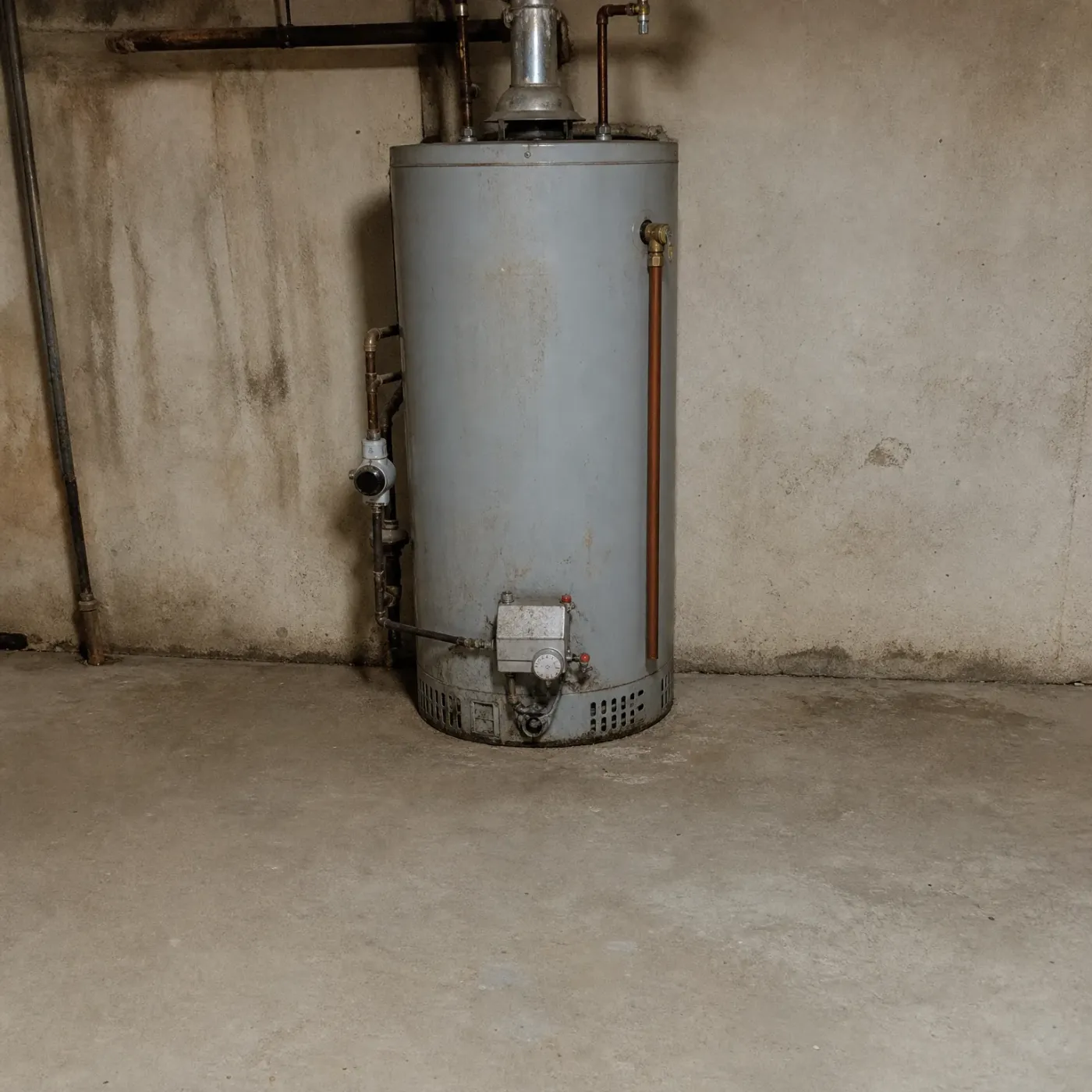
An older gray cylindrical gas water heater with copper and steel piping and a flue, standing on a concrete floor against a stained concrete wall.
Before you get your water heater repair
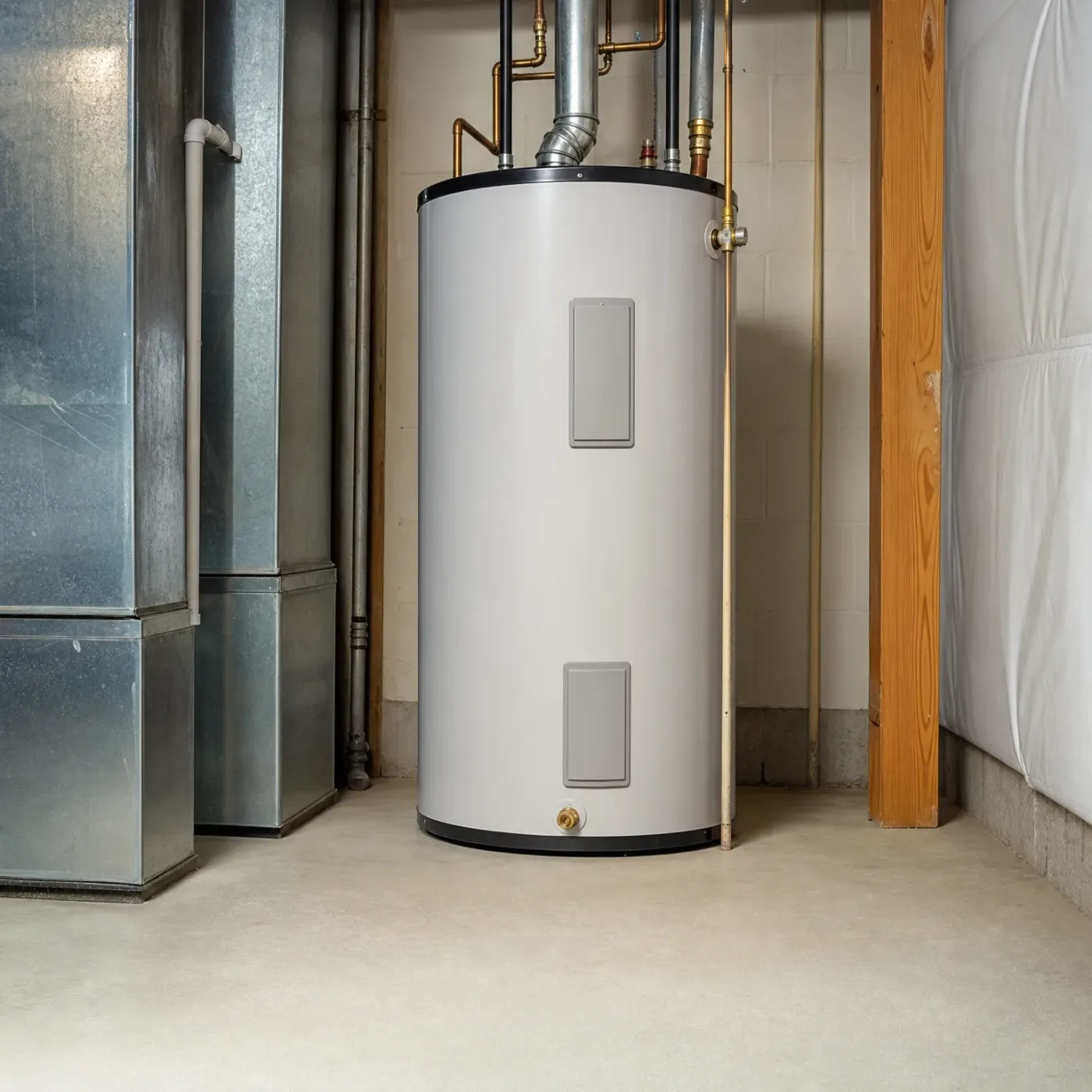
A white cylindrical water heater with two access panels stands on a concrete floor in a basement corner, beside galvanized ductwork, copper and metal pipes, a wooden post, and a concrete block wall.
After you get your water heater repair

What's Actually Happening Inside the Tank

  • A gas tank heats from a burner at the bottom, so sediment sitting on that floor acts like a blanket between the flame and the water.
  • An electric tank has a lower element buried in that same sediment layer, and once it's coated, the element cycles on and off without actually heating much.
  • The thermostat reads the water near it, not the water at the bottom, so it can call for heat long after the lower section has gone cold.
  • A dip tube feeds cold water to the bottom of the tank to be heated first, and a cracked or shifted one lets cold mix straight into the hot output.
  • The anode rod inside is there to corrode instead of the tank, and once it's used up, rust starts eating the steel and the tank's capacity along with it.
  • Recovery time, the minutes it takes to reheat a drained tank, stretches out as sediment or a weak element cuts into how fast the burner or element can catch up.

A gas water heater fires from underneath, and that's the first place sediment lands. Once enough has settled, the burner is heating sediment, not water, and the water above it never gets the full blast of heat it used to. Electric tanks have the same problem in a different spot. The lower element sits down in that same layer, and a coated element draws power and cycles on schedule but can't transfer much heat through the grit packed around it. Either way the thermostat has no idea. It's reading the water near the sensor, higher up in the tank, so it tells the burner or element to back off while the bottom third is still lukewarm. There's also the dip tube to consider, the plastic tube that carries incoming cold water down to the bottom so it heats before it rises. If that tube has cracked or slipped out of position, cold water dumps in near the top instead, mixing straight into what should be your hot supply. And inside every tank is an anode rod, a length of metal wired to corrode on purpose so the steel tank doesn't have to. Once that rod is used up, the tank itself starts rusting, and rust takes up space the same way sediment does. All of this shows up as recovery time. A tank that used to reheat in a predictable stretch after a shower now takes longer, because whatever's cutting into capacity is also cutting into how fast the burner or element can catch up.

Power here costs 11.20 cents per kilowatt-hour

At 11.20 cents per kilowatt-hour, running an electric water heater here costs less than it would almost anywhere else. That's worth knowing before you jump to replacing a tank that just runs out fast. Cheap power won't fix sediment or a failing element, but it means a repair that keeps your current tank running isn't fighting you on the electric bill.

EIA-861 2025

A gray cylindrical gas water heater with copper piping, flue vent, and a small expansion tank stands in a basement corner between a concrete wall and an insulated stud wall.

Still keeping up

This tank still has the pipes and vent connections running clean, and the expansion tank doing its job up top. Hot water lasts through the showers it was sized for, because nothing inside has lost its capacity to the sediment layer yet.

An older gas water heater with copper and black pipes stands in the corner of a bare concrete basement next to a wood-framed partition wall.

Running out early

Same setup, years further along. The gas control valve at the base still lights the burner, but sediment has built up on the floor of the tank above it, and the water runs cold well before everyone's had a turn.

A woman stands in the open doorway of a white stucco house holding the dark door, facing a man in a black cap and shirt seen from behind in the blurred foreground, with a potted flowering plant beside the entry.

Running out fast has a cause, and it's fixable

A tank that falls short of what it used to cover isn't failing for no reason. Sediment sitting on the bottom, a heating element on its way out, a thermostat set wrong, each one shows up the same way: hot water that doesn't last like it did. Checking which one it is doesn't take guesswork, and most of the time the fix doesn't mean a new tank.

What it takes is someone who can look at your water heater and tell you straight which of those it is. Instead of searching through contractors, calling a few, and walking each one through the same story about short showers and cold mornings, you answer a few questions once and a contractor who handles this in Lancaster County reaches out to you. From there you know what you're dealing with, and so do they.

A dark ceramic mug on a round wooden table beside a light grey sofa with a woven cushion and knit throw, with a window, potted plant, floor lamp and wooden cabinet blurred in the background.
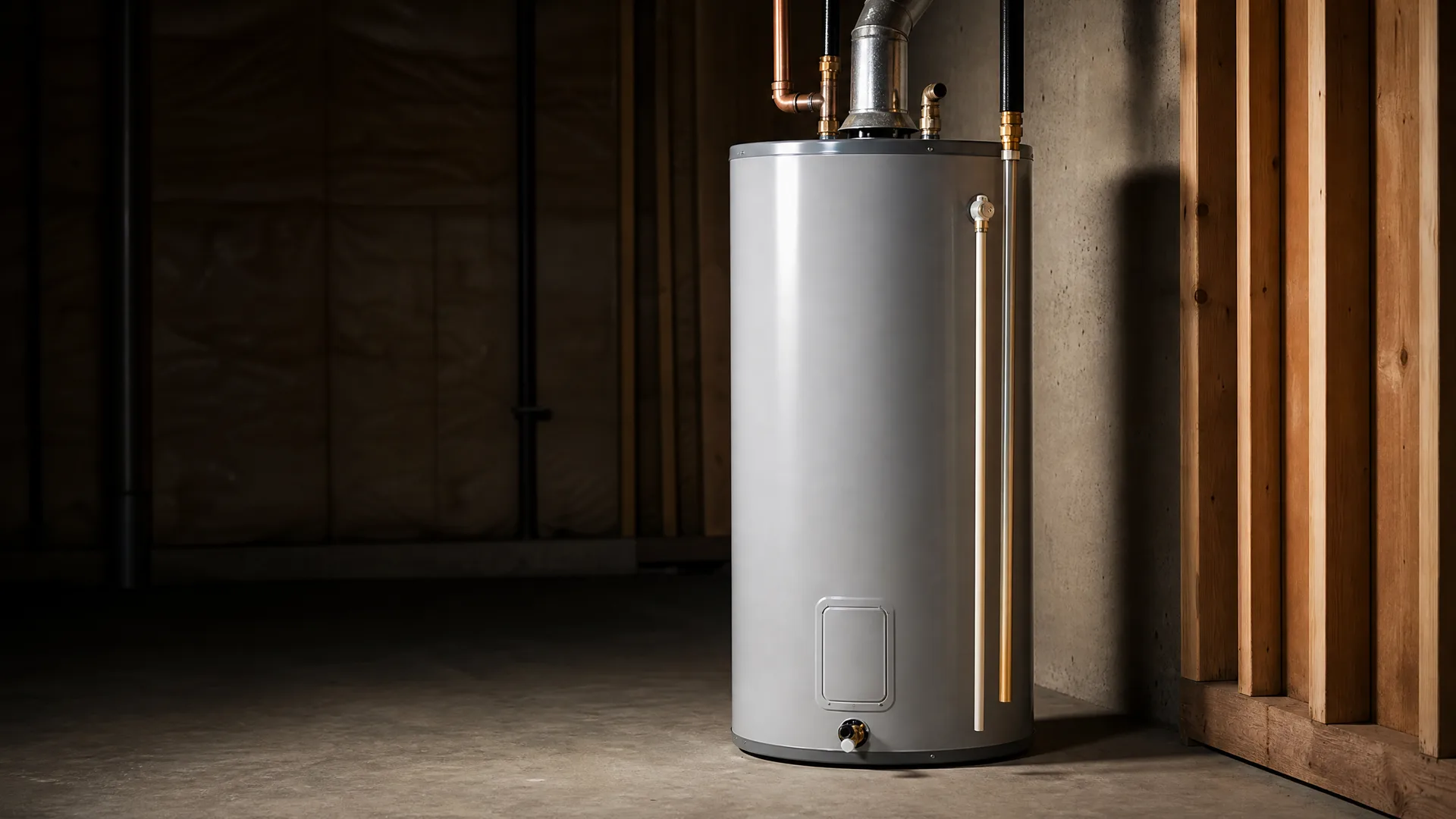
A gray cylindrical tank water heater with copper and metal pipes at its top stands on a concrete floor beside a concrete wall and wooden studs in a dim basement.

Get your water heater to the right pro

Step 1 of 3: Equipment