

Gas or electric water heater for a Nebraska home
Once you send the form, finding a pro is off your list.
Hand off my installationGas is the better fit for most Nebraska homes, and it's what most homes here already have. A gas water heater costs more to buy but less to run, and that gap matters because Nebraska winters push incoming water temperatures down, so the tank works harder to bring it up to heat. Gas handles that recovery faster and cheaper than an electric unit, which heats more slowly and leans on electric resistance to do it. Electric still makes sense in a home with no gas line already run to it, since adding one adds its own cost. If gas already feeds your furnace or your range, keep the water heater on gas. If your home runs on electric only, there's no case for switching just to switch. Either way, installation is where this gets decided, since venting, gas line sizing and electrical capacity all depend on what your house already has.




Gas vs Electric Water Heater
Gas
- A gas water heater needs a vent to the outside, so installation depends on where that vent can run in your home.
- Recovery is faster, which matters more in winter when the incoming water is colder and the tank has more work to do.
- If the power goes out, a standing pilot model keeps making hot water since it doesn't rely on electricity to fire the burner.
- Most homes in Nebraska already have a gas line run to the water heater, which simplifies a straight swap.
- The upfront cost is higher than electric, but gas here is the fuel most of these tanks are built to run on.
Electric
- No venting to plan around, so an electric water heater can go in tighter spots a gas unit can't.
- Installation is usually simpler if there's no gas line already at the water heater.
- With power priced low here, running an electric tank costs less than the usual gap between the two fuels elsewhere.
- Recovery is slower, so a household that runs through hot water back to back may notice the wait more.
- If the power goes out, the tank stops heating until it's back, with nothing like a standing pilot to keep it going.
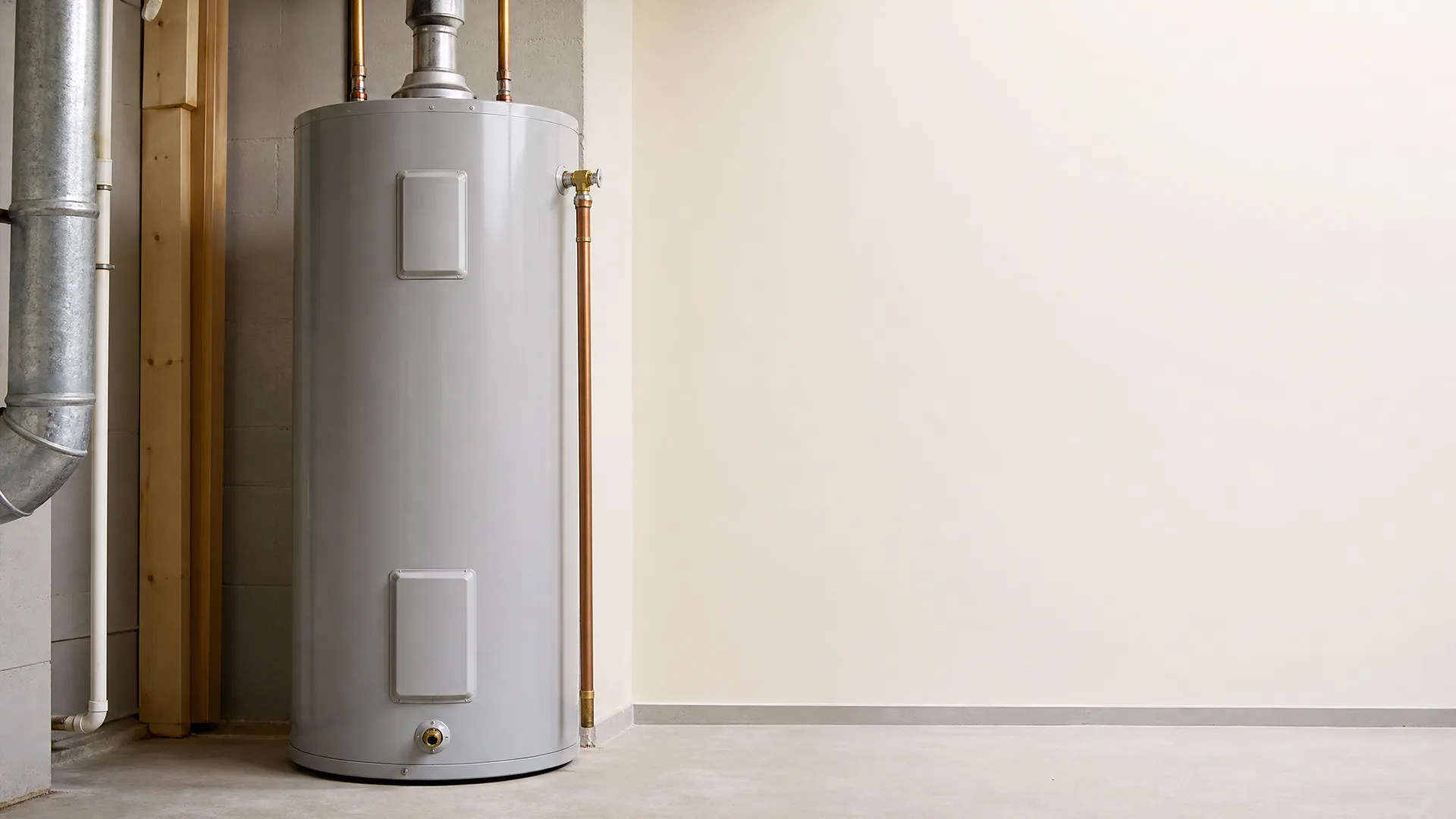
Why recovery speed matters here
Groundwater coming into the tank in winter runs colder than it does in a milder state, so the burner or elements have more work to do before the next shower runs hot. A gas burner heats the whole tank of water directly and recovers in well under an hour. Electric elements work slower, so a household that runs through hot water back to back can notice the difference most on a January morning.
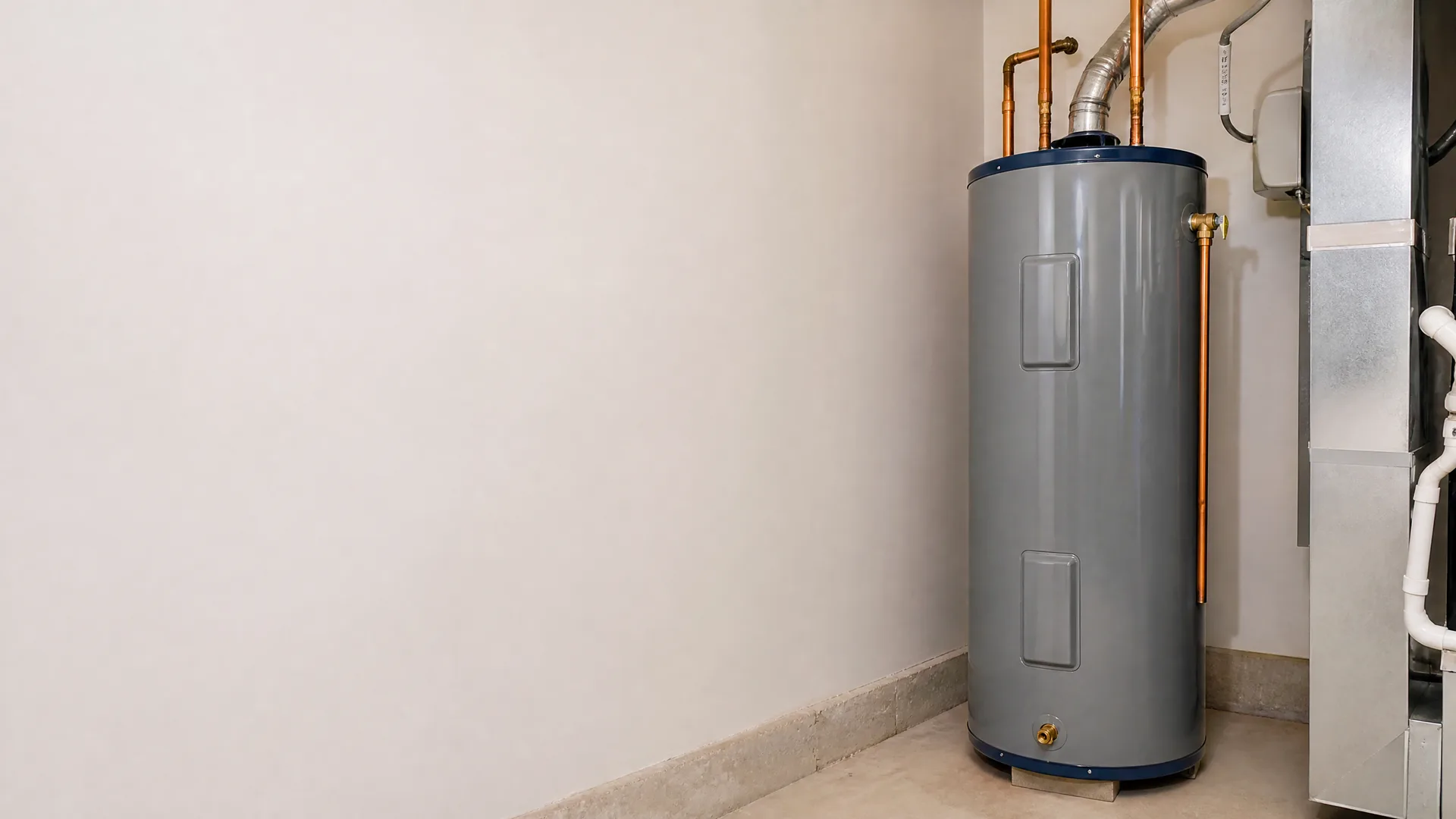
What the vent requirement looks like
A gas water heater sends exhaust outside through a vent pipe, and that pipe has to run from the tank to an exterior wall or the roof. Where the water heater sits in the house decides how straightforward that run is. A tank in a basement near an outside wall is simple. One buried in an interior closet or a finished space takes more planning, and that's worth having someone qualified look at before install day.
Is your water heater keeping up this winter
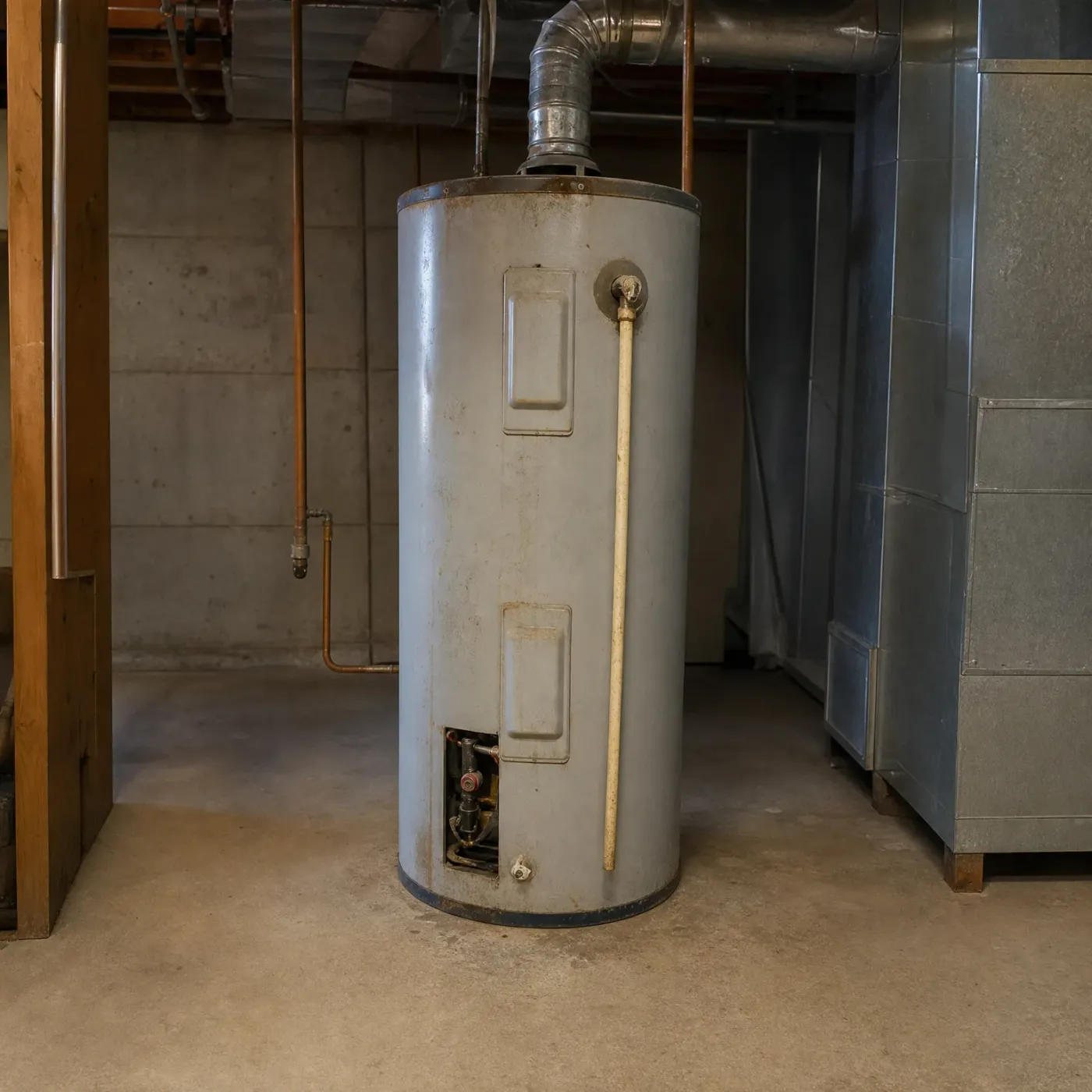
You might notice the shower turning lukewarm before everyone's had a turn, or the tank making a popping or rumbling sound as it heats. A pilot light that won't stay lit, water with a rusty tinge, or a puddle near the base are signs worth paying attention to, not waiting out. Nebraska's cold winters mean incoming water is already colder than it would be in a milder climate, so a tank that's struggling has less room to spare before it falls behind. Left alone, a failing unit can mean a tank that leaks and damages flooring or drywall, or a gas unit that isn't venting properly, which is a safety issue, not just an inconvenience.
Done looking for a water heater pro
One installer gets your project, so there's no bidding war over it.
After you send the request, you're done searching.
Sending the form costs nothing.
How does a gas water heater actually heat the water
You've seen the burner under the tank, but it's not obvious how a flame down there gets the water at the top hot enough for a shower. Knowing the order things happen in helps you understand why a gas unit recovers faster than an electric one, especially once winter has the incoming water running cold.
The burner heats the tank from underneath, not with a coil inside it
A gas burner sits under the tank and fires into a flue that runs straight up through the middle of it. That flue is surrounded by water, so heat passes through its walls into the whole tank at once, not just the water nearest the flame. That's why a gas water heater catches up quickly after a full tank of cold groundwater comes in, which matters more in Nebraska once winter pushes incoming temperatures down. An electric unit works differently, with elements heating only the water around them, so the tank heats in sections rather than all together. The thermostat on a gas unit controls the gas valve, cycling the burner on and off to hold the set temperature without you touching anything.
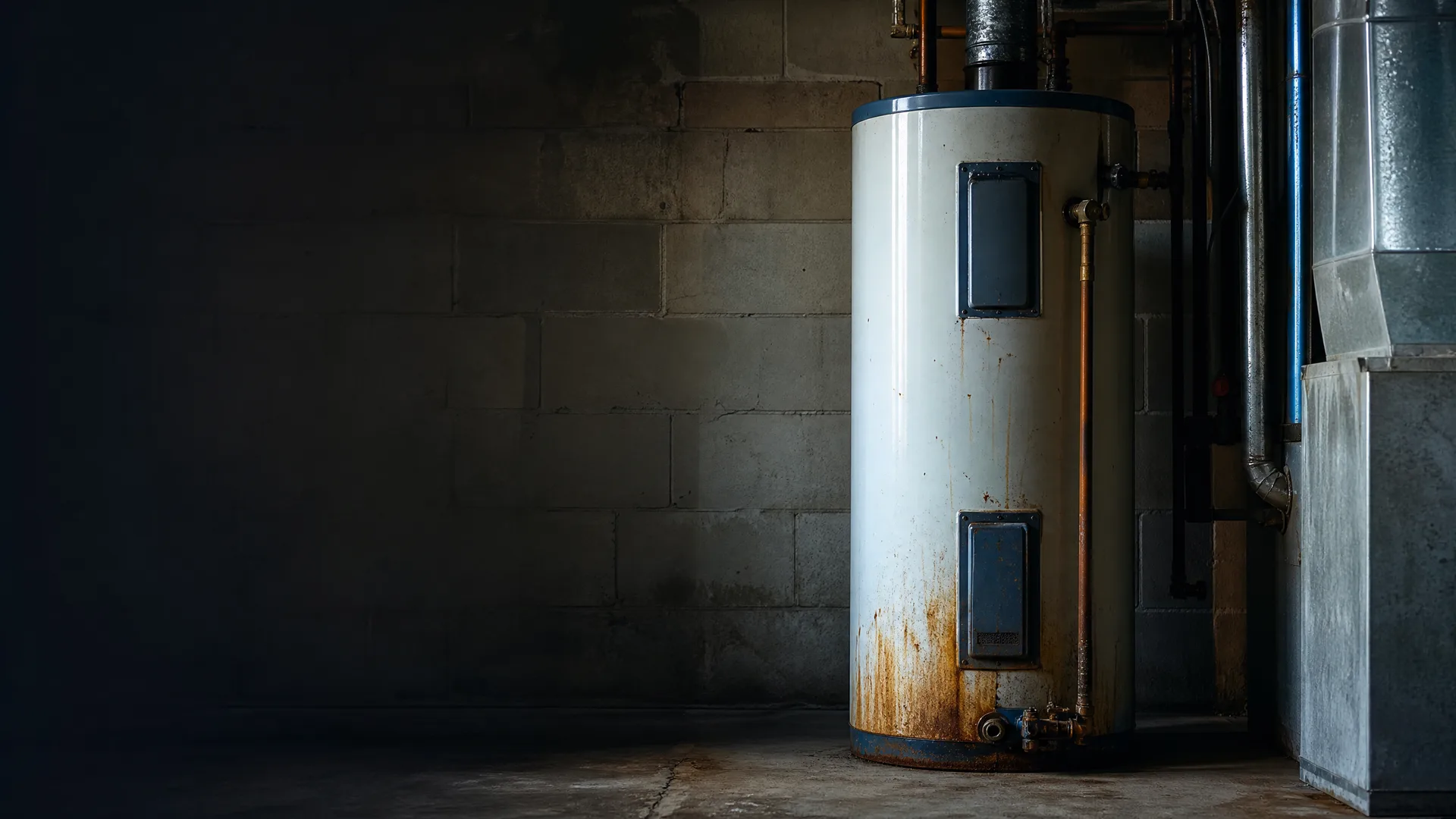
You go down to the utility room after dinner to grab something from the chest freezer, and the air is warmer than it should be, almost damp. The tank sits in the corner, and under the light you notice it this time, a brown stain creeping down the side of it and a small ring of water on the concrete where the base meets the floor. You crouch down and touch the streak. It's dry and crusted, been there longer than tonight. The furnace kicks on behind you, working against the cold coming through the block wall, and you stand there a second, thinking about how old this tank actually is.
59.2% of homes statewide heat with gas
Most of your neighbors are already set up for a gas water heater, since gas is what heats most Nebraska homes. If your house has that gas line and vent in place, putting in a gas water heater is usually straightforward rather than a new project.
ACS 2020-2024 5-year B25040


Gas is the right call here
- Gas fits most Nebraska homes better, mainly because the house is likely already set up for it.
- Faster recovery matters most when groundwater runs cold, which is most of the year here.
- If your gas line and vent are already in place, installation is usually straightforward rather than a new project.
- A failing tank shows itself through lukewarm water, rumbling, or a stain creeping down the side.
- A local installer who works on these tanks every winter knows which parts tend to fail first in this water and this cold.
- Sending one request means one licensed local contractor looks at your setup, not a string of callbacks to sort through.
For most homes in Nebraska, gas is the straightforward choice. The gas line and vent are usually already there, the tank recovers faster when groundwater runs cold, and cold groundwater is most of the year here. None of that changes based on who installs it, but the install itself is where things go right or wrong. The vent has to run correctly, the gas line has to be sized and connected the way it should be, and the tank has to be set up to handle what your winter actually asks of it. That part depends on who does the work.
A water heater installer who works in Nebraska every winter has seen what this cold and this water do to a tank over time. They know which fittings tend to corrode first, which vent runs cause trouble in older homes, and what a tank needs to keep up once the incoming water drops with the season. That's not something you get from a general plumber working a dozen states, and it's not something you can check from a brochure. It shows up in whether the install holds up three winters from now.
Sending a request here puts you in touch with one licensed, local contractor, not a handful of companies competing for your callback. You get someone who already knows the water and the cold you're dealing with, looking at your actual setup instead of a generic job. From there, you're not the one tracking down who's available or who's qualified. That part is off your plate.
It's off your list after this
Only one pro gets your request, so you hear from one company.